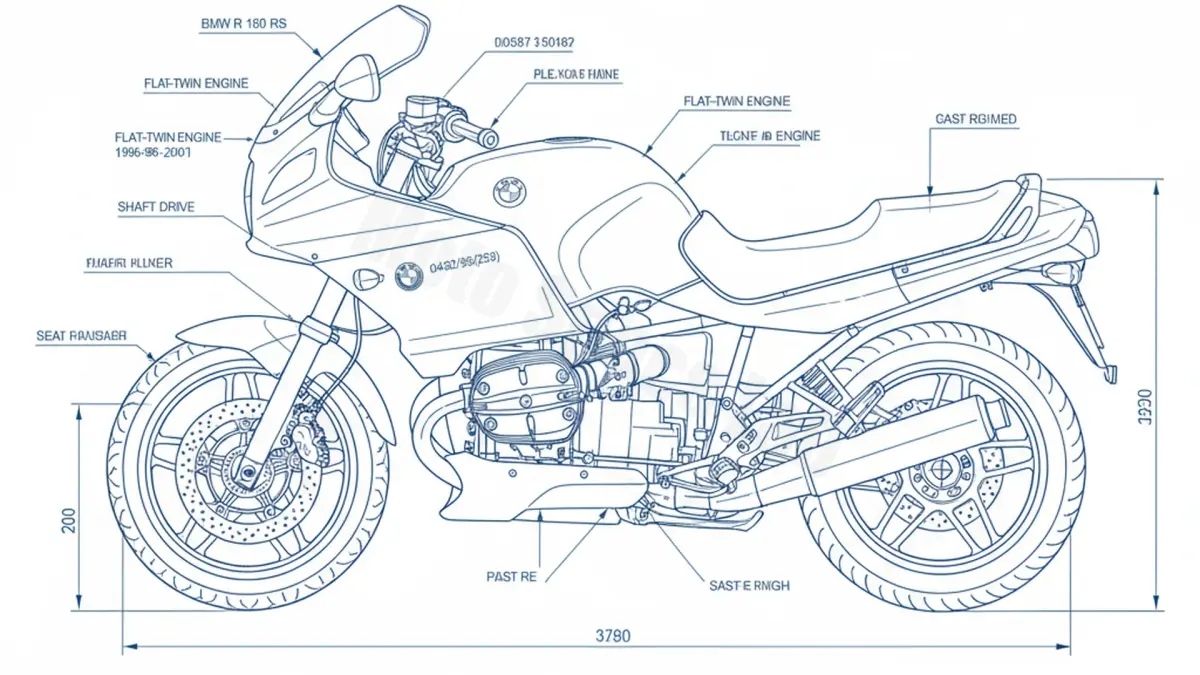
| Specification | Data |
|---|---|
| Production Years | 1993–2001 |
| Engine Oil | SAE 20W-50 API SF, SG or SH (3.75 L) |
| Tires (F/R) | 120/70 ZR 17 / 160/60 ZR 18 |
| Spark Plugs | Bosch FR 6 DDC / NGK BKR 7 EKC |
| Battery Type | DIN 51913 |
Historical Engineering Highlight: The BMW R 1100 RS (Type 259) holds a prestigious position in motorcycling history as the first production motorcycle to utilize the BMW Telelever front suspension system. By separating the steering and braking forces from the suspension movement, BMW effectively eliminated brake dive, a feat that revolutionized sport-touring stability in 1993.
Technical Review: The 259 Series Legacy
The R 1100 RS was the vanguard of the “Oilhead” generation. Transitioning from the traditional air-cooled “Airhead” designs, this model introduced four-valve cylinder heads and a combination of air and oil cooling. This allowed for tighter tolerances and higher power output while maintaining the iconic boxer configuration.
From a mechanical perspective, the 0432/96 variant is celebrated for its Motronic engine management system, which provided precise fuel injection—a significant leap forward in fuel efficiency and throttle response for the early 90s. The chassis, featuring the engine as a stressed member, contributed to a lower center of gravity, making the 239kg (wet) machine surprisingly agile in transitions.
Maintenance Guide & Service Protocols
1. Lubrication System
The R 1100 RS requires 3.75 liters of engine oil. At MotoSpecsLab, we recommend SAE 20W-50 with API SF, SG, or SH ratings. Given the oil-cooled nature of the cylinder heads, using a high-quality mineral or semi-synthetic oil that can withstand high thermal shear is critical for longevity.
2. Ignition & Electrical
For optimal combustion and cold-start reliability, the specified spark plugs are Bosch FR 6 DDC or NGK BKR 7 EKC. These dual-electrode plugs are designed to work with the high-voltage demands of the Motronic system. The electrical system is anchored by a DIN 51913 battery; ensure terminal connections are free of oxidation, as the ABS system is sensitive to voltage drops during the startup self-test.
3. Chassis & Contact Patch
The R 1100 RS utilizes a specific 18-inch rear wheel setup. Tire pressures must be strictly maintained to prevent cupping of the front tread:
- Solo Riding: Front 2.2 bar (32 psi) / Rear 2.5 bar (36 psi)
- Loaded/Pillion: Front 2.5 bar (36 psi) / Rear 2.9 bar (42 psi)
MotoSpecsLab Verdict
The BMW R 1100 RS – 0432/96 remains a masterclass in functional design. While the Paralever and Telelever systems require specific maintenance checks (specifically the pivot bearings and ball joints), the powertrain is notoriously robust, often exceeding 200,000 kilometers with basic fluid adherence. It is a quintessential choice for the high-mileage enthusiast who values mechanical transparency and historical significance.