| Specification | Data |
|---|---|
| Production Years | 1993 – 1999 |
| Engine Oil | SAE 20W-50 (API SF, SG, or SH) – 3.75 L |
| Tire Size (F/R) | 110/80 R 19 59V / 150/70 R 17 69V |
| Battery Type | 51913 (12V 19Ah) |
| Spark Plugs | NGK BKR7EKC / Bosch FR6DDC |
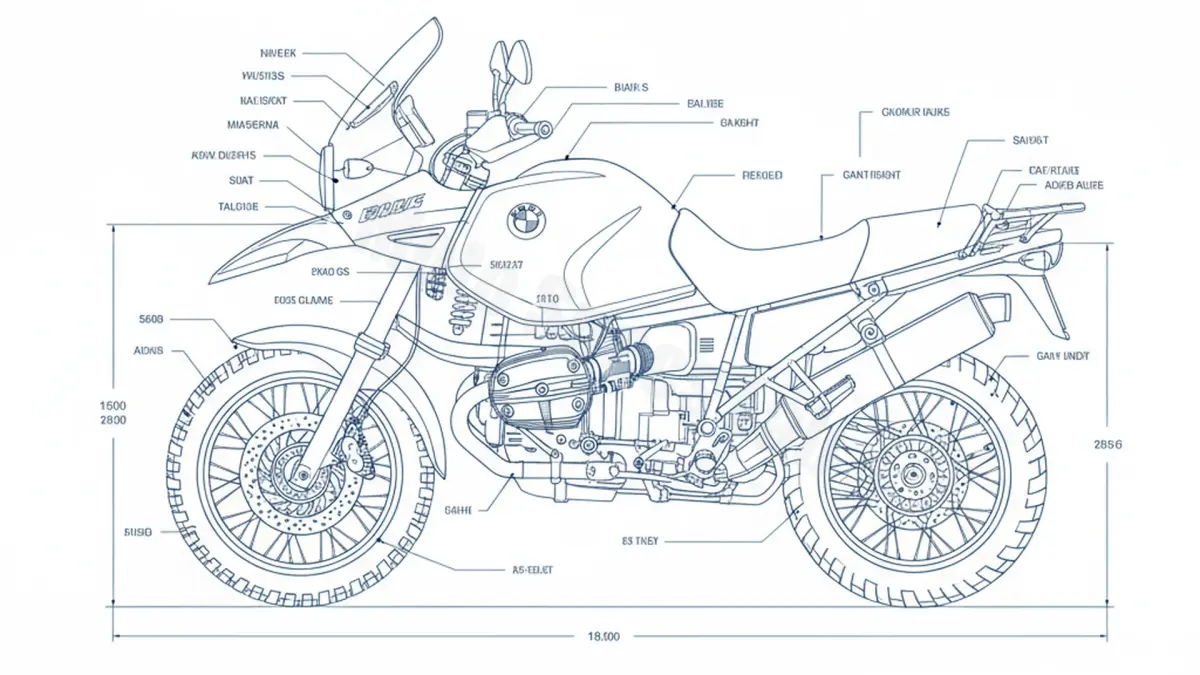
The BMW R 1100 GS (internal code 259) represents a pivotal moment in motorcycling history. It was the first GS model to utilize the revolutionary Telelever front suspension. Unlike traditional telescopic forks, the Telelever system decouples the steering and braking forces, effectively eliminating brake dive and maintaining chassis geometry under heavy deceleration—a feature that redefined the dual-sport segment upon its release in late 1993.
Engineering Legacy: The 1085cc Boxer
Moving away from the ‘Airhead’ designs of the R 80 and R 100 series, the R 1100 GS introduced the ‘Oilhead’ engine. This 1085cc flat-twin featured four valves per cylinder and a combination of air and oil cooling. The engine also served as a stressed member of the frame, a design choice that reduced weight and increased rigidity. With 80 horsepower and 97 Nm of torque, it provided the grunt necessary for transcontinental touring and light off-road exploration.
Maintenance Essentials
As the Editor-in-Chief of MotoSpecsLab, I cannot overstate the importance of using the correct lubricants for this specific Boxer engine. The SAE 20W-50 grade is critical due to the engine’s clearances and thermal profile. Total capacity with a filter change is 3.75 liters.
Ignition and Electrical
Consistent ignition is provided by dual-electrode plugs. We recommend either the NGK BKR7EKC or the Bosch FR6DDC. For the electrical system, the 51913 battery is the standard fitment, providing the high cold-cranking amps required to turn over the large 1100cc pistons in cold conditions.
Tire and Chassis Management
The R 1100 GS utilizes a 19-inch front and 17-inch rear wheel setup. Maintaining proper inflation is vital for both tire longevity and handling precision, especially given the Paralever rear swingarm’s sensitivity to load.
- Front (110/80 R 19): 2.2 bar (32 psi) Solo / 2.5 bar (36 psi) with Passenger.
- Rear (150/70 R 17): 2.5 bar (36 psi) Solo / 2.9 bar (42 psi) with Passenger.
Conclusion
The BMW R 1100 GS (0409/259) is more than just a vintage adventure bike; it is a masterclass in functional engineering. By following these technical specifications and maintenance intervals, owners can ensure this legendary ‘Oilhead’ remains a reliable companion for many miles to come.