| Attribute | Specification |
|---|---|
| Production Years | 1978 – 1980 |
| Engine Type | Air-cooled, four-stroke boxer twin |
| Engine Oil | SAE 20W-50 Mineral (2.5 L) |
| Tires (Front/Rear) | 3.25 S 19 / 4.00 S 18 |
| Tire Pressure (F/R) | 1.9 bar / 2.1 bar |
| Spark Plug | Bosch W 7 DC |
| Battery Type | DIN 52515 |
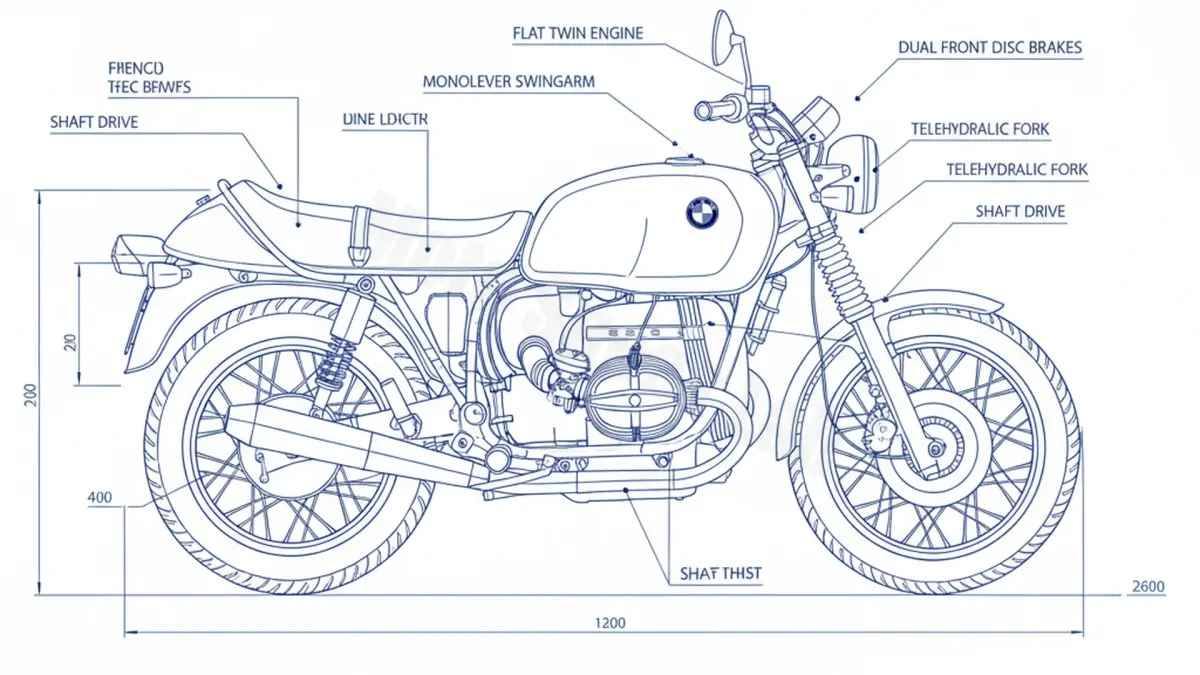
Historical Engineering Highlight: The BMW R 100 T (Touring) represents a pivotal moment in the ‘Slash 7’ evolution. While its siblings, the RS and RT, were defined by their revolutionary fairings, the ‘T’ was engineered for the purist. It utilized the high-displacement 980cc boxer engine in a naked frame, offering the highest power-to-weight ratio in the touring lineup of its era, essentially bridging the gap between a sportster and a long-distance cruiser.
Technical Overview: The 0385 Evolution
Under the MotoSpecsLab lens, the BMW R 100 T is a masterclass in modular engineering. The 0385 designation refers to the specific touring configuration that prioritized torque delivery over top-end speed. Unlike the 70hp RS variants, the T-model was tuned for a smoother power curve, making it the preferred choice for riders tackling Alpine passes or transcontinental journeys without the aerodynamic drag of full bodywork.
Maintenance Essentials
Lubrication System
The air-cooled boxer engine relies heavily on oil for both lubrication and thermal management. At MotoSpecsLab, we mandate the use of SAE 20W-50 Mineral oil. Modern synthetic oils can sometimes be too ‘thin’ for the wider tolerances of these vintage seals, potentially leading to leaks. A total capacity of 2.5 Liters ensures the sump remains sufficiently cooled during operation.
Ignition and Electrical
Reliability in the R 100 T is centered around the Bosch W 7 DC spark plug. These plugs are specifically heat-rated to prevent pre-ignition in the large combustion chambers. Power is managed by a robust DIN 52515 battery, which provides the necessary cranking amps to turn over the heavy 980cc pistons in cold weather.
Chassis and Contact Patch
Handling characteristics are heavily dependent on tire selection and pressure. The R 100 T utilizes a classic staggered setup: a 3.25 S 19 front and a 4.00 S 18 rear. For optimal stability and tire wear, maintain 1.9 bar (27.5 psi) in the front and 2.1 bar (30.5 psi) in the rear. Deviating from these pressures can lead to the ‘head shake’ common in older airheads if the front tire is under-inflated.
Editorial Verdict
The BMW R 100 T is the ‘gentleman’s express’ of the late 70s. It offers a visceral connection to the road that fairing-shrouded models lack. For the collector or the vintage rider, it remains one of the most accessible and maintainable ‘Big Boxers’ ever produced, provided the owner adheres to the strict mineral-oil and specific tire-pressure regimens outlined in this guide.