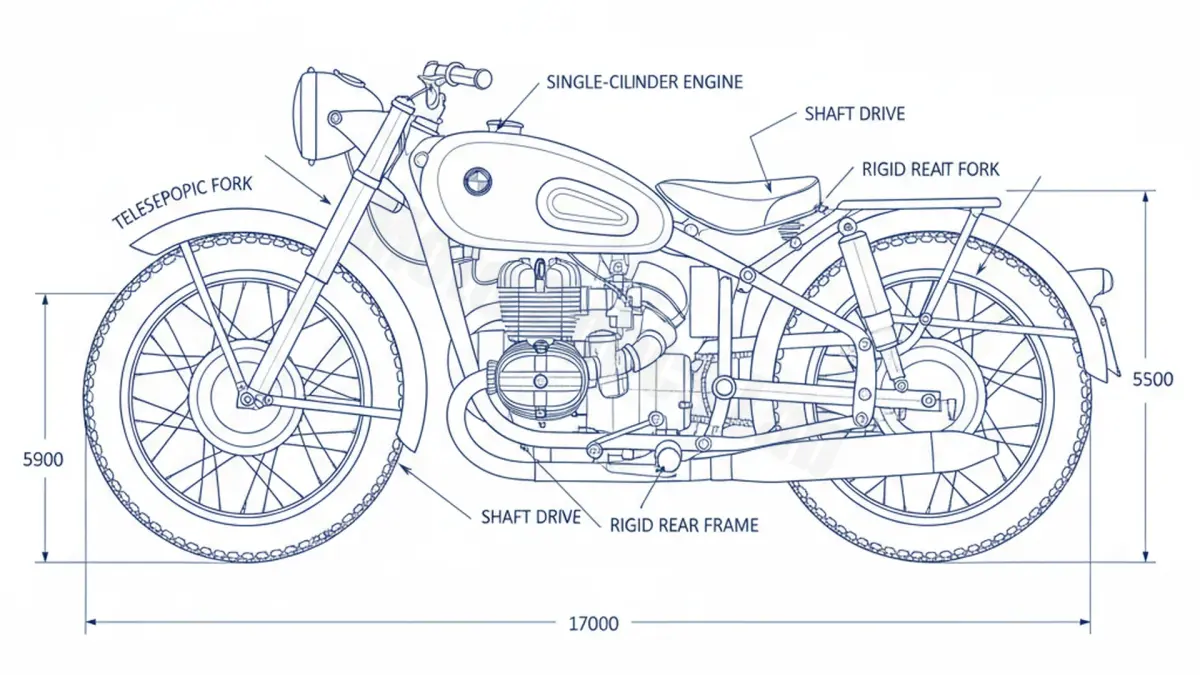
The BMW R 35 holds a unique position in motorcycling history as the last BMW model to utilize the iconic pressed-steel star frame, a design that offered exceptional rigidity for its era. Unlike its predecessors, the R 35 was engineered to be a ‘workhorse,’ bridging the gap between high-end luxury machines and accessible utility transport, eventually becoming a cornerstone of post-war reconstruction in the Eisenach plant.
| Quick Specs: BMW R 35 – 0235 | |
|---|---|
| Production Years | 1937–1940 |
| Engine Type | Single-cylinder 342cc OHV |
| Oil Requirement | 1.25 L SAE 40 (Summer) / SAE 20 (Winter) |
| Tire Size | 3.00 x 19 (Front & Rear) |
| Tire Pressure | F: 1.2 bar / R: 1.5 bar |
| Electrical System | 6V 7Ah Battery |
| Spark Plug | Bosch W 225 T1 (0.6 mm gap) |
Engineering Excellence: The 0235 Heritage
The BMW R 35 was designed with a focus on durability and ease of maintenance. The 342cc overhead-valve engine produced a reliable 14 horsepower, allowing for a top speed of approximately 100 km/h. Its most distinctive feature, the rigid rear frame combined with a telescopic front fork (a rarity at the time), provided a stable platform for both solo riding and sidecar applications.
Maintenance Essentials
1. Lubrication System
The R 35 utilizes a splash lubrication system. It is critical to use non-detergent mineral oil. Modern detergent oils can suspend old sludge and debris, which may clog the internal oil passages of this vintage engine. The capacity is 1.25 liters; use SAE 40 for temperatures above 15°C and SAE 20 for colder climates.
2. Ignition and Electrical
The 6V electrical system is powered by a 7Ah battery. Timing and spark intensity are paramount for easy starting. The specified Bosch W 225 T1 spark plug must be gapped precisely to 0.6 mm. Periodically check the contact breaker points for pitting, as the 6V system is sensitive to voltage drops caused by poor connections.
3. Wheels and Tires
The R 35 uses identical 3.00 x 19 tires for both front and rear. Maintaining correct pressure is vital for handling, especially given the rigid rear end. Set the front to 1.2 bar (17.4 psi) and the rear to 1.5 bar (21.7 psi). Over-inflation can lead to a harsh ride and increased stress on the pressed-steel frame.
Editor’s Verdict
As a specimen of pre-war German engineering, the BMW R 35 – 0235 remains a testament to functional design. While it lacks the rear suspension of later models, its mechanical simplicity makes it one of the most maintainable vintage BMWs for the modern collector. Adhering to the original non-detergent oil specifications and 6V electrical maintenance is the key to preserving this machine for the next century.