| Specification | Value |
|---|---|
| Model Generation | 0368 (2005 – 2009) |
| Engine Oil | SAE 20W-50 (4.0 L) |
| Tire Size (F/R) | 120/70 ZR 17 / 180/55 ZR 17 |
| Tire Pressure (F/R) | 2.5 bar / 2.9 bar |
| Battery Type | Exide 51913 (12V / 19Ah Gel) |
| Spark Plug | NGK DCPR8EKC |
The BMW R 1200 RT (0368) holds a prestigious position in motorcycling history as the first dedicated tourer to utilize the ‘Hexhead’ engine architecture, incorporating a counter-rotating balance shaft that effectively neutralized the vibration issues that had plagued large-displacement boxer twins for decades. This engineering milestone allowed BMW to increase displacement to 1170cc while actually improving rider comfort over long distances.
Technical Engineering Overview
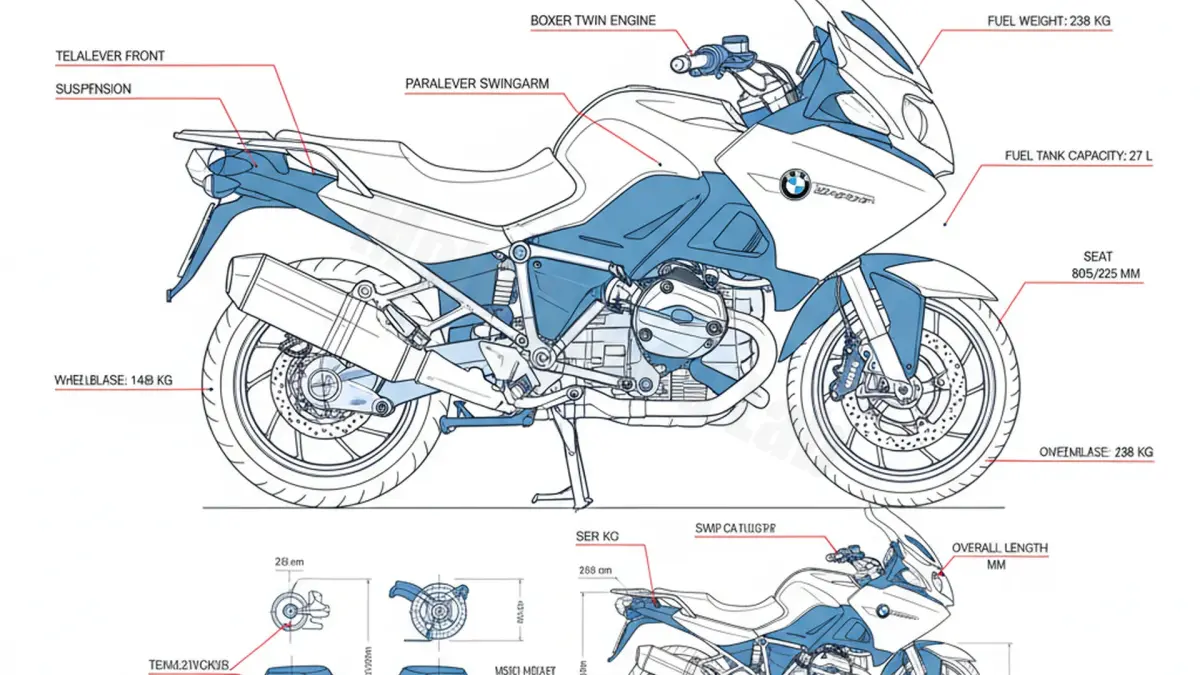
The 0368 chassis represents a significant evolution from the previous 1150 series. By utilizing the engine as a stressed member and employing the Paralever and Telelever suspension systems, BMW achieved a unique balance of high-speed stability and low-speed agility. The air/oil-cooled flat-twin produces approximately 110 hp, delivered through a dry single-plate clutch and a shaft drive system that remains a benchmark for the touring category.
Maintenance Guide & Fluid Specifications
For the professional technician or the dedicated owner, adhering to the following specifications is critical for the longevity of the Hexhead power unit:
1. Lubrication System
The R 1200 RT requires 4.0 liters of SAE 20W-50 engine oil. We recommend a high-quality mineral or semi-synthetic oil meeting API SJ / JASO MA2 standards. Unlike modern liquid-cooled engines, the Hexhead relies heavily on oil for cooling the cylinder heads, making oil quality and level monitoring paramount.
2. Electrical & Ignition
The electrical system is managed via a CAN-bus architecture, reducing wiring complexity but requiring a healthy battery to prevent sensor errors. The Exide 51913 (12V / 19Ah Gel) is the factory-specified unit. For ignition, the dual-spark system utilizes NGK DCPR8EKC plugs, which should be inspected for gap consistency to ensure smooth idling and optimal fuel economy.
3. Chassis & Contact Patch
Handling characteristics are highly sensitive to tire pressure. The 17-inch cast aluminum wheels should be fitted with 120/70 (Front) and 180/55 (Rear) rubber. Optimal performance is achieved at 2.5 bar (36.3 psi) front and 2.9 bar (42.1 psi) rear.
MotoSpecsLab Verdict
The 2005–2009 R 1200 RT remains one of the most capable trans-continental machines ever built. While the integrated ABS systems require specialized maintenance, the core mechanical components are robust. With proper adherence to the fluid and electrical specifications outlined above, the 0368 platform is easily capable of exceeding 100,000 miles with minimal degradation in performance.
Frequently Asked Questions
Q: Can I use synthetic oil in the R 1200 RT?
A: While synthetic is permissible, BMW traditionally recommended mineral oil for the break-in period and semi-synthetic for high-mileage engines to ensure proper seal lubrication. Ensure it meets JASO MA2 specs.
Q: How often should I change the NGK DCPR8EKC plugs?
A: Under standard touring conditions, spark plugs should be replaced every 12,000 miles (20,000 km) to maintain ignition efficiency.