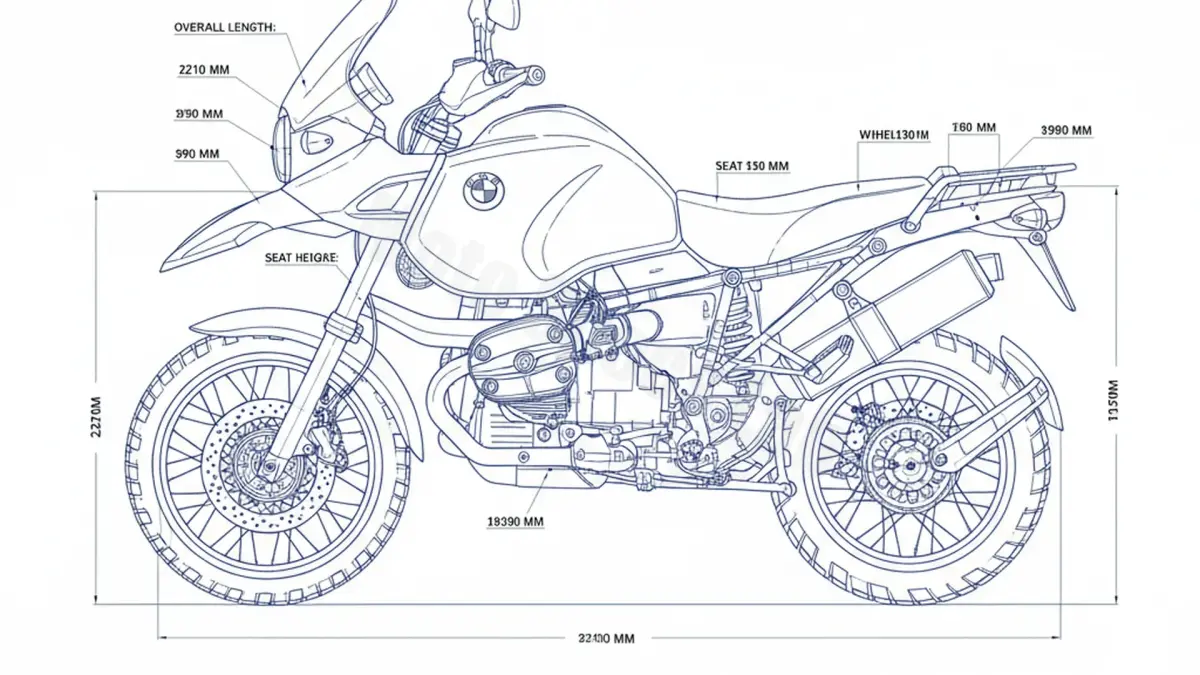
| Specification | Value |
|---|---|
| Production Years | 2001 – 2005 |
| Engine Type | Air/Oil-cooled Boxer Twin |
| Oil Capacity/Grade | 3.75 L / SAE 20W-50 (API SF, SG, SH) |
| Tire Size | F: 110/80 R 19 | R: 150/70 R 17 |
| Battery | DIN 51913 |
A pivotal moment in adventure motorcycling history occurred in 2001: BMW introduced the R 1150 GS Adventure (R21). While the standard GS was already a legend, the Adventure variant was the first to offer the “Enduro” low-ratio first gear as an option, specifically engineered to allow riders to crawl through technical terrain despite the massive 30-liter fuel tank and increased curb weight. This engineering choice cemented the GSA as the ultimate globetrotter’s tool.
Engineering Overview: The R21 Legacy
The R 1150 GS Adventure is defined by its robust 1130cc Boxer engine. Unlike its successors, the R21 maintains a mechanical purity that enthusiasts prize. The chassis utilizes the engine as a stressed member, paired with the iconic Telelever front suspension and Paralever rear drive. This setup virtually eliminates brake dive, a critical advantage when navigating steep descents with a fully loaded bike.
Maintenance Essentials
Lubrication System
For the R21, oil is not just a lubricant; it is a primary cooling agent. The system requires 3.75 liters of SAE 20W-50. It is imperative to use oil meeting API SF, SG, or SH standards to ensure the longevity of the air/oil-cooled top end. Given the dry clutch design, standard automotive oils of the correct grade are often acceptable, provided they lack friction modifiers that could interfere with engine seals.
Ignition and Spark Plugs
Maintenance requirements differ based on the production year. Early models used a Single Spark system (NGK BKR7EKC). From late 2002 onwards, BMW transitioned to Twin Spark technology to improve combustion efficiency and reduce “surging.” These models require an NGK BKR7EKC as the upper plug and a Bosch YR6LDE as the lower plug.
Tires and Pressure Management
The R 1150 GSA demands specific pressure management to handle its significant mass. The recommended tires are 110/80 R 19 (Front) and 150/70 R 17 (Rear).
- Solo Riding: Front 2.2 bar (32 psi) / Rear 2.5 bar (36 psi).
- Maximum Load: Front 2.5 bar (36 psi) / Rear 2.9 bar (42 psi).
Using the correct pressure is vital for preventing premature tire cupping, a common issue on the heavy front end of the R21.
Editorial Review: MotoSpecsLab Verdict
The R 1150 GS Adventure remains the “Goldilocks” of the GS lineage. It offers more modern amenities than the R 1100 GS, yet lacks the complex electronics (and potential failures) of the later R 1200 series. While the DIN 51913 battery is notoriously difficult to access, requiring the removal of the fuel tank, the overall serviceability of the Boxer engine is world-class. If you can manage the height and the weight, it is perhaps the most reliable long-distance motorcycle ever built.
Frequently Asked Questions
Q: How do I identify if my R 1150 GSA is a Twin Spark?
A: Check the cylinder head covers. Twin Spark models have a plastic strip covering the spark plug wires that says “2-SPARK” and feature an additional plug located at the bottom of the cylinder.
Q: What is the significance of the DIN 51913 battery?
A: This is a specific lead-acid or gel battery size. Due to the tight tolerances under the fuel tank, using a non-standard size may cause fitment issues or contact with the frame.