| Feature | Specification |
|---|---|
| Production Years | 1991 – 1996 |
| Engine Type | In-line 4, 4-stroke, SACS (Oil-cooled) |
| Final Drive | Shaft Drive |
| Engine Oil | SAE 10W-40 (API SF/SG, JASO MA/MA2) |
| Spark Plug | NGK JR9B (Gap: 0.6 – 0.7 mm) |
| Tire Size (Front/Rear) | 120/70 ZR 17 / 160/70 ZR 17 |
| Battery | YTX14-BS |
A unique engineering highlight of the Suzuki GSX 1100 G (GV74A) is its specific adaptation of the legendary GSX-R1100 engine. While the GSX-R was a track-focused weapon, the ‘G’ model utilized the massive thermal capacity of the Suzuki Advanced Cooling System (SACS) to create a high-torque, low-maintenance touring powerhouse, making it one of the few motorcycles in history to successfully marry a pure superbike powerplant with a heavy-duty shaft drive system.
Technical Engineering Overview
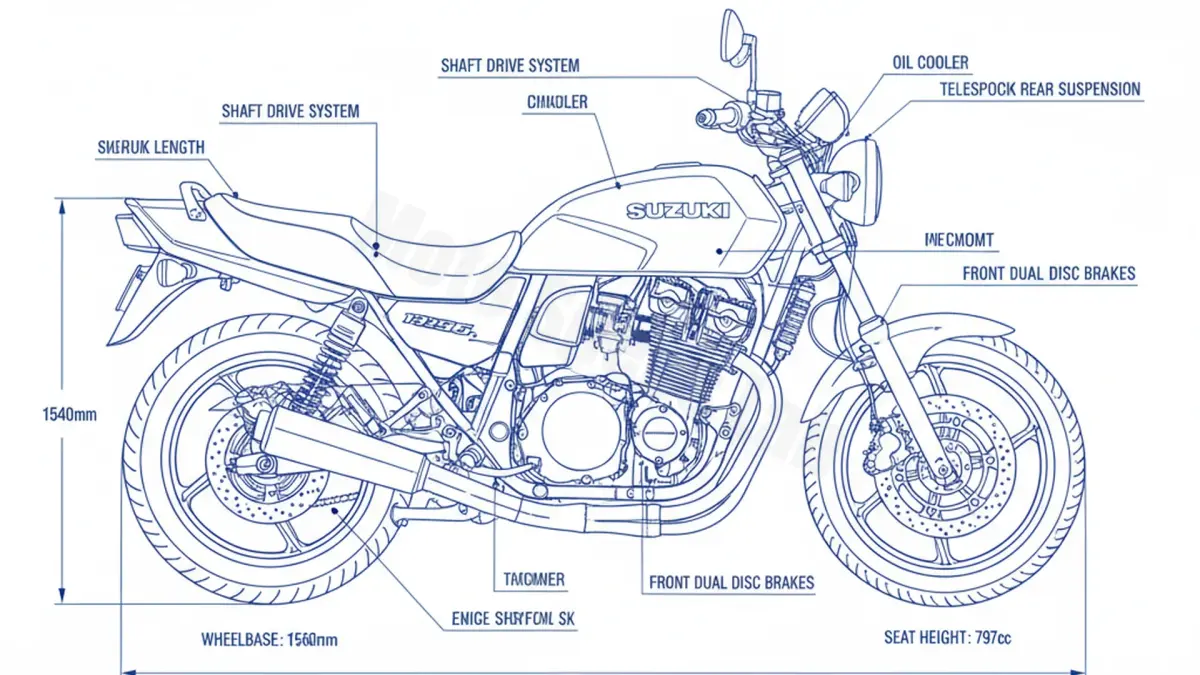
The GV74A was Suzuki’s definitive answer to the high-speed touring market of the early 90s. At its heart lies the 1127cc oil-cooled inline-four. To suit the touring application, Suzuki engineers re-tuned the cams and intake to prioritize mid-range grunt over top-end rush. The inclusion of a shaft drive necessitated a significant frame redesign, resulting in a long wheelbase that provides exceptional high-speed stability, albeit at the cost of low-speed agility.
Maintenance Guide & Specifications
Lubrication System
The SACS engine relies heavily on oil for both lubrication and cooling. It is imperative to use a high-quality SAE 10W-40 oil meeting JASO MA/MA2 standards to protect the integrated gearbox.
- Oil Change: 3.5 Liters
- With Filter: 3.9 Liters
- Dry Engine: 4.7 Liters
Chassis and Tires
The GSX 1100 G is a heavy machine, weighing in at approximately 260kg dry. Tire pressure management is critical for handling and longevity.
- Front: 120/70 ZR 17 (2.5 bar / 36 psi)
- Rear: 160/70 ZR 17 (2.5 bar Solo / 2.9 bar Dual)
Electrical and Ignition
Reliable starting is provided by a YTX14-BS battery. For optimal combustion, ensure the NGK JR9B spark plugs are gapped precisely between 0.6 and 0.7 mm. Given the heat generated by the oil-cooled block, checking spark plug condition annually is recommended to prevent fouling.
Expert Verdict
The GV74A remains a cult classic for riders who value over-engineered mechanical reliability. While it lacks the electronic aids of modern tourers, its “bulletproof” engine and low-maintenance shaft drive make it an excellent candidate for long-distance restoration projects. Regular oil changes are the single most important factor in preserving the SACS engine’s longevity.
Frequently Asked Questions (FAQ)
A: It offers the simplicity of air cooling with the thermal efficiency of liquid cooling, reducing weight and mechanical complexity compared to traditional water-cooled systems.
A: While the engine oil is changed frequently, the final gear oil should be inspected every 12,000 km and replaced according to the service manual to ensure gear longevity.