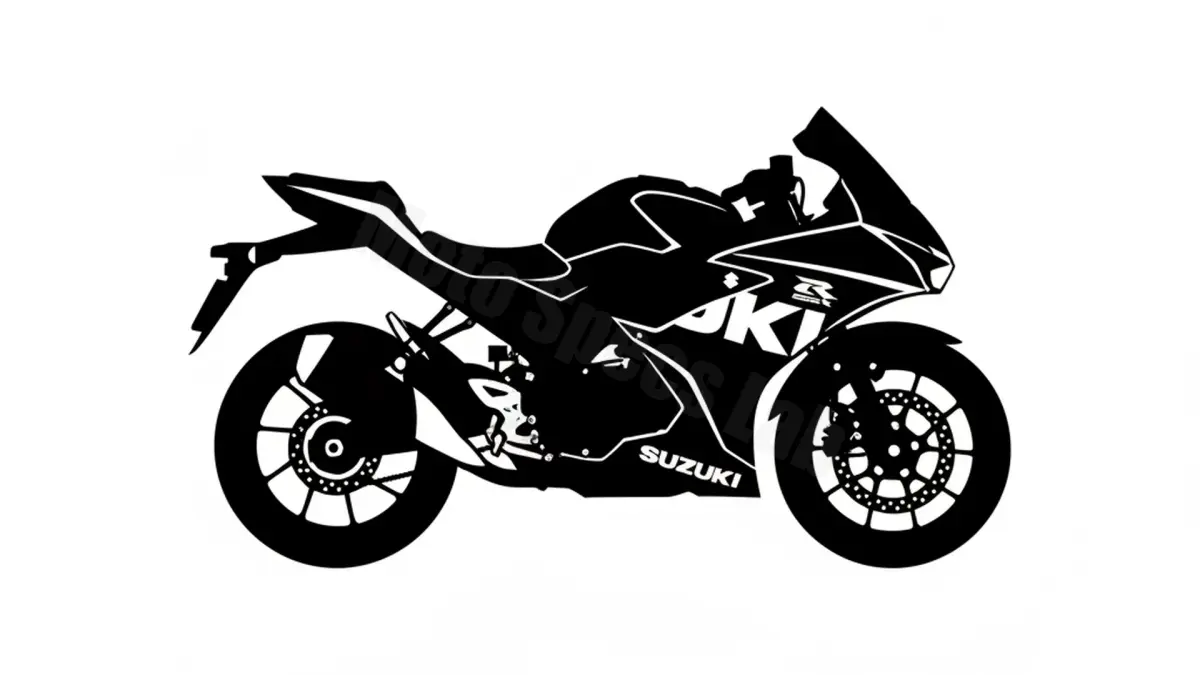
| Parameter | Specification |
|---|---|
| Production Years | 2017 – Present |
| Engine Oil | SAE 10W-40 (JASO MA2) / 1.4 Liters |
| Tires (Front/Rear) | F: 90/80-17 / R: 130/70-17 |
| Tire Pressure | F: 29 psi / R: 33 psi |
| Battery Type | FTZ6V / YTZ6V |
| Spark Plug | NGK MR8E-9 (Gap: 0.8–0.9 mm) |
A unique engineering highlight of the Suzuki GSX-R 125 is its power-to-weight ratio, which remains the best in the 125cc class. This was achieved through rigorous wind-tunnel testing and the implementation of a 32mm throttle body—the largest in its segment—allowing the DOHC engine to breathe with an efficiency typically reserved for higher-displacement supersport machines.
Technical Review: Precision Engineering
At MotoSpecsLab, we categorize the GSX-R 125 not just as a learner bike, but as a scaled-down racing instrument. The liquid-cooled, 124cc DOHC engine is a masterpiece of friction reduction, utilizing Suzuki Composite Electrochemical Material (SCEM) coated cylinders. This technology, derived directly from MotoGP, ensures durability while maintaining tight tolerances for maximum power delivery across the rev range.
The chassis geometry is aggressive, promoting rapid turn-in and high-speed stability. Despite its featherweight 134kg curb mass, the bike feels planted, thanks to its narrow profile and optimized aerodynamics that provide the lowest drag coefficient in its category.
Maintenance Guide: Sustaining Peak Performance
1. Lubrication System
To maintain the high-revving nature of the GSXR125, oil quality is paramount. Use a high-quality SAE 10W-40 semi-synthetic or full synthetic oil that meets JASO MA2 standards. The total capacity is 1.4 Liters. Regular changes every 4,000 miles (6,000 km) are recommended to protect the valve train.
2. Tires and Handling
The GSX-R 125 utilizes a specific tire combination for agility: 90/80-17 at the front and 130/70-17 at the rear. For optimal grip and fuel efficiency, maintain pressures at 2.00 bar (29 psi) front and 2.25 bar (33 psi) rear. Under-inflation significantly hampers the bike’s precise steering characteristics.
3. Electrical and Ignition
The ignition system relies on the NGK MR8E-9 spark plug. When replacing, ensure the electrode gap is precisely 0.8–0.9 mm. For the electrical system, the FTZ6V or YTZ6V battery provides the necessary cold cranking amps for the Suzuki Easy Start System. Given the bike’s keyless ignition system (on most models), ensuring a healthy battery is critical to avoid immobilization.
MotoSpecsLab Verdict
The Suzuki GSX-R 125 remains the benchmark for technical sophistication in the entry-level sportbike market. By adhering to the maintenance parameters outlined above, owners can ensure that this high-performance DOHC engine continues to deliver its class-leading performance for years to come.