| Feature | Specification |
|---|---|
| Production Years | 1982-1986 |
| Engine Oil | SAE 10W-40 API SE/SF/SG (3.2 L) |
| Front Tire | 100/90-19 57H |
| Rear Tire | 120/90-17 64H |
| Battery | YB14L-A2 |
| Spark Plug | NGK B8ES |
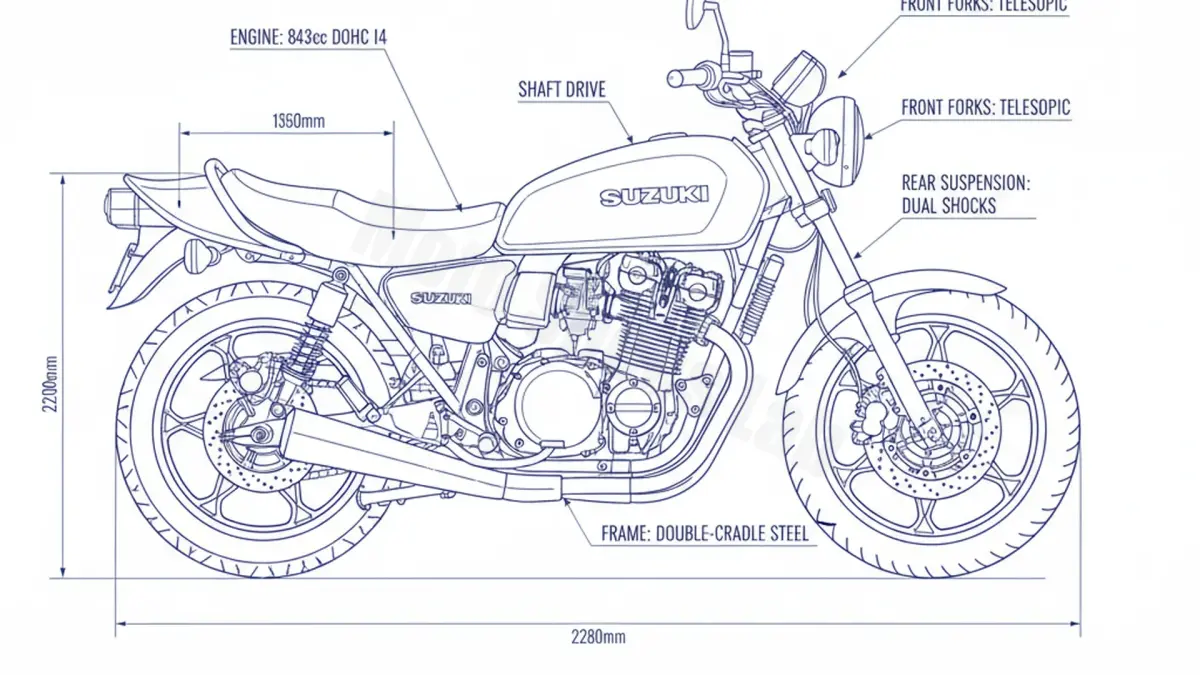
History records the Suzuki GS 850 G (GS72A) as a masterpiece of pragmatic engineering. While most manufacturers were struggling to balance performance with shaft-drive reliability, Suzuki achieved a milestone by utilizing the robust bottom end of the GS750 and mating it with a bored-out GS1000 top end. This specific configuration allowed the GS 850 G to become one of the most reliable touring platforms of the 1980s, often referred to as the ‘indestructible’ mile-muncher.
Technical Review: Engineering & Performance
The GS72A variant represents the refinement of the 850 series. Its air-cooled, four-cylinder DOHC engine provides a linear power delivery that is perfectly suited for long-distance travel. Unlike its chain-driven siblings, the ‘G’ model features a sophisticated shaft-drive system that significantly reduces maintenance intervals for cross-continental riders. The chassis, though heavy by modern standards, provides a planted feel that inspires confidence at highway speeds.
Maintenance Guide & Fluid Specifications
To maintain the legendary reliability of the GS72A, strict adherence to fluid intervals is required. The engine utilizes 3.2 Liters of SAE 10W-40 oil. Given the era of this engine’s design, using oils meeting API SE, SF, or SG specifications is critical to ensure proper lubrication of the overhead cams and the integrated gearbox.
Tire Pressures and Handling
Proper inflation is vital for the GS 850 G’s heavy frame. The factory recommended settings are as follows:
- Front (100/90-19): 1.75 bar (25 psi) for solo riding; 2.00 bar (29 psi) for dual/heavy loads.
- Rear (120/90-17): 2.00 bar (28 psi) for solo riding; 2.50 bar (36 psi) for dual/heavy loads.
Electrical System
The electrical system relies on a YB14L-A2 lead-acid battery. Owners should periodically check the electrolyte levels and ensure the charging system is outputting approximately 14.0-14.5V at 5,000 RPM to prevent premature battery failure, a common quirk in vintage GS models.
MotoSpecsLab Verdict
The Suzuki GS 850 G (GS72A) remains a pinnacle of 1980s over-engineering. For the modern collector or vintage tourer, it offers a level of mechanical transparency and durability that is rarely found in contemporary machinery. With regular oil changes and attention to the shaft drive’s final gear oil, this machine is capable of exceeding 100,000 miles with ease.