| Component | Specification |
|---|---|
| Engine Type | 1127cc SACS Oil-Cooled Inline-4 |
| Oil Grade | SAE 10W-40 (API SF or SG) |
| Oil Capacity | 3.3L (Change) / 3.7L (Filter) / 4.5L (Overhaul) |
| Tires (F/R) | 120/70 ZR 17 / 160/60 ZR 17 |
| Tire Pressure (F/R) | 2.5 bar / 2.5-2.9 bar |
| Spark Plug | NGK JR9B |
| Battery | YB14L-A2 |
Engineering Legacy: The 1127cc Breakthrough
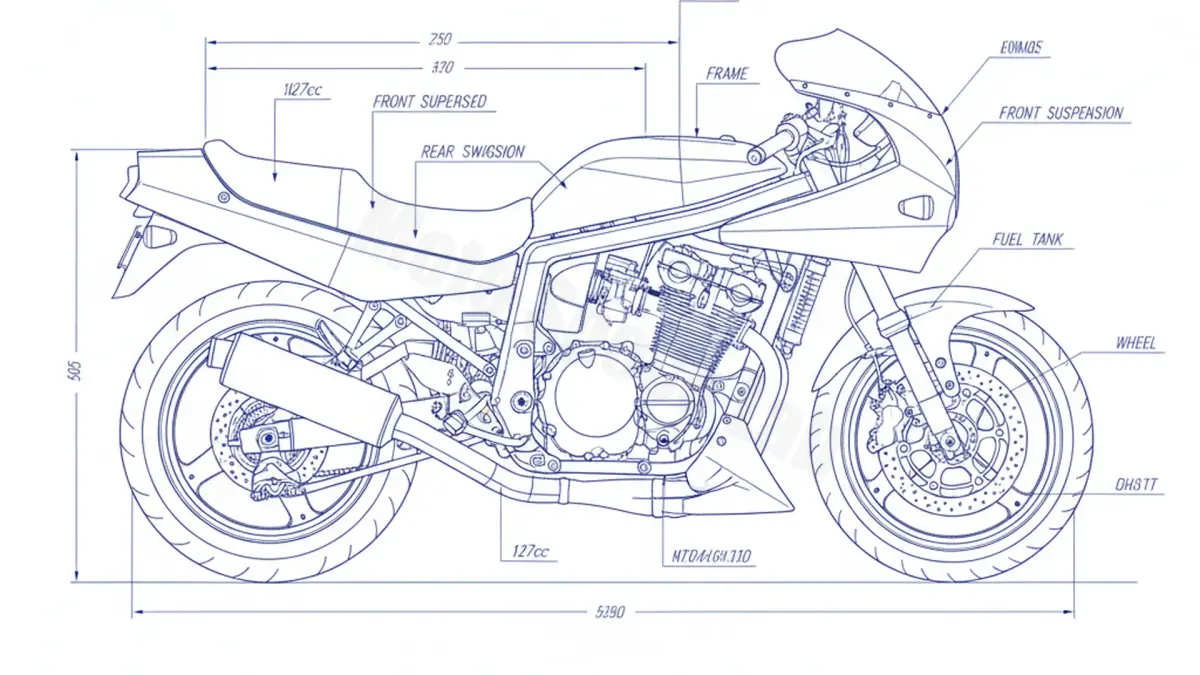
The 1989 ‘K’ model (GV73C) represents a pivotal moment in superbike history. While its predecessors defined the lightweight class, the 1100K introduced the massive 1127cc displacement, marking the first major evolution of the Suzuki Advanced Cooling System (SACS). Unlike contemporary water-cooled rivals, the GSX-R 1100 K utilized high-volume oil jets to cool the cylinder heads, a design that earned it the legendary nickname ‘Oil-Boiler’ and established a reputation for bulletproof reliability under extreme thermal stress.
Maintenance & Fluid Dynamics
To maintain the high-performance standards of the GV73C, lubricant quality is paramount. The SACS engine relies on oil not just for lubrication but as its primary cooling medium. We recommend a high-quality SAE 10W-40 meeting API SF or SG standards. Note the specific capacities: a standard oil change requires 3.3 liters, while replacing the filter brings the requirement to 3.7 liters. For those performing a complete engine overhaul, the dry fill capacity is 4.5 liters.
Chassis & Handling: Tire Dynamics
The GV73C transitioned to 17-inch wheels, significantly improving the availability of modern radial rubber compared to the earlier 18-inch models. The factory specification calls for a 120/70 ZR 17 front and a 160/60 ZR 17 rear. Maintaining precise tire pressure is critical for the GSX-R’s heavy-set high-speed stability. While 2.5 bar (36 psi) is the standard for solo operation, the rear must be increased to 2.9 bar (42 psi) for pillion transport or sustained high-speed touring to prevent carcass deformation.
Electrical & Ignition
The ignition system utilizes NGK JR9B spark plugs, which are specifically heat-ranged for the SACS engine’s operating temperatures. For reliable starting, especially given the high-compression nature of the 1127cc block, the YB14L-A2 battery must be maintained at a full charge; a drop in CCA (Cold Cranking Amps) often leads to difficult starts or fouling of the plugs.
Technical FAQ
What is the correct spark plug gap for the JR9B?
The standard gap for the NGK JR9B on the GV73C is 0.6mm to 0.7mm.
Can I use synthetic oil in the 1100K?
While modern synthetics are superior, ensure they do not contain friction modifiers that could cause the wet clutch to slip. Stick to JASO MA rated oils if moving away from mineral-based SF/SG grades.