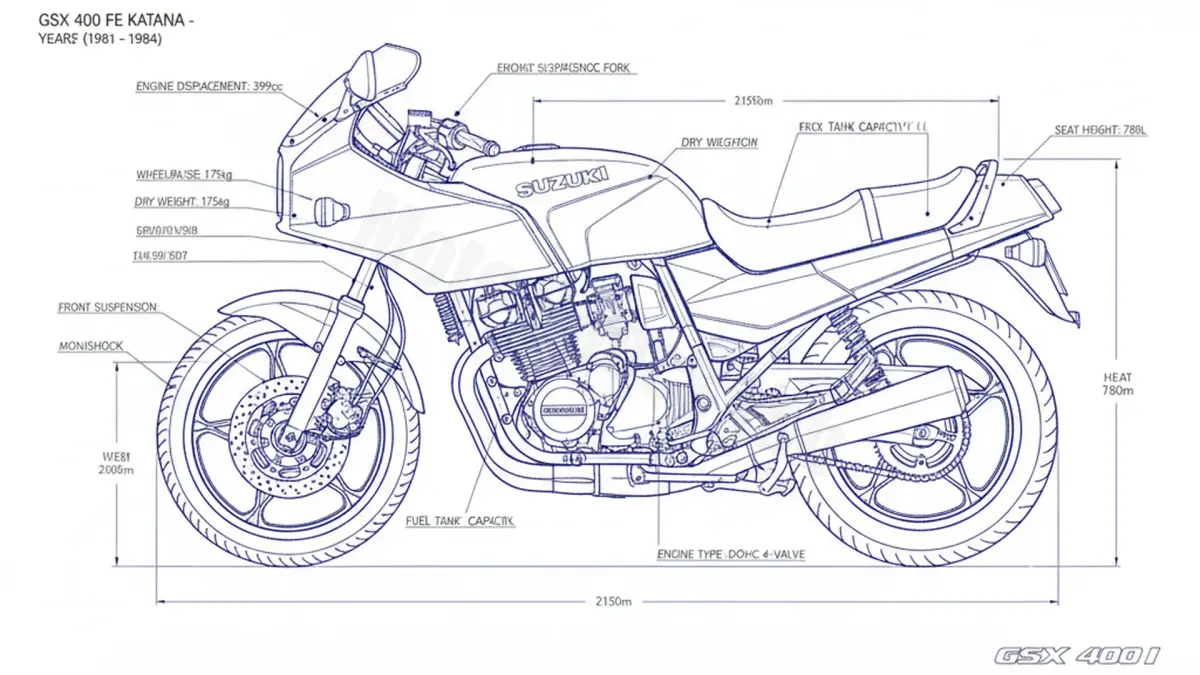
| Specification | Data |
|---|---|
| Production Years | 1981 – 1983 |
| Engine Type | Inline-4, DOHC, 16-Valve |
| Engine Oil | 10W-40 (JASO MA2) / 2.4 L |
| Spark Plug | NGK D8EA |
| Battery | YB10L-A2 |
| Front Tire | 90/90-18 (2.0 bar / 29 psi) |
| Rear Tire | 110/90-18 (2.3 bar / 33 psi) |
The Suzuki GSX 400 FE Katana (GS40XF) occupies a unique space in motorcycle history as the mid-displacement embodiment of Hans Muth’s radical ‘Target Design’ philosophy. While the 1100cc variant garnered the most headlines, the 400cc FE model was an engineering marvel for its time, featuring the Twin Swirl Combustion Chamber (TSCC) technology. This design optimized flame front travel by creating a dual-vortex intake charge, significantly improving torque and fuel efficiency in a high-revving 400cc inline-four platform.
Engineering Deep Dive: The GS40XF Heart
The GS40XF engine is a double overhead cam (DOHC) 16-valve unit. Unlike many of its contemporaries that utilized shim-under-bucket valve adjustment, the GSX 400 FE maintained a balance between performance and serviceability. The TSCC system allowed for a higher compression ratio without the risk of pre-detonation, making it one of the most responsive small-bore fours of the early 1980s.
Maintenance Essentials
For the modern collector or enthusiast, maintaining the GSX 400 FE requires adherence to specific vintage Suzuki tolerances. At MotoSpecsLab, we emphasize the importance of using modern JASO MA2 rated oils to protect both the high-revving top end and the integrated wet clutch system.
- Lubrication: Use 2.4 liters of high-quality 10W-40 (JASO MA2). Regular changes every 3,000 miles are recommended due to the high operating temperatures of air-cooled 16-valve heads.
- Ignition: The NGK D8EA is the standard plug. Ensure a gap of 0.6mm to 0.7mm for optimal cold-start performance.
- Electrical: The YB10L-A2 battery is the standard lead-acid fitment. Given the age of these machines, checking the charging system output (stator and regulator/rectifier) is a critical part of seasonal maintenance.
Chassis and Handling
The GS40XF utilized an 18-inch wheel configuration both front and rear, providing a stable, classic handling profile. To maintain the intended geometry, we recommend the following tire specifications:
- Front: 90/90-18 inflated to 2.0 bar (29 psi).
- Rear: 110/90-18 inflated to 2.3 bar (33 psi).
Proper tire pressure is vital on the Katana to prevent ‘heavy’ steering, a common complaint when the narrow 18-inch front tire loses even a few psi of pressure.
Conclusion
The Suzuki GSX 400 FE Katana is more than just a styling exercise; it is a testament to Suzuki’s willingness to bring high-end combustion technology to the masses. By following these technical specifications, owners can ensure this iconic piece of 1980s Japanese engineering remains roadworthy for decades to come.