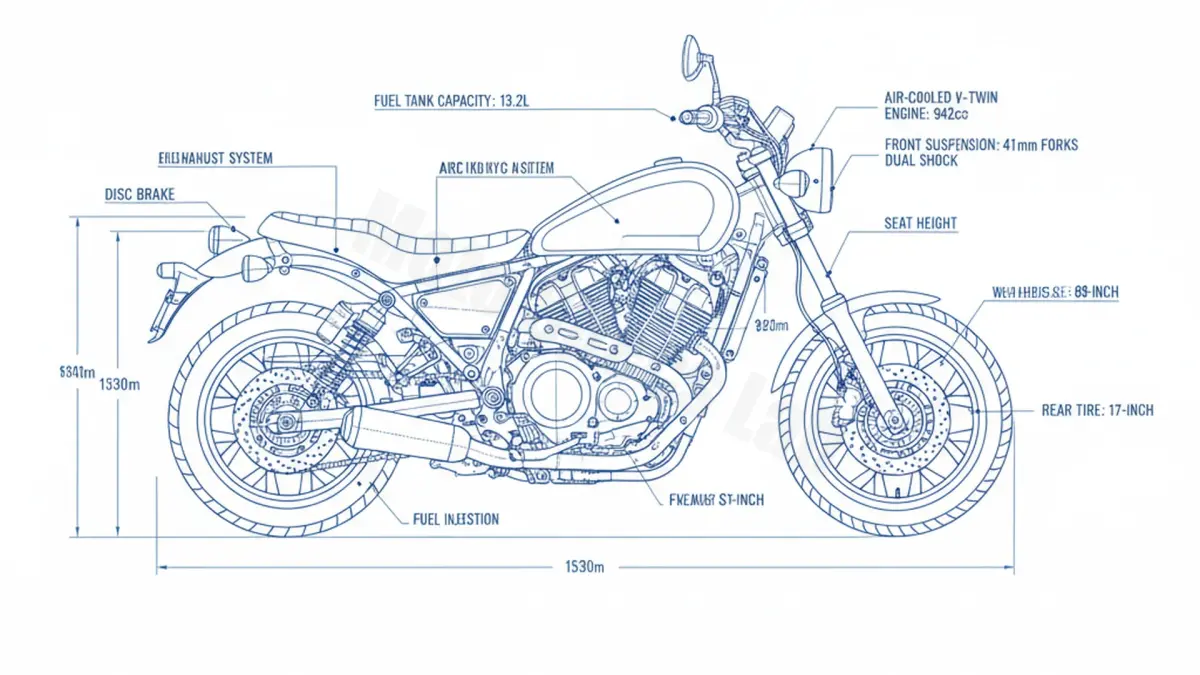
| Component | Specification |
|---|---|
| Model Series | VN07 (2017 – 2020) |
| Engine Type | 942cc Air-cooled 60° V-twin |
| Oil Requirement | SAE 10W-40, API SG+, JASO MA (4.0 L) |
| Spark Plug | NGK CPR7EA-9 |
| Battery | YTZ14S |
| Front Tire | 100/90-19 M/C 57H (2.25 bar / 33 psi) |
| Rear Tire | 150/80B16 M/C 71H (2.50 bar / 36 psi) |
A unique engineering highlight of the Yamaha SCR 950 (VN07) is its use of ceramic-composite plated cylinders. Unlike traditional steel liners, this racing-derived technology allows for superior heat dissipation and reduced friction, which is critical for an air-cooled V-twin operating under the tighter thermal constraints of Euro 4 emissions standards.
Engineering Overview
The SCR 950 is built upon the robust XV950 “Bolt” platform but features a significantly revised subframe to accommodate the higher seat height and scrambler ergonomics. The heart of the machine is the 60-degree V-twin, which prioritizes low-to-mid-range torque. To comply with Euro 4 regulations, the VN07 utilizes a sophisticated fuel injection system and a closed-loop exhaust with a 3-way catalytic converter, balancing classic aesthetics with modern environmental compliance.
Maintenance Essentials
Lubrication System
The lubrication system is a wet-sump design requiring 4.0 liters of oil. MotoSpecsLab recommends a high-quality semi-synthetic or fully synthetic SAE 10W-40 oil. It is imperative to use oil that meets the JASO MA standard to ensure proper operation of the wet multi-plate clutch, which shares the engine oil.
Ignition and Electrical
The VN07 utilizes a TCI (Transistor Controlled Ignition). For optimal combustion efficiency, the NGK CPR7EA-9 spark plugs should be inspected every 6,000 miles. Electrical stability is maintained by a 12V system powered by the YTZ14S battery, known for its high Cold Cranking Amps (CCA), essential for turning over the large 942cc cylinders.
Chassis and Handling
The SCR 950 transitions from the cruiser geometry of the Bolt to a more upright stance. This change necessitates specific attention to tire pressures. For the best balance of longevity and grip, the 19-inch front should be maintained at 2.25 bar (33 psi), while the 16-inch rear requires 2.50 bar (36 psi). The spoked wheels require periodic tension checks, especially if the bike is used on light gravel or unpaved surfaces.
Conclusion
The Yamaha SCR 950 (VN07) remains a standout example of ‘Sport Heritage’ engineering. By following these technical specifications and maintenance intervals, owners can ensure the longevity of the air-cooled V-twin while maintaining the distinct performance characteristics designed by Yamaha’s engineers.