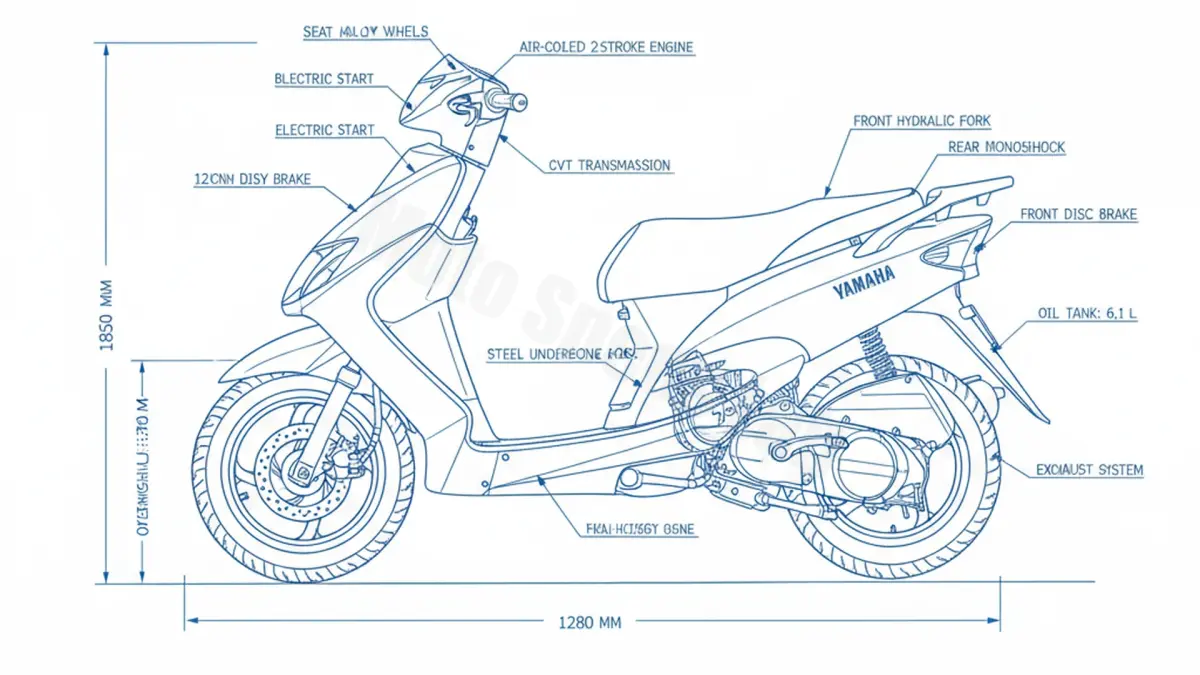
| Component | Specification |
|---|---|
| Production Years | 1999 – 2003 |
| Engine Type | 2-Stroke Air-Cooled (Minarelli) |
| Oil Requirement | 2-stroke (JASO FC/FD) (1.2 L) |
| Front Tire | 120/70-12 51J |
| Rear Tire | 130/70-12 56J |
| Battery | YB4L-B |
| Spark Plug | NGK BR8HS |
Historical Engineering Context: The Yamaha NEO’S 100 (SB04) represents a pinnacle of the ‘sleeper’ urban scooter era. While it shared the same compact chassis as its 50cc sibling, it housed the robust 100cc Minarelli long-block engine. This configuration provided a power-to-weight ratio that made it an exceptional urban sprinter, bridging the gap before the industry shifted toward heavier 4-stroke units due to Euro 2 emissions standards.
Engineering Analysis: The SB04 Platform
The SB04 is distinguished by its simplicity and reliability. Unlike modern liquid-cooled fuel-injected scooters, the NEO’S 100 utilizes a forced-air cooling system and a traditional carburetor, making it a favorite for enthusiasts who prioritize ease of maintenance. The Minarelli engine architecture is renowned for its durability, provided the lubrication system is managed with high-quality synthetics.
Maintenance & Lubrication
The 2-stroke autolube system has a capacity of 1.2 liters. For the longevity of the cylinder wall and piston rings, MotoSpecsLab recommends JASO FC or FD rated semi-synthetic/synthetic oils. These modern standards ensure low-smoke operation and prevent carbon buildup on the exhaust port—a common issue in older air-cooled designs. The NGK BR8HS spark plug is the standard heat range for this engine; however, if the vehicle is used exclusively for short, low-speed city trips, monitoring for fouling is essential.
Chassis and Handling
The NEO’S 100 features 12-inch wheels, which offer a superior balance between flickability and stability compared to 10-inch alternatives. Correct tire pressure is critical for handling precision:
- Front: 1.75 bar (25 psi)
- Rear (Solo): 2.00 bar (29 psi)
- Rear (With Passenger): 2.25 bar (33 psi)
Under-inflating the 130/70-12 rear tire significantly increases the risk of ‘rim-pinching’ and sluggish corner entry, particularly given the added torque of the 100cc engine over the base model.
Electrical System
The system relies on a YB4L-B battery. Given the SB04 utilizes a DC ignition system for certain lighting components, maintaining a healthy charge is vital for consistent starting performance. If the scooter is stored during winter months, a trickle charger is recommended to prevent sulfation of the lead-acid plates.
Expert Verdict
The Yamaha NEO’S 100 (SB04) remains a highly desirable classic for urban commuters. Its mechanical simplicity, combined with the punchy power delivery of a 100cc 2-stroke, offers a riding experience that modern 4-stroke 125cc scooters often fail to replicate in terms of character and weight distribution.