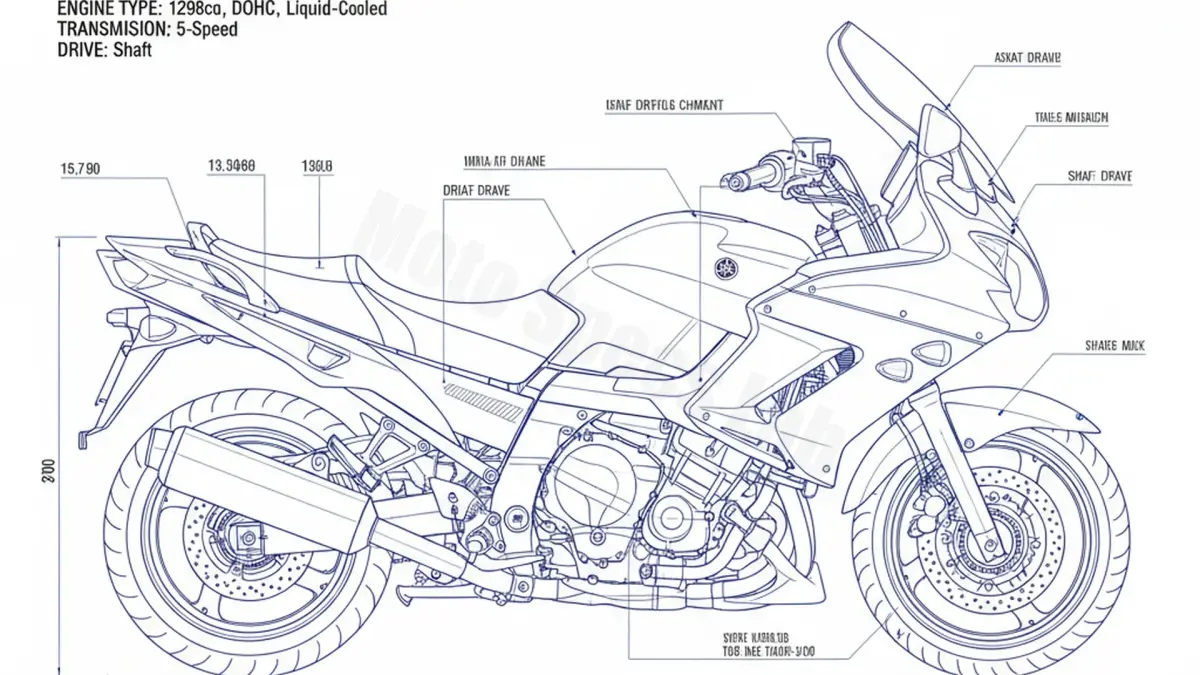
| Quick Specifications – RP13 Generation | |
|---|---|
| Production Years | 2006 – 2012 |
| Engine Oil | 4.0 L (SAE 10W-40/20W-50, JASO MA) |
| Front Tire | 120/70 ZR 17 (2.5 bar / 36 psi) |
| Rear Tire | 180/55 ZR 17 (2.9 bar / 42 psi) |
| Battery | GT14B-4 |
| Spark Plugs | NGK CPR8EA-9 (0.8–0.9 mm gap) |
The Yamaha FJR 1300 A RP13 represents a pivotal moment in sports-touring history. While the original FJR established the class, the RP13 generation (2006-2012) was the first to utilize a curved radiator and redesigned fairing ducts specifically engineered to solve the ‘heat soak’ issues that plagued earlier models. This engineering refinement transformed the FJR from a powerful but occasionally uncomfortable machine into a true transcontinental master.
Technical Architecture and Powertrain
At the heart of the RP13 is the legendary 1,298cc inline-four engine, delivering a seamless spread of torque. Unlike its predecessors, the RP13 introduced a longer swingarm to improve stability and a revised final drive ratio. The integration of the ABS system as standard (hence the ‘A’ designation) and the Unified Braking System (UBS) marked a significant step forward in active safety for heavy-weight tourers.
Maintenance Guide: MotoSpecsLab Standards
Lubrication System
For the RP13, Yamaha specifies a total oil capacity of 4.0 liters. To maintain the integrity of the wet clutch and the high-shear environment of the integrated gearbox, use only JASO MA certified oils. While 10W-40 is standard for temperate climates, 20W-50 is recommended for sustained high-speed touring in warmer regions.
Chassis and Contact Patch
The RP13 is sensitive to tire wear due to its 260kg+ wet weight. Maintaining the precise pressure of 2.5 bar (front) and 2.9 bar (rear) is critical to prevent ‘cupping’ of the front tire and to ensure the neutral handling characteristics the FJR is known for. We recommend high-load index (W) rated tires for this specific model.
Electrical and Ignition
The RP13 utilizes the GT14B-4 battery, which provides the high cold-cranking amps required for the large displacement four-cylinder engine. Spark plug maintenance involves the NGK CPR8EA-9; ensure the gap is precisely set between 0.8 and 0.9 mm to prevent high-speed misfires and optimize fuel economy.
Editorial Verdict: The RP13 Legacy
From a technical perspective, the RP13 is the ‘sweet spot’ of the FJR lineage. It lacks some of the complex electronic suspension found in later RP23/28 models, making it more accessible for the home mechanic, yet it includes all the necessary thermal and ergonomic upgrades that the first generation lacked. It remains a benchmark for reliability in the used market, often reaching 150,000+ kilometers with routine maintenance.