| Feature | Specification |
|---|---|
| Production Years | 2004 – 2006 |
| Engine Type | Air-cooled, 4-stroke, DOHC, 4-cylinder |
| Oil Type / Capacity | SAE 10W-40 (JASO MA) / 3.35 L |
| Tire Size (Front/Rear) | 120/70 ZR 17 / 180/55 ZR 17 |
| Battery | YTX14-BS |
| Spark Plug | NGK DPR8EA-9 (0.8–0.9 mm gap) |
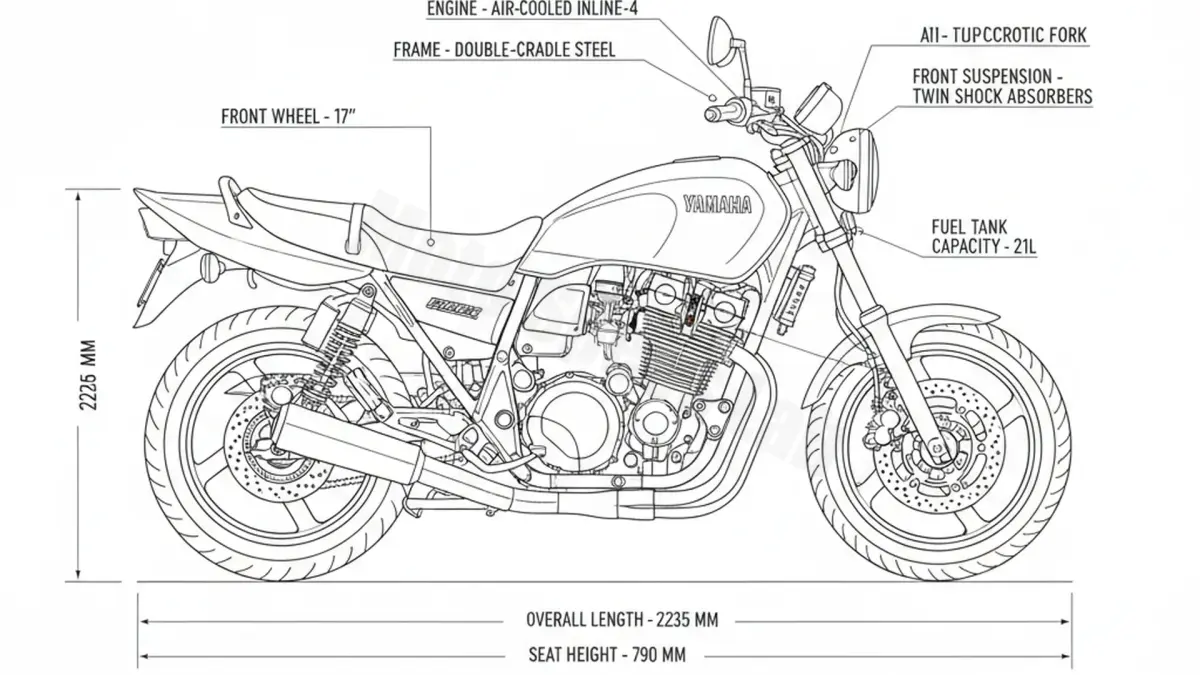
The Yamaha XJR 1300 RP10 generation represents a pivotal moment in the evolution of the muscle bike. While its predecessors were defined by raw, carbureted power, the RP10 (introduced in 2004) refined the formula with an integrated engine immobilizer and a redesigned 4-into-1 exhaust system featuring an EXUP valve. This engineering choice significantly smoothed the torque curve, making it one of the most tractable air-cooled inline-fours ever produced before the transition to fuel injection in 2007.
Engineering Overview
The RP10 remains a favorite among enthusiasts for its balance of classic aesthetics and modern reliability. The 1,251cc engine is a masterclass in thermal management for an air-cooled unit, utilizing ceramic-composite plated cylinders to dissipate heat efficiently. The RP10 specifically benefited from lighter wheels and upgraded front braking components derived from the YZF-R1, providing the stopping power necessary for its 230kg+ wet weight.
Maintenance Essentials
Lubrication System
For the RP10, Yamaha specifies SAE 10W-40 engine oil meeting the JASO MA standard to ensure wet-clutch compatibility. A total volume of 3.35 liters is required when changing the filter. Given the air-cooled nature of the engine, oil shear is a concern; we recommend intervals no longer than 6,000 km (4,000 miles) to preserve top-end longevity.
Chassis and Tires
The RP10’s handling is highly sensitive to tire pressure. The standard setup uses a 120/70 ZR 17 front and a 180/55 ZR 17 rear. For optimal stability, maintain 2.5 bar (36 psi) in the front. The rear requires 2.5 bar (36 psi) for solo riding, but must be increased to 2.9 bar (42 psi) when carrying a passenger or heavy luggage to prevent sidewall deformation.
Electrical and Ignition
The ignition system relies on NGK DPR8EA-9 spark plugs. It is critical to verify the electrode gap is between 0.8–0.9 mm before installation. The electrical system is supported by a YTX14-BS battery; ensure the terminals are clean and treated with dielectric grease to prevent the corrosion common on exposed-frame nakeds.
Expert Verdict
The Yamaha XJR 1300 RP10 is a “mechanic’s motorcycle.” It rewards those who adhere to strict maintenance schedules with bulletproof reliability. Its lack of complex electronics (save for the immobilizer) makes it an ideal candidate for home garage servicing, provided the owner respects the torque specifications of its massive engine casings.
Frequently Asked Questions
What oil should I use?
Use a high-quality 10W-40 JASO MA semi-synthetic or synthetic oil. 3.35 liters are required for a full change.
What is the correct spark plug gap?
The NGK DPR8EA-9 plugs should be gapped to exactly 0.8 to 0.9 mm.
What is the battery model?
The RP10 uses the YTX14-BS maintenance-free lead-acid battery.