| Specification | Data |
|---|---|
| Production Years | 2004 – 2018 |
| Engine Oil | SAE 10W-40 API SG/JASO MA (1.3 L) |
| Tires (F/R) | F: 80/100-19 / R: 120/90-16 |
| Spark Plug | NGK DR7EA |
| Battery | YTZ7S |
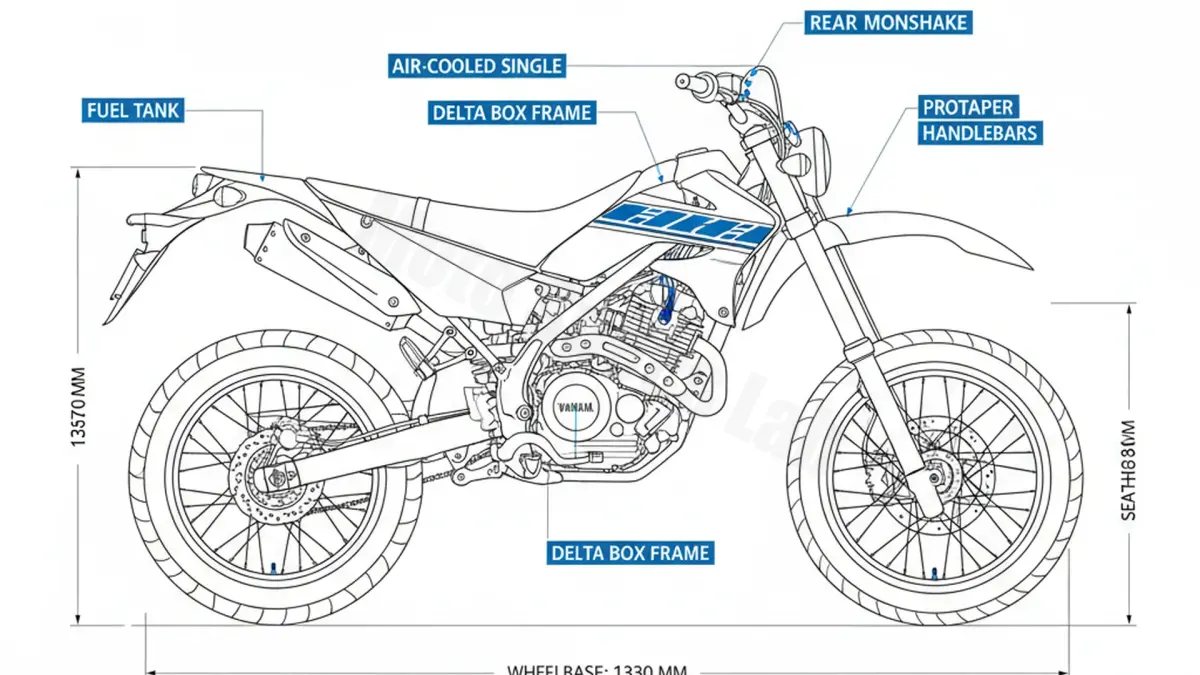
The Yamaha TRICKER 250 (XG250) represents one of the most daring engineering experiments in Yamaha’s modern history. Unlike traditional dual-sports, the Tricker was designed under the ‘BMX with an engine’ philosophy. Its unique frame geometry and wheel sizes were specifically engineered to allow riders to perform trials-style maneuvers in urban environments, making it a pioneer in the ‘freeride’ motorcycle segment.
Engineering Analysis: The XG250 Platform
At the heart of the XG250 is the bulletproof 249cc air-cooled, SOHC single-cylinder engine shared with the legendary Serow 250. However, the Tricker differentiates itself through its ultra-slim chassis and unconventional wheel diameters (19-inch front and 16-inch rear). This configuration lowers the center of gravity and reduces rotational inertia, providing the ‘flickability’ required for technical urban riding.
Maintenance Essentials
For the Editor-in-Chief at MotoSpecsLab, maintaining the integrity of this specialized machine requires adherence to strict technical tolerances:
- Lubrication: The engine utilizes 1.3 liters of 10W-40 oil. Given the air-cooled nature of the XG250, using a JASO MA certified oil is critical to prevent clutch slippage and ensure heat dissipation.
- Ignition: The NGK DR7EA is the specified spark plug. Regular inspection of the electrode gap is vital for maintaining the crisp throttle response the Tricker is known for.
- Tire Pressures: Operating at 1.25 bar (front) and 1.50 bar (rear) is essential for balancing the bike’s unique contact patch requirements on mixed surfaces.
Performance Verdict
The Yamaha Tricker 250 is not a highway cruiser, nor is it a dedicated motocrosser. It is a technical tool designed for agility. Its short wheelbase and low seat height make it an exceptional choice for both novice riders and experts looking for a ‘play bike’ that can handle stairs, curbs, and tight trails with equal composure.
Frequently Asked Questions
Q: How often should I change the oil?
A: For optimal engine longevity, we recommend changes every 3,000 km, or sooner if used primarily for technical off-road riding.
Q: Can I fit standard dirt bike tires?
A: The 19/16-inch wheel combination is unique. While options are more limited than standard 21/18 setups, specialized tires are available that maintain the bike’s intended geometry.