| Quick Specs: Yamaha XJ 550 (4V8) | |
|---|---|
| Production Years | 1981 – 1984 |
| Engine Oil | SAE 20W-40 (2.2 L) |
| Front Tire | 90/90-19 52H |
| Rear Tire | 110/90-18 61H |
| Tire Pressure | F: 2.0 bar / R: 2.25 bar |
| Battery | YB12A-A |
| Spark Plug | NGK D8EA |
The Yamaha XJ 550 (4V8) holds a prestigious place in motorcycle history as the platform that introduced the world to YICS (Yamaha Induction Control System). This engineering breakthrough utilized a sub-chamber connected to the intake ports to create a high-velocity swirl of the air-fuel mixture, significantly improving combustion efficiency and low-end torque—a rarity for small-displacement inline-fours of the early 1980s.
Engineering Overview
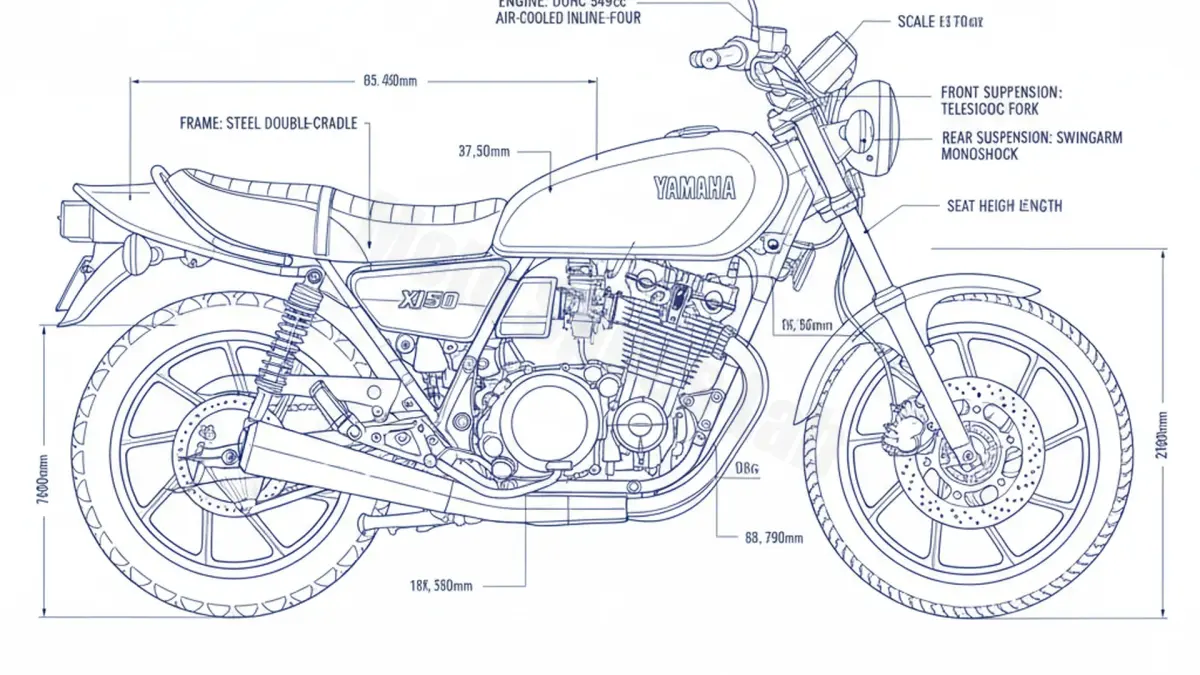
At its heart, the 4V8 features a 528cc DOHC air-cooled engine. Unlike its larger sibling, the XJ650, which utilized a shaft drive, the XJ 550 was equipped with a 6-speed gearbox and chain drive. This configuration made it lighter and more agile, positioning it as a formidable competitor in the mid-weight sport-touring category. The inclusion of a double-cradle frame and adjustable rear shocks provided a balance of rigidity and comfort that defined the ‘XJ’ philosophy.
Maintenance Guide
Lubrication System
For optimal engine longevity, MotoSpecsLab recommends SAE 20W-40 mineral or semi-synthetic oil. The total capacity is 2.2 Liters. Given the air-cooled nature of the 4V8, maintaining oil quality is critical to prevent thermal breakdown during urban idling.
Ignition & Electrical
The XJ 550 utilizes NGK D8EA spark plugs. Gap settings should be checked periodically to ensure the YICS system operates at peak efficiency. The electrical system is powered by a YB12A-A lead-acid battery; ensure terminals are clean to prevent the common voltage drop issues associated with older XJ wiring harnesses.
Chassis & Tires
Handling precision on the XJ 550 is highly sensitive to tire pressure. The factory specifications are 2.0 bar (29 psi) for the front 90/90-19 tire and 2.25 bar (33 psi) for the rear 110/90-18 tire. Over-inflating the front can lead to a “skittish” feel in high-speed corners.
Editorial Verdict
The Yamaha XJ 550 – 4V8 is more than just a vintage commuter; it is a testament to Yamaha’s era of rapid innovation. While the YICS system requires specialized tools for synchronization, the mechanical robustness of the engine makes it an excellent candidate for modern collectors and restorers.
Frequently Asked Questions
Q: Can I use 10W-40 oil instead of 20W-40?
A: Yes, in cooler climates 10W-40 is acceptable, but 20W-40 provides better protection for the air-cooled 4V8 engine in standard operating temperatures.
Q: What is the benefit of the YICS system?
A: It improves fuel economy by roughly 10% and smoothens the power delivery by ensuring a more homogeneous burn in the combustion chamber.