| Quick Specifications – RC46C | |
|---|---|
| Production Years | 2002-2013 |
| Engine Type | 781cc Liquid-cooled 90° V4 (VTEC) |
| Oil Capacity | 3.1 Liters |
| Spark Plugs | NGK IMR9B-9H (Iridium) |
| Battery | YTZ12S (MF) |
| Final Drive | O-ring Chain |
The Honda VFR 800 RC46C represents a pivotal moment in motorcycle engineering: it was the first production motorcycle to adapt Honda’s automotive VTEC (Variable Valve Timing and Lift Electronic Control) technology. Unlike previous gear-driven cam versions, the RC46C utilized a chain-driven system designed to balance low-end torque with high-RPM horsepower, effectively switching from 2-valve to 4-valve operation at approximately 6,800 RPM.
Engineering Overview
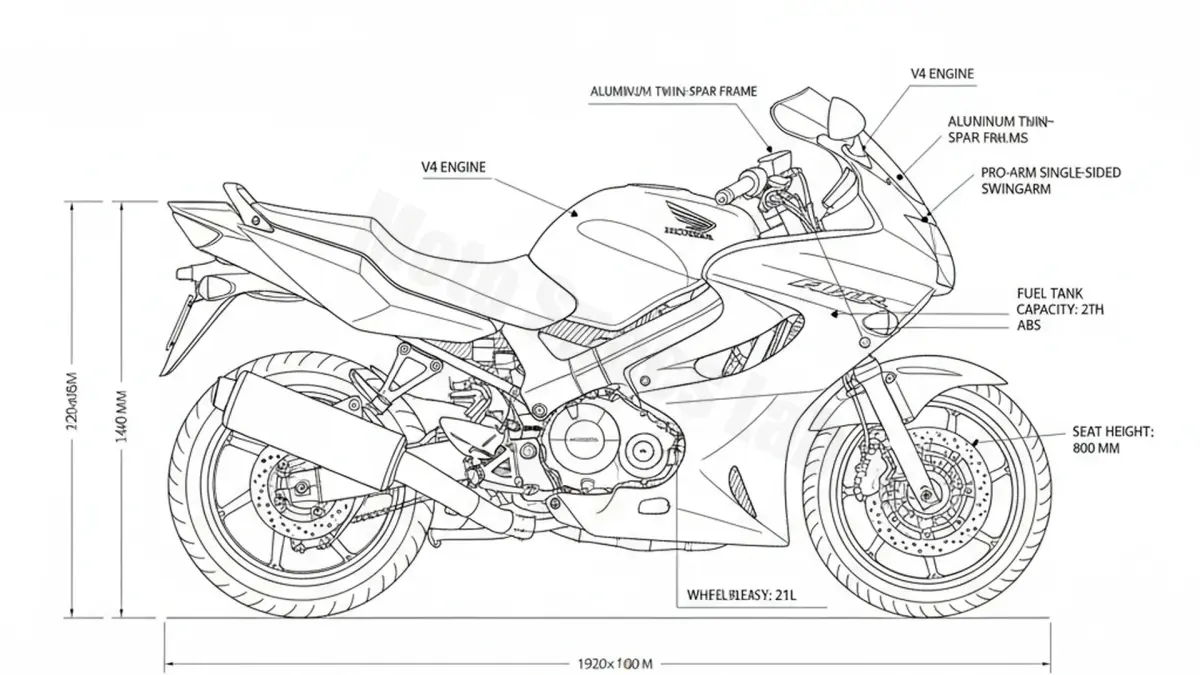
The RC46C is built around a twin-spar aluminum frame and the iconic Pro-Arm single-sided swingarm. This generation introduced the Dual Combined Braking System (DCBS) and optional ABS, significantly enhancing its safety profile for sport-touring. The 90-degree V4 configuration provides a unique firing order that delivers linear power and a distinct exhaust note that has become the hallmark of the Interceptor series.
Maintenance Essentials
To maintain the high-performance standards of the RC46C, adherence to technical fluid and component specifications is critical.
Lubrication and Fluids
The V4 engine requires high-quality synthetic or semi-synthetic oil to handle the thermal loads of the rear cylinders. Use 3.1 liters of SAE 10W-30 or 10W-40. Ensure the oil meets JASO MA standards to prevent clutch slippage. Oil changes should occur every 8,000 miles (12,800 km), though enthusiasts often recommend a 5,000-mile interval for longevity.
Tires and Handling
The VFR 800 is sensitive to tire wear due to its 210kg+ dry weight. Correct pressures are vital for maintaining the neutral steering characteristics:
- Front: 120/70 ZR17 M/C (58W) at 2.5 bar (36 psi)
- Rear: 180/55 ZR17 M/C (73W) at 2.9 bar (42 psi)
Ignition System
The RC46C utilizes specialized NGK IMR9B-9H Iridium spark plugs. Due to the VTEC head design, access to the rear cylinder bank requires pivoting the fuel tank and removing the airbox. These plugs are rated for long intervals but should be inspected for fouling if the VTEC transition feels sluggish.
Technical Challenges: The Charging System
A known technical vulnerability in the RC46C generation is the Regulator/Rectifier and Stator assembly. Owners should regularly inspect the wiring harness connectors for signs of heat discoloration. Upgrading to a MOSFET-style regulator is a common and recommended preventative measure to ensure the YTZ12S battery maintains a consistent charge.
Summary
The Honda VFR 800 RC46C remains a masterpiece of Japanese engineering. While the VTEC valve clearance checks are labor-intensive, the bike’s mechanical reliability and build quality are among the highest in the industry, making it a definitive choice for the discerning sport-touring rider.