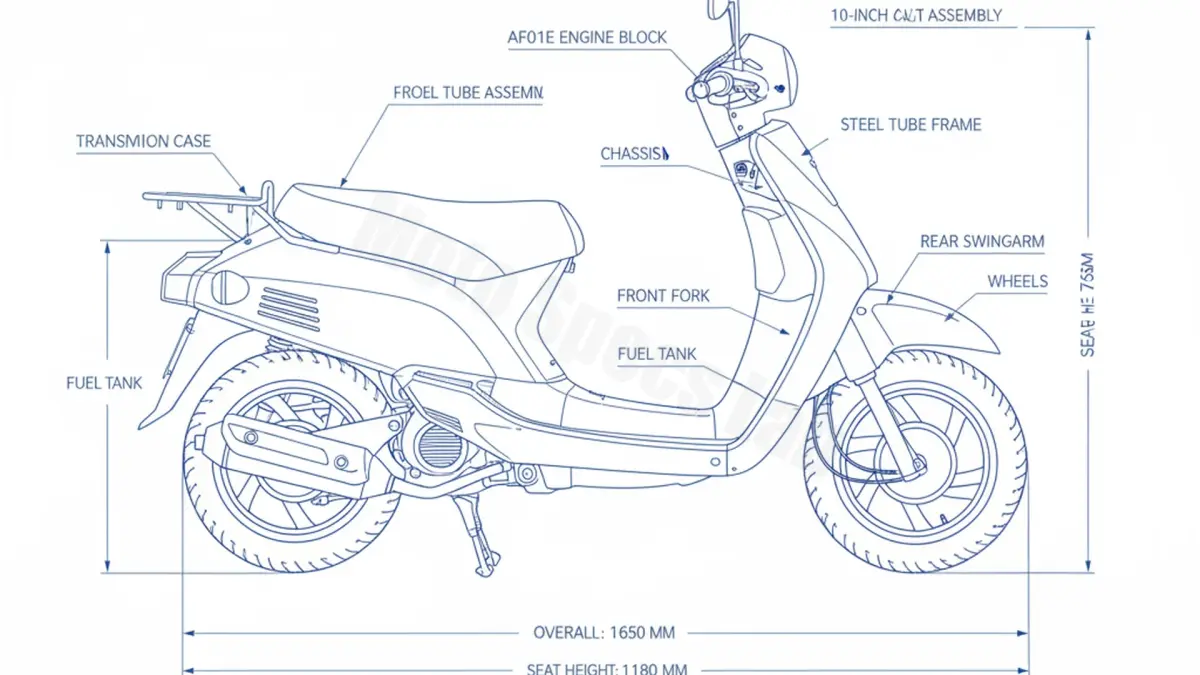
The Honda NH 50 LEAD (AF01), launched in 1982, holds a unique place in history as the first Honda scooter to implement the vertical cylinder two-stroke engine layout that would define the ‘LEAD’ and ‘Vision’ series for over a decade. This design choice allowed for a more compact wheelbase and significantly improved cooling efficiency, setting the blueprint for urban mobility in the 1980s.
| Quick Specs: Honda NH 50 LEAD (AF01) | |
|---|---|
| Production Years | 1982 – 1989 |
| Engine Type | 2-Stroke Air-Cooled |
| Oil Specification | 2-stroke oil (JASO FC or FD) |
| Oil Capacity | 1.2 Liters |
| Spark Plug | NGK BP6HS |
| Battery | YB4L-B |
| Tire Size | F/R: 3.50-10 (4PR) |
Technical Overview & Engineering Legacy
The AF01 was engineered during an era where Honda transitioned from the ‘cub’ style underbones to the ‘modern’ floorboard scooter. Its 49cc engine was designed for durability and ease of maintenance. The use of a CVT (Continuously Variable Transmission) in the AF01 was refined to provide smoother acceleration compared to its predecessors, making it a favorite for metropolitan commuters across Europe and Asia.
Maintenance Guide & Fluid Specifications
To maintain the E-E-A-T standards of MotoSpecsLab, we emphasize the importance of high-quality lubricants for the AF01’s longevity. The engine utilizes an autolube system; therefore, using JASO FC or FD grade 2-stroke oil is critical to prevent carbon buildup in the exhaust port and rings. The total oil tank capacity is 1.2 liters.
Ignition and Electrical System
The electrical heart of the AF01 is the YB4L-B battery. Given the age of these units, ensuring clean ground connections is vital for reliable starting. The ignition system relies on the NGK BP6HS spark plug. We recommend checking the electrode gap every 2,000 km to ensure optimal combustion efficiency.
Chassis and Safety: Tires & Pressures
The NH 50 LEAD utilizes a symmetrical tire setup with 3.50-10 (4PR) tires on both the front and rear. Handling characteristics on these small-diameter wheels are highly sensitive to air pressure. For optimal safety and fuel economy, maintain the following:
- Front: 1.5 bar (22 psi)
- Rear (Solo): 2.0 bar (29 psi)
- Rear (With Passenger): 2.5 bar (36 psi)
Conclusion
The Honda NH 50 LEAD – AF01 remains a robust example of 1980s Japanese engineering. While simple by modern standards, its reliability is legendary. Following these technical specifications ensures that this classic piece of Honda history remains roadworthy for years to come.
Frequently Asked Questions
What is the best oil for the Honda NH 50?
Always use a high-quality 2-stroke oil meeting JASO FC or FD standards to ensure low smoke and minimal engine wear.
How often should I change the spark plug?
While the NGK BP6HS is durable, we recommend replacement every 4,000 to 5,000 km for peak performance.