| Specification | Data |
|---|---|
| Production Years | 1981 – 1983 |
| Engine Type | Longitudinal V-Twin (80°) |
| Engine Oil | SAE 10W-40 (2.5 L) |
| Spark Plug | NGK DR8ES-L |
| Battery | YB14L-A2 |
| Front Tire | 100/90-18 56H |
| Rear Tire | 130/90-16 67H |
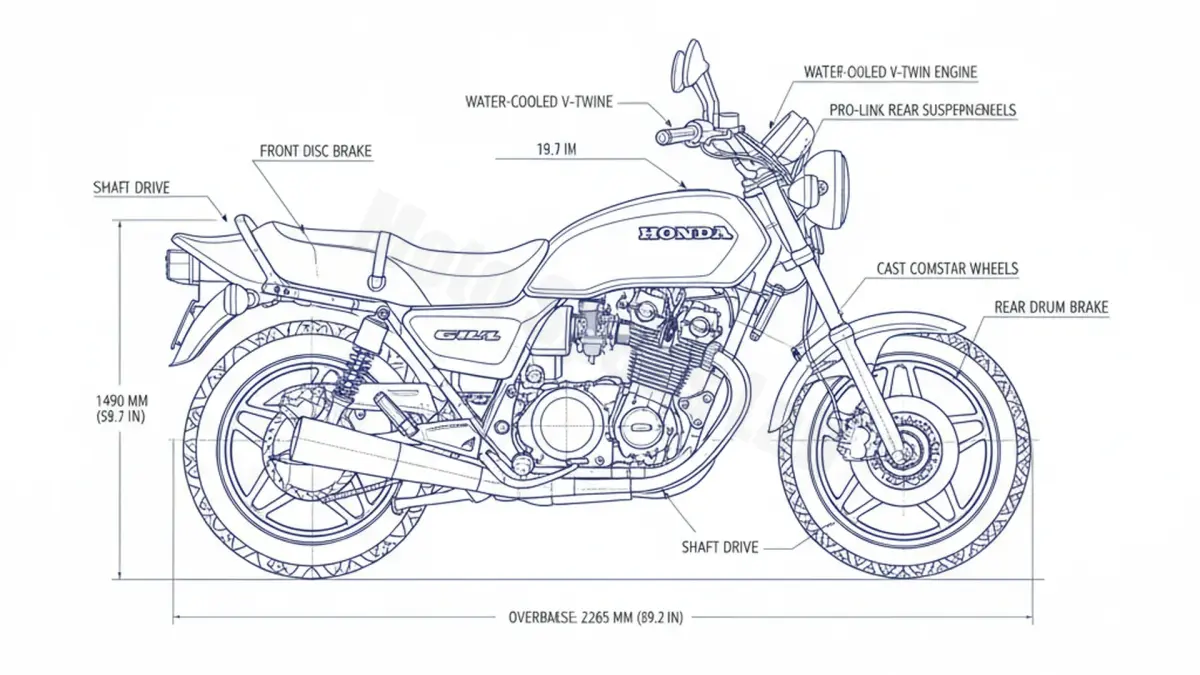
The Honda GL 500 D Silver Wing (PC02) holds a unique place in motorcycling history as the machine that introduced the revolutionary Pro-Link mono-shock rear suspension to Honda’s street-touring lineup. While often overshadowed by its larger Gold Wing sibling, the GL 500 was an engineering marvel that miniaturized the full-dress touring experience using the robust, liquid-cooled CX500 platform.
Engineering Overview
At the heart of the PC02 is the 80-degree longitudinal V-twin engine. By rotating the cylinder heads by 22 degrees, Honda engineers ensured that the carburetors and intake tracts remained tucked away from the rider’s knees, a design choice that prioritized ergonomics without sacrificing the low center of gravity provided by the shaft-drive layout. The ‘D’ (Deluxe) variant further solidified its touring credentials with factory-integrated fairings and luggage options.
Maintenance Essentials
Maintaining the Silver Wing requires attention to its specific cooling and lubrication needs. The engine utilizes a 2.5-liter capacity of SAE 10W-40 oil. To ensure clutch longevity and transmission protection, owners must use oil meeting JASO MA specifications. The ignition system relies on NGK DR8ES-L spark plugs, which should be gapped correctly to maintain the efficiency of the transistorized ignition system.
Tires and Chassis
Handling characteristics are heavily dependent on maintaining precise tire pressures. The factory recommends 2.0 bar (29 psi) for the front 100/90-18 tire and 2.25 bar (33 psi) for the rear 130/90-16 tire. Given the bike’s 1980s geometry, even minor deviations in pressure can lead to the ‘heavy’ steering sensation common in older tourers.
MotoSpecsLab Verdict
The Honda GL 500 D Silver Wing is more than a vintage curiosity; it is a testament to Honda’s era of peak mechanical experimentation. For the modern collector or enthusiast, it offers a sophisticated, shaft-driven touring experience with a level of reliability that remains impressive forty years later. Proper adherence to the maintenance schedule—particularly the cooling system and final drive lubrication—is key to preserving the PC02’s legendary durability.