| Component | Specification |
|---|---|
| Production Years | 1968–1975 |
| Engine Oil | SAE 10W-40 JASO MA (1.0 L) |
| Tires (Front/Rear) | F: 2.75-18 / R: 3.00-18 |
| Tire Pressure | F: 1.8 bar / R: 2.0 bar |
| Spark Plug | NGK D8EA (Gap: 0.6mm – 0.7mm) |
| Battery | 12N9-4B-1 |
Engineering Highlight: The Honda CB 125 K stands as a pinnacle of small-displacement engineering from the late 60s, notably being one of the few motorcycles in its class to utilize a 180-degree parallel-twin engine configuration. This design allowed the machine to reach higher RPMs and deliver a smoother power band compared to the utilitarian single-cylinder competitors of the era.
Technical Overview
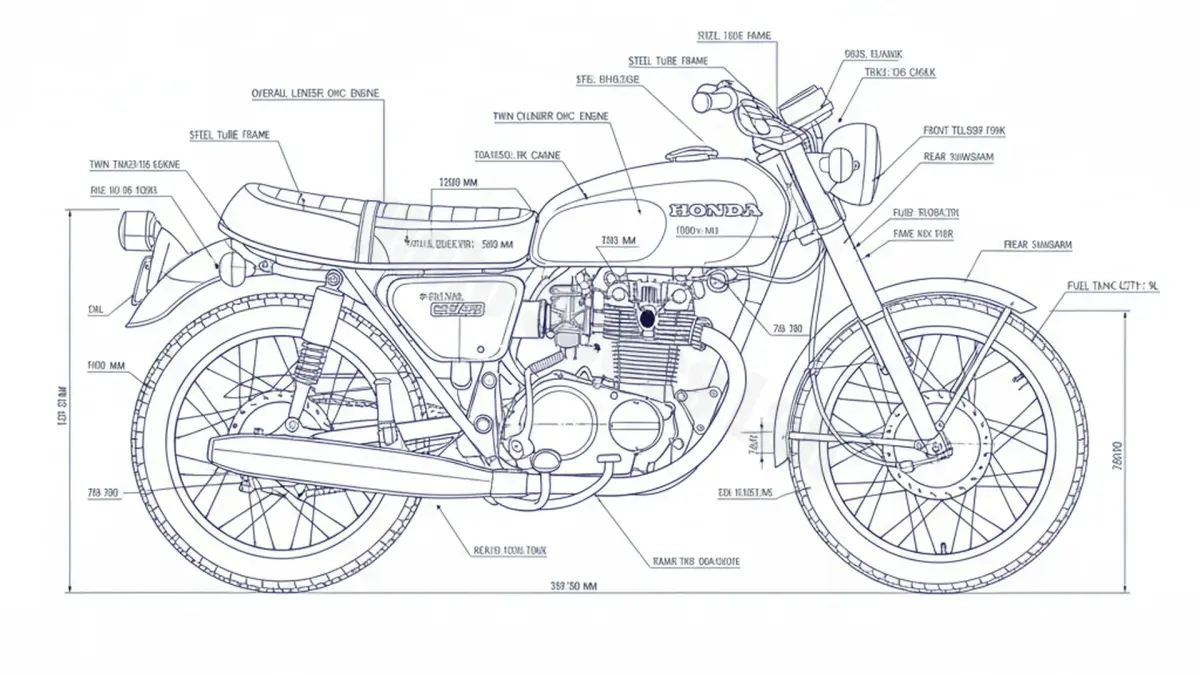
The CB 125 K series, encompassing the K1 through K5 variants, represents Honda’s transition from the ‘Benly’ styling to the more modern ‘CB’ aesthetic. Its heart is an OHC (Overhead Cam) air-cooled twin-cylinder engine that produces approximately 15 horsepower. For collectors and restorers, maintaining the mechanical integrity of these high-revving twins is paramount to preserving their vintage performance.
Maintenance & Service Guide
1. Lubrication System
The CB 125 K relies on a wet-sump lubrication system. Given the age of these engines and the lack of a modern spin-on filter, frequent oil changes are critical. We recommend a high-quality SAE 10W-40 JASO MA oil. The total capacity is exactly 1.0 Liter. Ensure the centrifugal oil cleaner is cleaned during major services to prevent sludge buildup.
2. Ignition & Electrical
The ignition system uses a contact breaker point setup. For optimal combustion and throttle response, use NGK D8EA spark plugs. The gap must be precisely calibrated between 0.6mm and 0.7mm. The electrical system is powered by a 12V circuit, utilizing the 12N9-4B-1 lead-acid battery. Ensure the charging system is tested regularly, as these vintage stators can weaken over time.
3. Chassis, Tires, and Safety
Handling characteristics are heavily dependent on correct tire selection and pressure. The CB 125 K uses 18-inch wheels both front and rear. The factory-recommended pressures are 1.8 bar (26 psi) for the front (2.75-18) and 2.0 bar (28 psi) for the rear (3.00-18). Over-inflating can lead to a harsh ride on the vintage telescopic forks, while under-inflation significantly degrades cornering stability.
MotoSpecsLab Verdict
The Honda CB 125 K is a masterclass in ‘miniature’ sophistication. While more complex to maintain than its single-cylinder siblings (like the CB125S), the twin-cylinder’s exhaust note and historical significance make it a highly desirable classic. Adhering to the specific tolerances for spark gaps and oil quality listed above is essential for anyone looking to keep this 1970s icon on the road.