| Specification | Value |
|---|---|
| Model Year | 1979 |
| Engine Type | Parallel-Twin (2-Zylinder) |
| Oil Requirement | 2.5 L – SAE 10W-40 API SE/SF |
| Tires (Front/Rear) | F: 3.25 – 19 4PR / R: 130/90 – 16 67S |
| Tire Pressure | F: 1.8-2.0 bar / R: 2.0-2.25 bar |
| Battery Type | YB12A-A |
| Spark Plug | NGK B7ES (0.7 – 0.8 mm gap) |
Engineering Heritage & Historical Significance
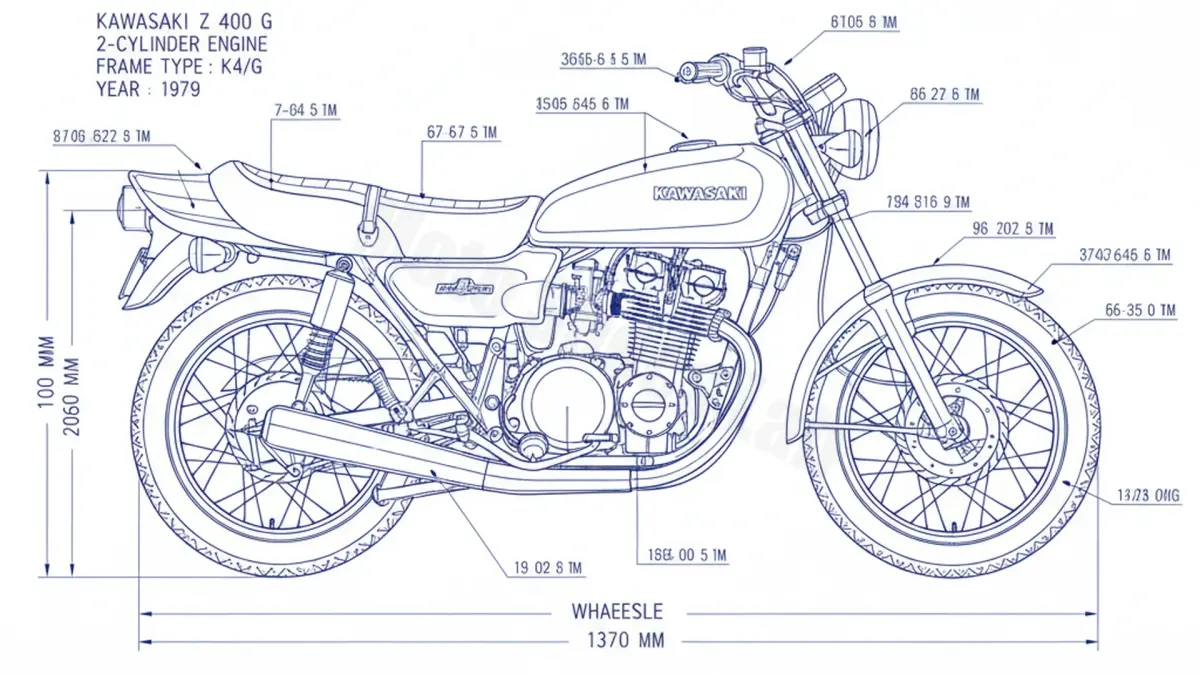
The 1979 Kawasaki Z 400 G, specifically the K4/G variant, represents a pivotal moment in Kawasaki’s engineering history. While the industry was rapidly moving toward four-cylinder configurations, Kawasaki refined this parallel-twin to offer a ‘Soft-Chopper’ or ‘LTD’ aesthetic that prioritized torque and reliability over raw top-end speed. A unique engineering highlight of this specific 1979 G-model is its transition to the 16-inch rear wheel, which significantly altered the rake and trail characteristics compared to the earlier standard Z400 models, providing the cruiser-like handling profile that became synonymous with the late-70s custom movement.
Technical Review: Performance and Architecture
The heart of the Z 400 G is a 398cc SOHC parallel-twin engine. Known for its robust bottom-end and accessible power band, the K4/G iteration was designed for durability. The use of a 180-degree crankshaft gives the engine its characteristic ‘thrum,’ providing a rhythmic exhaust note that separates it from the smoother four-cylinder siblings of the era. From a mechanical standpoint, the engine is remarkably serviceable, featuring straightforward valve adjustment procedures that make it a favorite for vintage enthusiasts today.
Maintenance Guide: Keeping the Legend Alive
Lubrication System
To maintain the integrity of the plain bearings and cam surfaces, MotoSpecsLab recommends a high-quality mineral or semi-synthetic SAE 10W-40 oil meeting API SE or SF standards. The total capacity is 2.5 Liters. Given the age of these engines, regular oil changes are the single most important factor in preventing premature wear on the overhead cam.
Ignition and Electrical
The electrical system relies on the YB12A-A battery. For optimal combustion efficiency, the NGK B7ES spark plugs must be maintained with a precise gap of 0.7 – 0.8 mm. Fouled plugs are common if the carburetors are not perfectly synced, so regular inspection is advised.
Chassis and Safety
The tire setup is specific to the ‘G’ model’s cruiser stance. The front uses a 3.25 – 19 4PR, while the rear utilizes a wider 130/90 – 16 67S. Maintaining correct pressures is vital for handling stability: 1.8 to 2.0 bar in the front and 2.0 to 2.25 bar in the rear, depending on load.
Editorial Verdict
The Kawasaki Z 400 G (K4/G) is a masterclass in late-70s versatility. While it may not possess the sheer power of the Z1, its mechanical simplicity and distinct styling make it a highly desirable classic. For the modern collector, following these technical specifications is essential for preserving the machine’s operational excellence.