| Component | Specification |
|---|---|
| Engine Oil | SAE 10W-40 JASO MA2 (3.6 L) |
| Tires (Front/Rear) | 120/70 ZR 17 / 180/55 ZR 17 |
| Tire Pressure (F/R) | 2.5 bar (36 psi) / 2.9 bar (42 psi) |
| Battery | YT12A-BS |
| Spark Plug | NGK CR9EIA-9 |
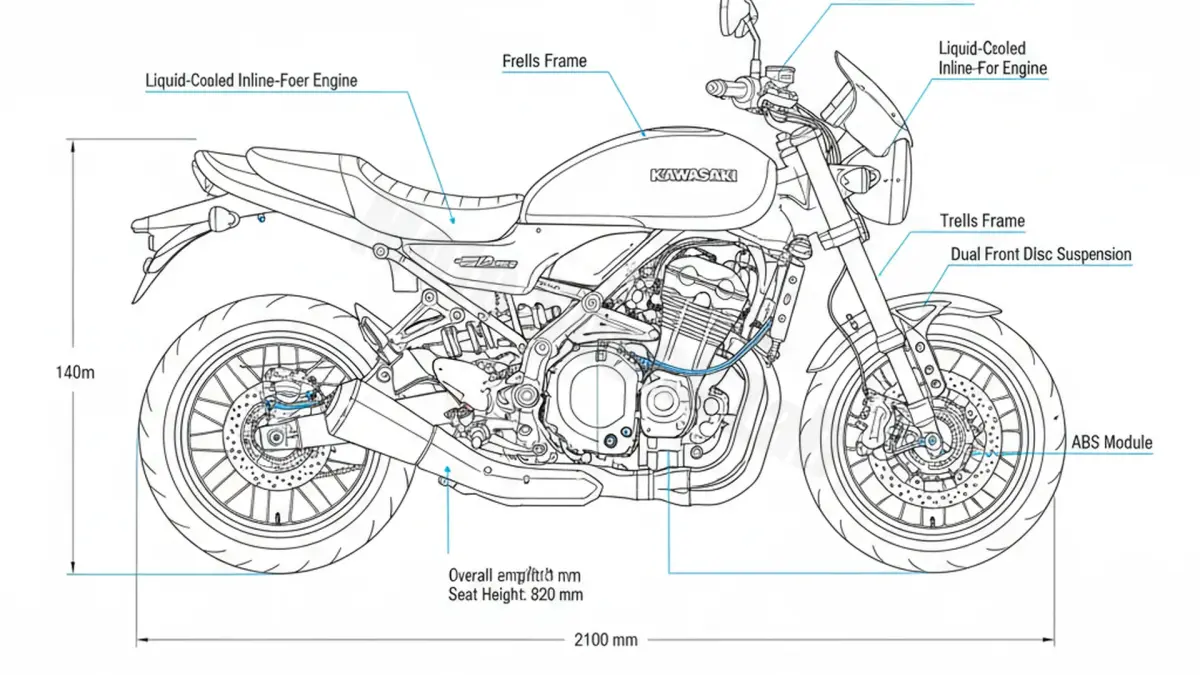
Engineering Highlight: While most modern retro-nakeds simply restyle existing frames, the Kawasaki Z 900 RS CAFE (ZR900E) features a chassis specifically re-engineered from the standard Z900. To achieve the iconic flat silhouette of the original Z1, Kawasaki engineers redesigned the entire trellis frame to lower the rear rails, while the engine was internally modified with a heavier flywheel and lower compression ratio to prioritize mid-range ‘character’ over peak horsepower—a rare instance of a manufacturer intentionally detuning for a superior tactile experience.
Technical Deep Dive
The ZR900E variant represents the Euro 4 compliant era of Kawasaki’s modern classic line. Underneath the Vintage Lime Green paint and the iconic bikini fairing lies a 948cc inline-four powerhouse. Unlike the high-revving Z900, the RS Cafe utilizes different cam profiles and a lower compression ratio (10.8:1 vs 11.8:1), ensuring that torque is available exactly where road riders need it most: between 3,000 and 7,000 RPM.
The exhaust system is another marvel of acoustic engineering. Kawasaki conducted extensive research into the ‘frequency’ of the exhaust note, designing the 4-into-1 system to emit a deep rumble at idle and a distinctive howl at high revs, specifically tuned to satisfy the auditory expectations of heritage enthusiasts.
Maintenance Essentials
Maintaining the ZR900E requires precision to preserve its longevity and performance. The SAE 10W-40 JASO MA2 oil is critical for the integrated wet clutch system. With a capacity of 3.6 liters, owners should ensure the bike is level when checking the sight glass. For ignition, the NGK CR9EIA-9 iridium plugs offer superior fouling resistance, which is vital for the tuned fuel injection maps of the Euro 4 engine.
Tire maintenance is equally paramount. The factory-specified 2.5 bar (front) and 2.9 bar (rear) pressures are optimized for the chassis’s geometry. Deviating from these pressures can significantly impact the turn-in characteristics of the 120/70 and 180/55 ZR 17 setup, potentially leading to ‘heavy’ steering or premature wear.
Frequently Asked Questions
What makes the CAFE model different from the standard RS?
The CAFE model (ZR900E) distinguishes itself through its aerodynamic front cowl, a lower-profile ‘stepped’ seat, and a drop-style handlebar that creates a more aggressive, forward-leaning riding position compared to the upright ergonomics of the standard RS.
How often should the spark plugs be replaced?
Given the use of high-performance NGK CR9EIA-9 iridium plugs, Kawasaki generally recommends inspection every 12,000 km (7,500 miles) and replacement every 24,000 km (15,000 miles), though this can vary based on riding conditions.
Is the battery difficult to access?
The YT12A-BS battery is located under the seat. Access is straightforward, requiring only the ignition key to remove the seat unit, making it easy for seasonal maintenance or connecting a trickle charger.