| Parameter | Specification |
|---|---|
| Production Years | 1987-1988 |
| Engine Type | Liquid-cooled, Inline-4, DOHC |
| Oil Grade | SAE 10W-40, 10W-50, 20W-40, or 20W-50 (API SE, SF, SG) |
| Oil Capacity | 3.5 Liters |
| Tires (Front/Rear) | 100/90-18 56V / 160/80-15 74V |
| Tire Pressure | F: 2.25 bar (32 psi) / R: 2.50 bar (36 psi) |
| Spark Plugs | NGK DR8ES or DR8ES-L |
| Battery | YB14L-A2 |
Engineering Heritage: The GPZ Heart
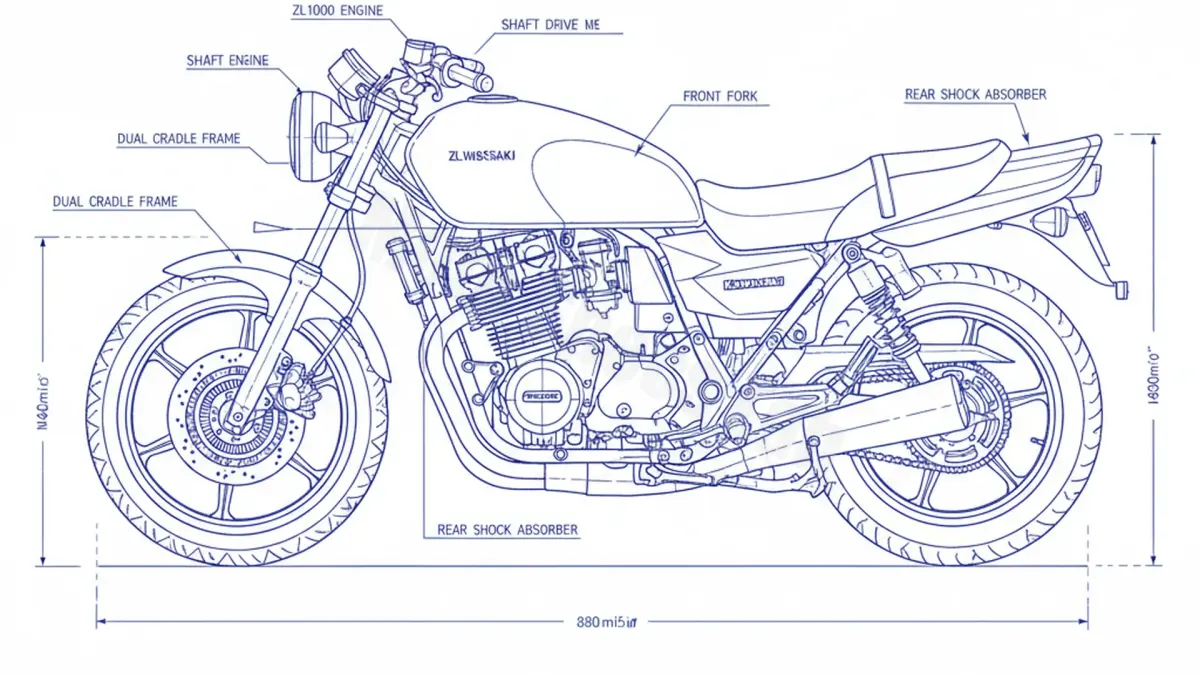
The Kawasaki ZL 1000, known internally as the ZLT00A, represents a unique moment in motorcycle history where the boundaries between cruiser comfort and superbike performance were intentionally blurred. A unique engineering highlight of the ZL 1000 is its direct lineage to the legendary GPZ1000RX (Ninja 1000R). While most cruisers of the late 80s relied on air-cooled V-twin torque, Kawasaki opted for the high-revving, liquid-cooled transverse four-cylinder architecture, detuning it slightly for improved low-to-midrange grunt while retaining its formidable top-end rush. This was a motorcycle designed specifically to dominate the stoplight-to-stoplight sprint.
Technical Performance & Handling
The ZL 1000 utilized a shaft drive system—a departure from the chain-driven Ninja—to provide a maintenance-free experience suitable for long-distance cruising. However, the short wheelbase and aggressive geometry made it feel more like a dragster than a traditional tourer. The 15-inch rear wheel, wrapped in a substantial 160/80-15 tire, provided the necessary contact patch to put the engine’s power to the pavement, though it required precise tire pressure management (36 psi) to maintain stability at high speeds.
Maintenance Guide: Keeping the Eliminator Alive
Engine Lubrication
The ZLT00A engine is a high-performance unit that demands quality lubrication. For most climates, a high-quality 10W-40 or 10W-50 oil meeting API SE, SF, or SG standards is required. The system holds 3.5 liters. Given the age of these machines, regular oil changes are critical to prevent cam chain tensioner wear and to protect the DOHC valvetrain.
Ignition and Electrical
The ignition system relies on NGK DR8ES or DR8ES-L plugs. Due to the tight packaging of the inline-four engine within the cruiser frame, ensure the spark plug wells are clean before removal to prevent debris from entering the combustion chamber. The electrical system is supported by a standard YB14L-A2 lead-acid battery; however, many modern owners opt for AGM equivalents to minimize maintenance.
Tires and Chassis
The 18-inch front and 15-inch rear configuration is classic for the ‘Eliminator’ series. To ensure optimal handling, maintain 32 psi in the front and 36 psi in the rear. Over-inflating the rear can lead to a harsh ride, while under-inflation can cause the bike to ‘hunt’ or wallow during cornering transitions.
Frequently Asked Questions
What is the primary difference between the ZL 900 and ZL 1000?
The ZL 1000 features a larger fuel tank, a more refined engine based on the 1000RX, and styling cues that leaned slightly more toward the ‘Gentleman’s Express’ rather than the raw ‘Power Cruiser’ aesthetic of the 900.
Can I use synthetic oil in the ZL 1000?
Yes, provided the synthetic oil meets the specified API ratings (SE, SF, SG) and is compatible with wet clutches (JASO MA/MA2). However, many owners of vintage Kawasakis prefer high-zinc mineral or semi-synthetic oils to better protect older internal components.