| Specification | Data |
|---|---|
| Model Series | Kawasaki GPZ 400 – KZ400J/ZX |
| Production Years | 1983-1985 |
| Engine Oil | SAE 10W-40 (API SE, SF, SG) / 2.5 Liters |
| Tires (F/R) | 90/90-18 51H / 110/90-18 61H |
| Tire Pressure | Front: 2.0 bar (28 psi) / Rear: 2.25 bar (32 psi) |
| Battery Type | YB12A-A |
| Spark Plug | NGK D8EA |
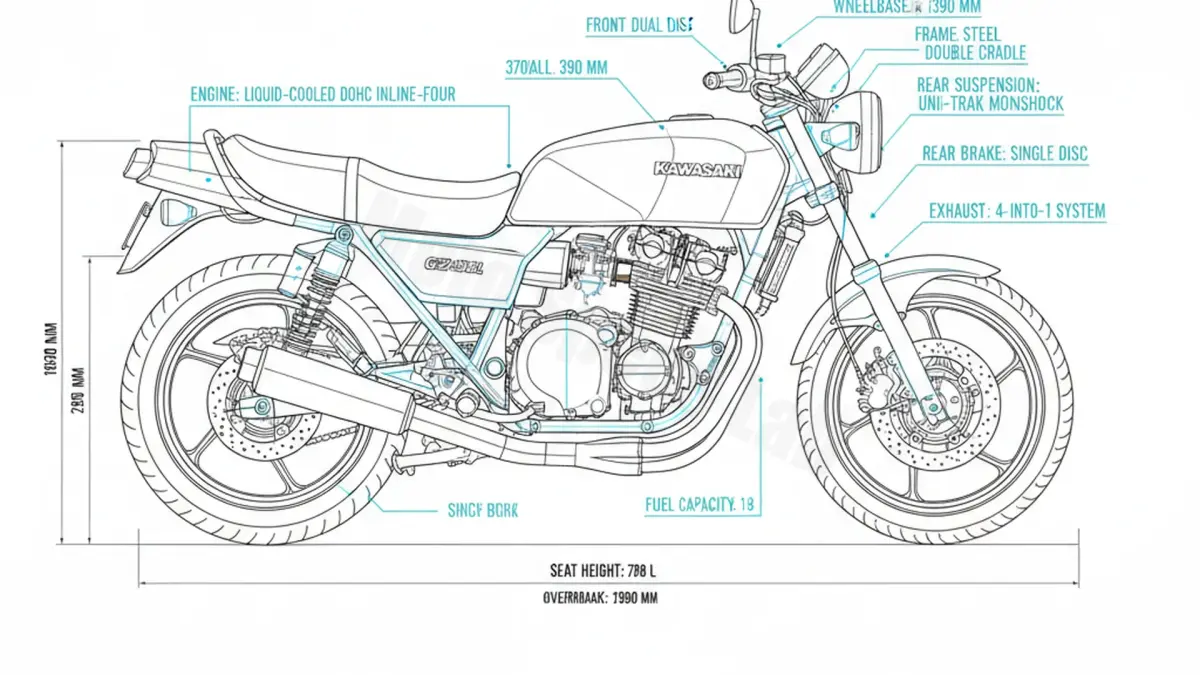
At MotoSpecsLab, we recognize the Kawasaki GPZ 400 (KZ400J/ZX) as a pivotal engineering milestone. A unique historical highlight of this machine is that it served as the technological bridge between the traditional air-cooled Z-series and the high-performance liquid-cooled Ninja lineage. Specifically, the GPZ 400 was one of the first middleweight motorcycles to successfully integrate Kawasaki’s ‘Uni-Trak’ rear suspension system with a high-revving DOHC inline-four, setting the blueprint for the 400cc sportbikes that would dominate the Japanese domestic market (JDM) for the next decade.
Engineering Legacy & Performance
The KZ400J and ZX variants represent the peak of air-cooled 400cc technology. While the world was looking toward larger displacements, Kawasaki refined the combustion efficiency of the 399cc plant, allowing it to scream toward a high redline with a distinct metallic howl. Its frame geometry was designed for agility, utilizing a double-cradle layout that offered a balance of rigidity and feedback that was revolutionary for the early 1980s.
Maintenance Guide & Technical Specs
Lubrication System
For optimal engine longevity and clutch performance (given the wet-clutch design), MotoSpecsLab recommends using a high-quality mineral or semi-synthetic SAE 10W-40 oil. The engine requires approximately 2.5 liters. Ensure the oil meets API SE, SF, or SG standards to avoid modern friction modifiers that may cause clutch slippage in vintage transmissions.
Wheels and Tires
Handling precision on the GPZ 400 is highly sensitive to tire condition. The factory dimensions are 90/90-18 for the front and 110/90-18 for the rear. Maintaining the correct pressure is critical for carcass stability: 2.0 bar (28 psi) in the front and 2.25 bar (32 psi) in the rear.
Electrical & Ignition
The ignition system relies on NGK D8EA spark plugs. These should be inspected every 5,000 km for carbon fouling or electrode erosion. The electrical system is powered by a YB12A-A lead-acid battery; given the age of these machines, ensure the charging system’s regulator/rectifier is outputting between 13.8V and 14.5V at 4,000 RPM to prevent battery sulfation.
Frequently Asked Questions
Q: Can I use synthetic oil in the GPZ 400?
A: Yes, provided it is a motorcycle-specific synthetic (JASO MA/MA2) that does not contain ‘Energy Conserving’ friction modifiers, which can damage the vintage wet clutch.
Q: Why is the 18-inch wheel setup important?
A: The 18-inch wheels provide the classic ‘neutral’ handling characteristics of 80s sportbikes, offering a larger contact patch during lean compared to smaller diameter wheels of that era.