| Specification | Data |
|---|---|
| Production Years | 2004–2006 |
| Engine Oil | SAE 10W-40 API SE-SL JASO MA (2.9 L) |
| Spark Plug | NGK CR9EK |
| Tire Size | F: 120/70 ZR 17 / R: 180/55 ZR 17 |
| Battery | YTX9-BS |
While the early 2000s mid-weight market was saturated with bored-out 600cc supersport engines, Kawasaki performed a masterstroke of engineering by doing the exact opposite. The ZR750J was born by sleeving down the Z1000’s engine rather than stretching a 600. This unique lineage gave the Z 750 a distinct torque advantage and a robust internal architecture that surpassed its immediate rivals in the street-naked category.
Engineering Overview
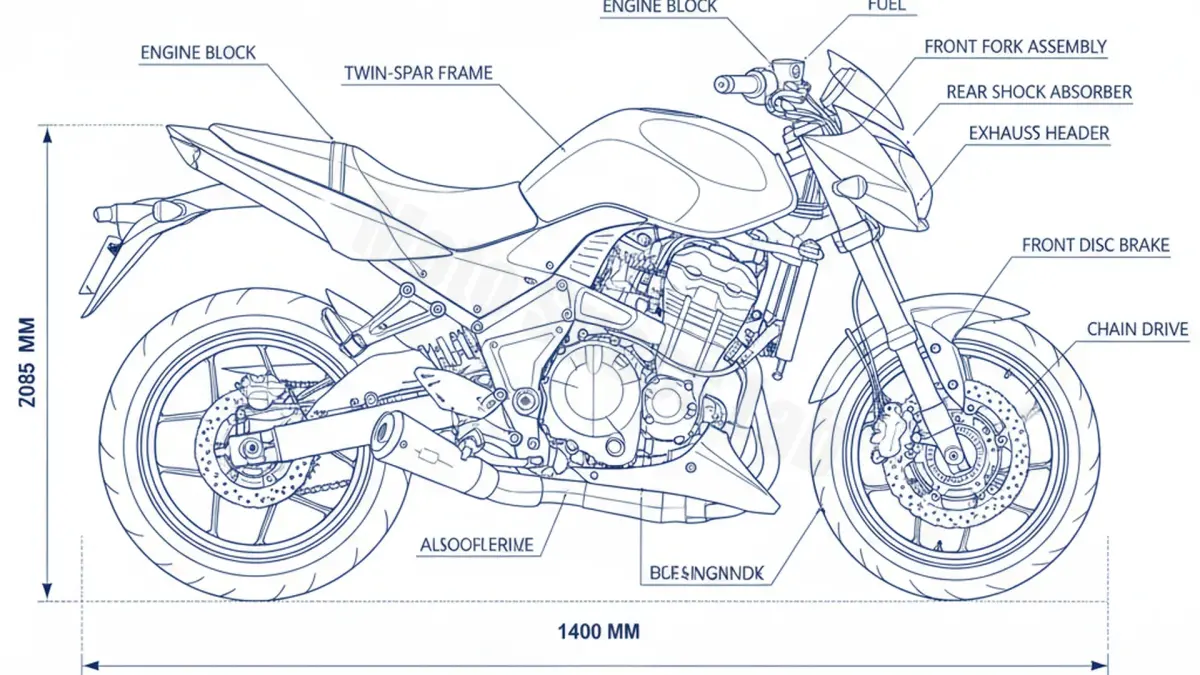
The ZR750J features an inline-four, liquid-cooled engine derived from the 2003 Z1000. By reducing the bore, Kawasaki retained the heavy-duty crankcase and cooling efficiency of a liter-class machine. The frame is a high-tensile steel diamond design, which, while heavier than aluminum counterparts, offers a predictable flex characteristic that makes the Z 750 exceptionally forgiving on imperfect public roads.
Maintenance Guide
Lubrication System
For optimal performance of the wet clutch and high-revving valvetrain, MotoSpecsLab recommends SAE 10W-40 meeting JASO MA standards. Total oil capacity including filter change is 2.9 Liters. Adhering to API SE-SL standards ensures the additives are compatible with the internal metallurgy of the mid-2000s Kawasaki blocks.
Ignition and Electrical
The ZR750J utilizes a high-energy ignition system requiring NGK CR9EK spark plugs. These dual-ground electrode plugs are critical for consistent combustion under the varying heat cycles of urban riding. The electrical system is supported by a YTX9-BS battery, which must maintain a steady 12.6V to ensure the fuel injection ECU initializes correctly during cold starts.
Chassis and Contact Patch
Precision handling on the Z 750 is highly dependent on tire pressure. We specify 2.5 bar (36 psi) for the 120/70 ZR 17 front and 2.9 bar (42 psi) for the 180/55 ZR 17 rear. Given the bike’s slightly top-heavy nature compared to modern nakeds, maintaining these pressures is vital to prevent ‘cupping’ of the front tire and to ensure agile turn-in response.
Editorial Verdict
The Kawasaki Z 750 (ZR750J) remains a benchmark for durability. It offers a ‘big bike’ feel in a manageable package. For the home mechanic, it is a dream; the layout is logical, and the parts commonality with the Z1000 makes sourcing components straightforward. It is a 4.5/5 star machine for riders seeking a balance of raw mechanical character and Japanese reliability.
Common Questions (FAQ)
Q: How often should I check the valve clearances?
A: Kawasaki recommends inspection every 24,000 km (15,000 miles), though the ZR750J is known for its valve train stability.
Q: Can I use synthetic oil?
A: Yes, provided it meets the JASO MA specification to prevent clutch slippage.