| Component | Specification |
|---|---|
| Engine Oil | 3.8 L (SAE 10W-40 API SG/SH/SJ/SL/SM JASO MA/MA1/MA2) |
| Front Tire | 120/70 ZR 17 (2.5 bar / 36 psi) |
| Rear Tire | 180/55 ZR 17 (2.9 bar / 42 psi) |
| Battery | YTZ10S |
| Spark Plug | NGK CR9EIA-9 |
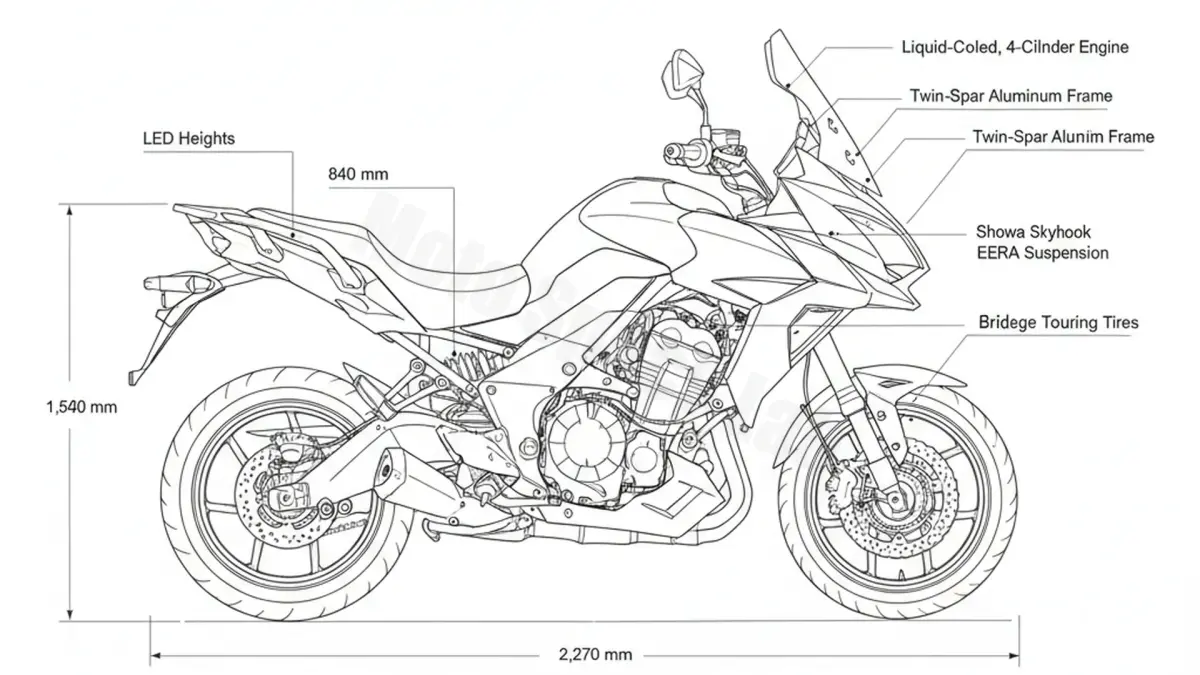
While most adventure-touring motorcycles opt for twin-cylinder configurations, the Kawasaki Versys 1000 SE remains a technological outlier. It is engineered around a 1,043cc inline-four engine—a direct lineage from the Z1000—refined specifically for linear torque delivery. A unique historical highlight of the 2019-2020 SE model is the debut of Showa’s Electronic Control Suspension (KECS) with Skyhook technology, which was one of the first systems to adjust damping in real-time based on vertical acceleration and pitch rate, effectively decoupling the chassis from the road surface.
Engineering Overview
The KLZ1000 (EURO 4) represents the peak of Kawasaki’s ‘Any-Road’ philosophy. Unlike the more dirt-focused competitors, the Versys 1000 SE utilizes 17-inch wheels front and back, prioritizing street handling and high-speed stability. The engine features electronic throttle valves which allow for seamless integration of the Kawasaki Cornering Management Function (KCMF) and cruise control. The SE trim specifically adds a high-grade TFT dashboard, cornering lights, and the highly durable ‘Self-Healing’ paint.
Maintenance Essentials
Maintaining the Versys 1000 SE requires precision, particularly concerning the lubrication system. The 1,043cc engine requires 3.8 liters of high-quality 10W-40 oil. To maintain the integrity of the wet clutch and the quick-shifter system, ensure the oil meets JASO MA2 standards. For optimal handling, tire pressures must be strictly maintained at 2.5 bar (36 psi) for the front and 2.9 bar (42 psi) for the rear, especially when utilizing the electronic preload adjustments for luggage or pillion passengers.
Technical FAQs
What battery is required for the Versys 1000 SE?
The motorcycle utilizes a YTZ10S battery. Given the heavy electronic load of the KECS suspension and LED lighting, maintaining a healthy charge is critical for ECU stability.
When should I replace the spark plugs?
The NGK CR9EIA-9 Iridium plugs are designed for longevity, but should be inspected according to the service manual (typically every 12,000 km) to ensure the high-compression inline-four maintains its fuel efficiency and EURO 4 compliance.
What is the benefit of the 180/55 ZR 17 rear tire?
The 180-section rear tire provides a larger contact patch for the 120hp engine, allowing for better power delivery during corner exit compared to the narrower tires found on traditional 19-inch front-wheel adventure bikes.