| Attribute | Specification |
|---|---|
| Model Year | 1980 |
| Engine Type | In-line 4, DOHC, DFI |
| Oil Type | SAE 10W-40 (API SE/SF) |
| Oil Capacity | 3.2 L |
| Front Tire | 3.25-19 4PR (2.0 bar / 28 psi) |
| Rear Tire | 4.00-18 4PR (2.25 bar / 32 psi) |
| Battery | YB14L-A2 |
| Spark Plug | NGK BR8ES |
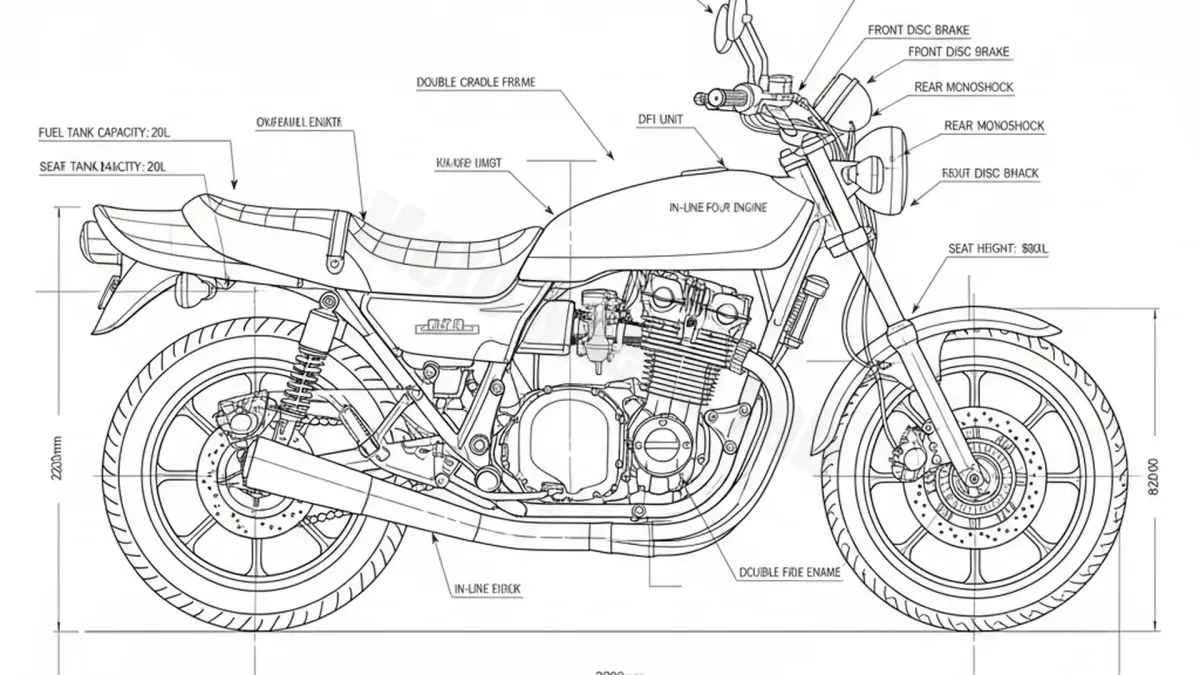
The 1980 Kawasaki Z 1000 DFI (KZT00A/H) marks a watershed moment in motorcycling history as one of the first production motorcycles to replace traditional carburetors with a microprocessor-controlled Digital Fuel Injection (DFI) system. Derived from Bosch’s L-Jetronic automotive technology, this system allowed the Z 1000 to achieve smoother throttle response and improved fuel efficiency long before EFI became the industry standard.
Engineering Overview
At the heart of the KZT00A/H lies the legendary air-cooled, transverse four-cylinder DOHC engine. While the mechanical architecture followed the successful ‘Z’ lineage, the DFI system introduced a complex array of sensors—including air temperature, engine temperature, and throttle position—to optimize the air-fuel mixture. For collectors and technicians, maintaining this early electronic system requires a blend of traditional mechanical skills and basic electronic diagnostic capabilities.
Maintenance Guide
Lubrication System
To preserve the longevity of the high-stress internal components, MotoSpecsLab recommends using SAE 10W-40 oil meeting at least API SE or SF standards. The system requires 3.2 liters for a complete change. Given the age of these units, regular oil analysis is advised to monitor for fuel dilution, a common issue in early injection systems.
Ignition & Electrical
The ignition system relies on NGK BR8ES spark plugs. These should be gapped precisely to factory specifications to ensure the DFI system’s signals result in efficient combustion. The electrical load of the fuel pump and ECU necessitates a healthy battery; the YB14L-A2 is the standard fitment. Ensure terminal connections are corrosion-free to prevent voltage drops that can confuse the ECU.
Chassis & Tires
Handling characteristics on the Z 1000 DFI are heavily dependent on tire pressure. We recommend maintaining 2.0 bar (28 psi) in the front (3.25-19) and 2.25 bar (32 psi) in the rear (4.00-18). Over-inflation can lead to a harsh ride on the vintage suspension, while under-inflation will make the steering feel heavy and unresponsive.
Editorial Verdict
The Kawasaki Z 1000 DFI is a masterpiece of transitional engineering. It offers the raw power of the 1970s superbike era tempered by the nascent technology of the 1980s. While the DFI system can be temperamental compared to modern standards, a well-maintained KZT00A/H remains a formidable and historically significant machine for the serious enthusiast.