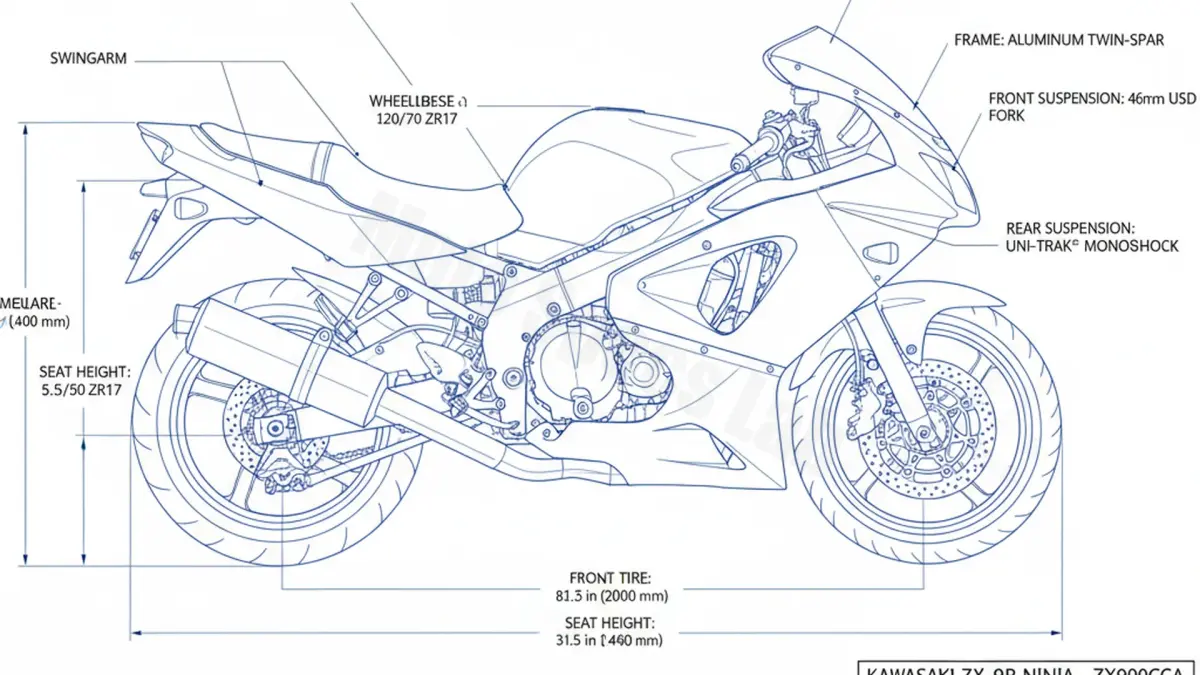
| Component | Specification |
|---|---|
| Production Years | 1998–1999 |
| Engine Oil | SAE 10W-40 (JASO MA) – 3.5 Liters |
| Front Tire | 120/70 ZR 17 (2.5 bar / 36 psi) |
| Rear Tire | 190/50 ZR 17 (2.9 bar / 42 psi) |
| Spark Plug | NGK CR9EK |
| Battery | YTX12-BS |
Engineering Highlight: The 35kg Weight Loss Program
The 1998 introduction of the ZX900CCA (C-model) marked a pivotal moment in Kawasaki’s engineering history. While the previous B-model was often criticized for its heavy, sport-touring bias, the C-model underwent a radical ‘weight-loss program,’ shedding a staggering 35kg (approx. 77 lbs). This was achieved through a total redesign of the frame—moving to a lightweight aluminum perimeter structure—and a more compact engine design, allowing the ZX-9R to finally challenge the dominance of the Honda Fireblade and the then-new Yamaha R1 in terms of power-to-weight ratio.
Technical Review: Performance and Handling
The ZX900CCA engine remains a masterpiece of late-90s inline-four engineering. Utilizing a 16-valve DOHC configuration, it delivers linear power with a ferocious top-end rush. Unlike its competitors, Kawasaki maintained the use of Keihin CVKD 40mm carburetors, which, when properly synced, offer smoother throttle transitions than many early fuel-injection systems. The inclusion of the Ram-Air system significantly boosts high-speed performance, a hallmark of the Ninja brand.
Maintenance Guide & Service Intervals
Lubrication System
For the ZX900CCA, maintaining oil quality is paramount due to the high-revving nature of the 899cc mill. Use SAE 10W-40 oil that meets JASO MA standards to ensure the wet clutch operates without slipping. A full change with filter requires 3.5 Liters.
Ignition and Electrical
The C-model utilizes NGK CR9EK dual-electrode spark plugs. These are designed to provide a more consistent spark under high compression. Ensure the gap is checked every 12,000 km. The electrical system is supported by a YTX12-BS battery; given the age of these machines, checking the charging system’s regulator/rectifier is a recommended preventative measure.
Chassis and Tires
The handling of the ZX-9R is highly sensitive to tire pressure. Running the 120/70 front at 36 psi and the 190/50 rear at 42 psi is critical for maintaining the intended geometry. Over-worn or under-inflated tires will lead to ‘heavy’ steering, a common complaint that is usually rectified by adhering to these factory specifications.
Summary
The Kawasaki ZX-9R ZX900CCA is a high-performance machine that balances raw speed with surprising ergonomics. For the modern collector or enthusiast, adhering to these technical specifications ensures that this 90s icon continues to perform at its peak engineering potential.