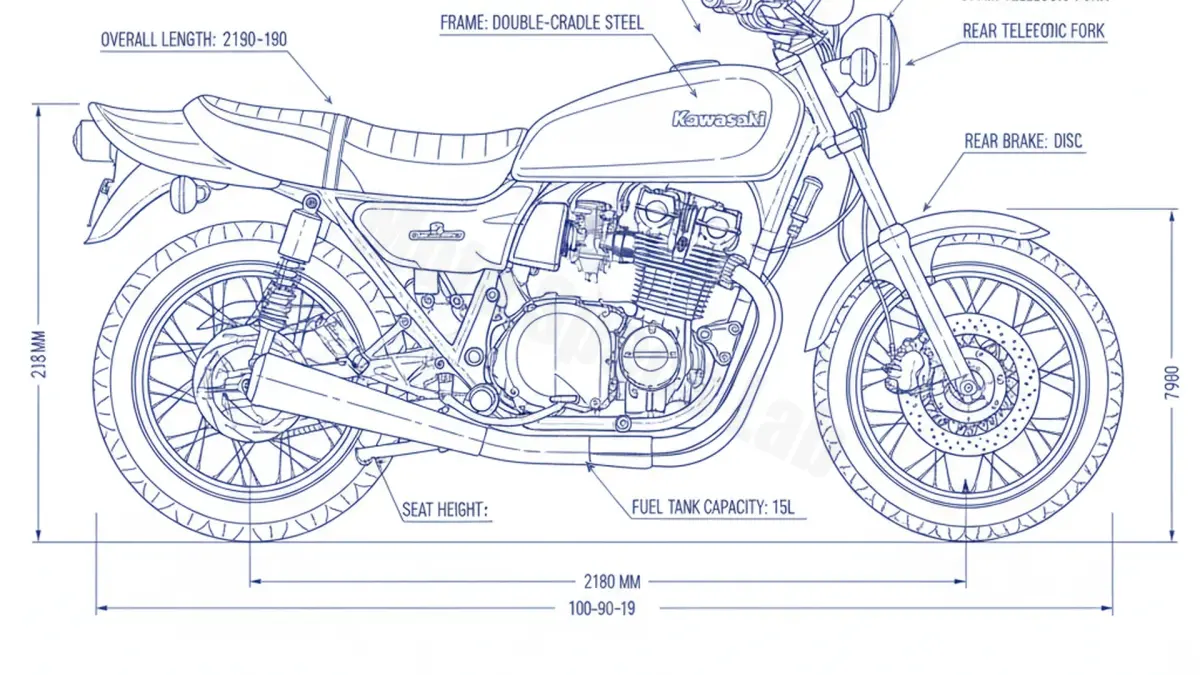
| Production Years | 1980–1984 |
|---|---|
| Engine Type | Inline-4, DOHC, 8-Valve |
| Oil Capacity / Grade | 2.5 L | SAE 10W-40, 10W-50, 20W-40, 20W-50 (JASO MA/MA2) |
| Tire Size (Front/Rear) | F: 100/90-19 / R: 120/90-18 |
| Tire Pressure (Front/Rear) | F: 2.0 bar (28 psi) / R: 2.25 bar (32 psi) |
| Battery Type | YB12A-A |
| Spark Plug | NGK B8ES / BR8ES |
Engineering Highlight: The Middleweight Powerhouse
A unique engineering highlight of the Kawasaki KZ750E is its direct lineage to the Z650; however, it wasn’t just a simple overbore. Kawasaki engineers implemented a significantly lighter crankshaft and revised the combustion chamber geometry, allowing the Z 750 L/SPORT to achieve a power-to-weight ratio that rivaled many 1000cc machines of the late 1970s. This specific model marked Kawasaki’s transition into the ‘modern’ middleweight era, balancing raw air-cooled power with a more agile frame.
Technical Review: Performance and Handling
The KZ750E/E-R series is celebrated for its DOHC inline-four engine, which is known for its reliability and smooth power delivery. In the ‘Sport’ and ‘L’ configurations, the bike offered a more aggressive stance compared to its cruiser-oriented siblings. The 738cc engine produces a broad powerband, making it a versatile choice for both spirited canyon riding and long-distance touring.
Handling is characterized by the 19-inch front wheel, which provides stability, though it requires slightly more input than modern 17-inch setups. The braking system, typically featuring dual front discs, was a significant upgrade for the time, providing the necessary stopping power for its 74hp output.
Maintenance Guide
Engine Lubrication
Maintaining the 2.5L oil capacity is critical for cooling this air-cooled unit. We recommend high-quality mineral or semi-synthetic oils meeting JASO MA2 standards to ensure the wet clutch operates without slipping. For most climates, 10W-40 is the standard, but 20W-50 is preferable for high-temperature summer riding.
Ignition and Electrical
The NGK B8ES (or the resistor BR8ES) spark plugs should be inspected every 5,000 km. Ensure the gap is set to factory specifications to prevent misfires. The YB12A-A battery requires regular electrolyte level checks if using a traditional lead-acid unit, though many modern owners opt for AGM equivalents for reduced maintenance.
Chassis and Tires
Correct tire pressure is vital for the KZ750’s handling characteristics. Running the 100/90-19 front at 2.0 bar (28 psi) and the 120/90-18 rear at 2.25 bar (32 psi) ensures the contact patch is optimized for the bike’s geometry. Over-inflating can lead to a harsh ride and reduced grip on vintage-style carcasses.
Frequently Asked Questions
Q: What is the best oil for the Kawasaki KZ750E?
A: Use a motorcycle-specific 10W-40 or 20W-50 oil with API SE to SJ and JASO MA/MA2 ratings.
Q: Can I use modern radial tires?
A: While possible, the narrow rim widths of the KZ750E are better suited for high-quality bias-ply tires in the original 100/90-19 and 120/90-18 sizes.