| Component | Specification |
|---|---|
| Engine Oil | SAE 10W-40 JASO MA2 (3.8 L) |
| Tires (F/R) | 120/70 ZR 17 / 180/55 ZR 17 |
| Tire Pressure | F: 2.5 bar (36 psi) / R: 2.9 bar (42 psi) |
| Battery | YTX9-BS |
| Spark Plug | NGK CR9EIA-9 |
While many manufacturers rely solely on aesthetics for retro-modern appeal, the Kawasaki Z 900 RS stands apart through its engineering heritage. A little-known fact regarding its development is that Kawasaki engineers utilized acoustic research to tune the exhaust note specifically. By analyzing the frequency of the original 1972 Z1, they designed the 4-into-1 pre-chamber and silencer to emphasize the deep, low-frequency rumble at idle and low speeds, making it the first Kawasaki model to have its exhaust sound specifically engineered for emotional resonance.
Technical Engineering Analysis
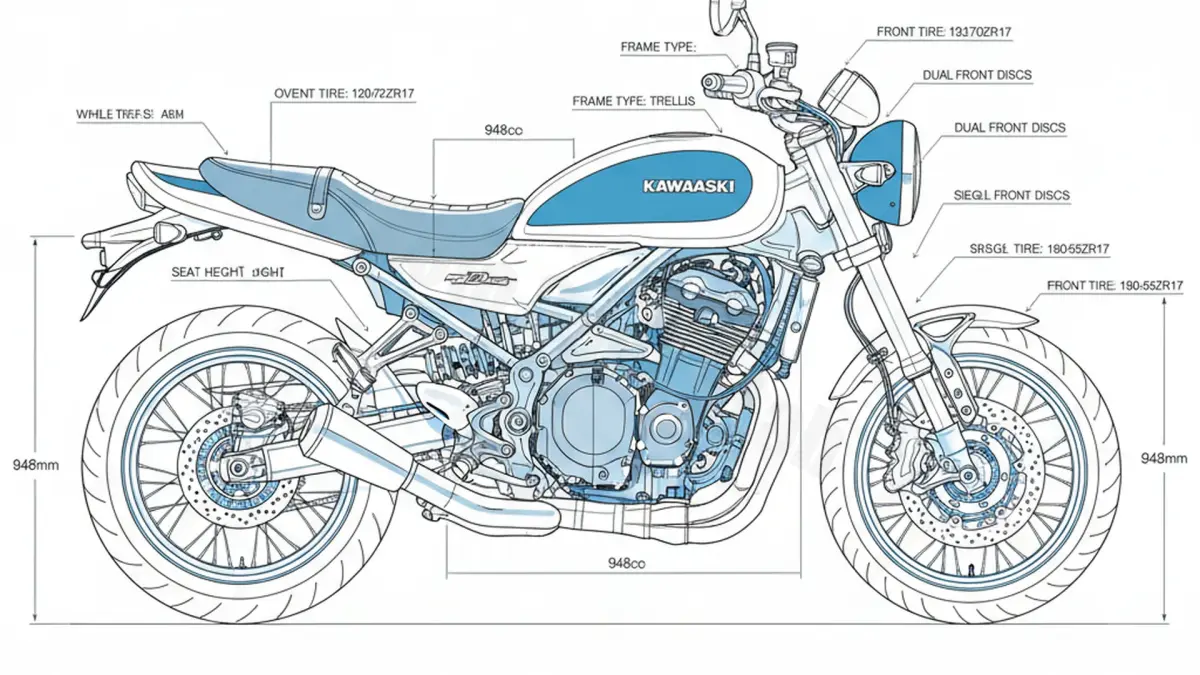
The Z900RS/26 is built around a lightweight trellis frame, specifically redesigned from the standard Z900 to accommodate the classic teardrop tank and horizontal line of the seat. The 948cc inline-four engine has been re-tuned for more low-to-mid-range torque, peaking at 98.5 Nm @ 6,500 rpm. This shift in power delivery requires precise maintenance of the fueling and ignition systems to preserve the smooth throttle response the model is known for.
Suspension and Braking
Unlike many vintage-styled competitors, the RS features high-performance 41mm inverted front forks with full adjustability (compression, rebound, and preload). The radial-mount monobloc calipers provide modern stopping power, necessitating strict adherence to brake fluid flush intervals to prevent moisture contamination in the ABS modulator.
Maintenance Guide & Service Requirements
1. Lubrication System
The engine requires 3.8 liters of SAE 10W-40 JASO MA2 oil. Given the high-revving nature of the inline-four, MotoSpecsLab recommends using a full synthetic ester-based oil to ensure shear stability during spirited riding. The oil filter should be replaced at every oil change to maintain internal cleanliness.
2. Ignition & Electrical
The NGK CR9EIA-9 Iridium spark plugs are essential for the Z900RS’s advanced ECU mapping. Iridium plugs offer a more stable spark and longer service life, which is critical for the bike’s Euro 4/5 emissions compliance. The electrical system is supported by a YTX9-BS battery; ensure terminal connections are torqued correctly to prevent vibration-induced intermittent power loss.
3. Chassis & Tires
The Z900RS is sensitive to tire wear and pressure. Maintaining 2.5 bar (36 psi) in the front and 2.9 bar (42 psi) in the rear is vital for maintaining the neutral handling characteristics of the 120/70 and 180/55 ZR 17 tire combination. Under-inflation will lead to heavy steering and uneven cupping of the front tread.
Service Interval Summary
- Oil Change: Every 12,000 km (7,500 miles) or annually.
- Spark Plug Inspection: Every 12,000 km; Replacement every 24,000 km.
- Valve Clearance: Every 42,000 km (26,000 miles).
- Coolant Flush: Every 3 years or 36,000 km.
In conclusion, the Kawasaki Z 900 RS is a masterclass in blending 70s aesthetics with modern reliability. By following these technical specifications and maintenance protocols, owners can ensure their machine performs with the same precision as the day it left the Akashi factory.