| Component | Specification |
|---|---|
| Model Years | 1990–1999 |
| Engine Type | Evolution V-Twin (Air-Cooled) |
| Oil Capacity / Type | 2.9 L / HD 360 SAE 20W50 |
| Tires (Front/Rear) | 130/90-16 / 130/90-16 |
| Tire Pressure (F/R) | 36 psi / 36-40 psi |
| Spark Plugs | HD 6R12 |
| Battery | 65989-97C |
The Engineering Legacy of the FLSTF
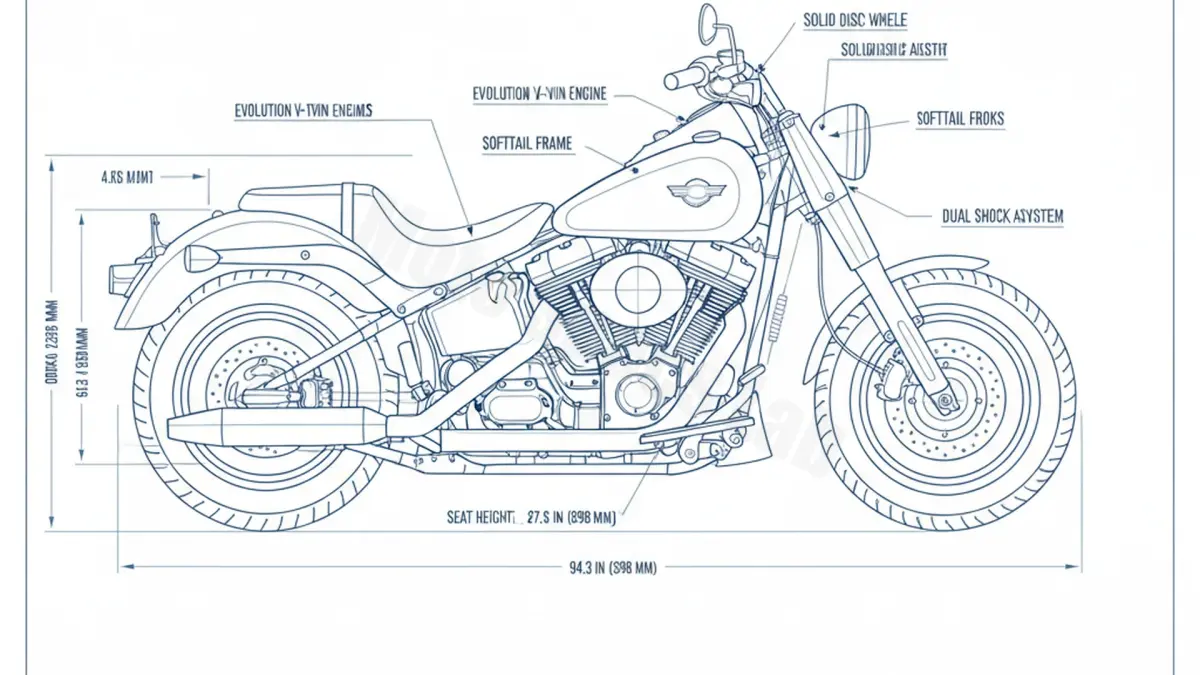
While urban legends often link the ‘Fat Boy’ name to the atomic bombs dropped on Japan, the true engineering marvel of the 1990 FLSTF was its introduction of the solid-cast aluminum ‘disc’ wheels. This design choice, led by Willie G. Davidson and Louie Netz, wasn’t just aesthetic; it redefined the heavy-cruiser profile, offering a massive, planted feel that became the hallmark of the Softail line. The Evolution engine (Blockhead), produced between 1984 and 1999, is widely credited with saving the Harley-Davidson brand, offering significantly improved thermal efficiency and oil-tight reliability compared to the preceding Shovelhead.
Mechanical Performance & Evolution Engine Dynamics
The Evolution engine in the FLSTF is a 1340cc (80 cubic inch) 45-degree V-twin. Unlike the rubber-mounted engines found in the Electra Glide or Road King of the same era, the Fat Boy’s engine is hard-mounted to the frame. This allows the rider to feel the ‘soul’ of the machine through direct vibration, though it requires meticulous attention to fastener torque during maintenance. The Softail chassis utilizes hidden rear shock absorbers beneath the frame, mimicking the look of a vintage ‘hardtail’ while providing modern suspension travel.
Maintenance Guide & Technical Specifications
To maintain the mechanical integrity of the Evolution engine, strict adherence to fluid intervals is paramount. The air-cooled nature of the V-twin places high thermal stress on the oil.
Lubrication System
The FLSTF requires 2.9 Liters of HD 360 SAE 20W50. Synthetic upgrades are acceptable but ensure they meet JASO MA2 standards if shared with the primary, though most Evo riders prefer dedicated weights for the three-hole system (Engine, Primary, Transmission).
Ignition and Electrical
For consistent combustion, use HD 6R12 spark plugs. The electrical system relies on the 65989-97C battery; given the high-compression start-up requirements of the 1340cc cylinders, maintaining a high Cold Cranking Amperage (CCA) is essential to prevent starter clutch wear.
Chassis and Contact Patch
The Fat Boy utilizes identical tire sizes for both front and rear: 130/90-16. Pressure management is critical for handling stability. Set the front to 36 psi (2.5 bar). The rear should be maintained at 36 psi (2.5 bar) for solo operation, but increased to 40 psi (2.8 bar) when carrying a passenger or heavy luggage to prevent sidewall overheating.
MotoSpecsLab Verdict
The 1990–1999 Fat Boy FLSTF remains the quintessential ‘modern classic.’ Its Evolution engine is remarkably over-engineered and, when maintained with the correct fluids and pressures, capable of exceeding 100,000 miles without a major overhaul. It is the gold standard for mechanical simplicity and iconic American industrial design.