| Specification | Detail |
|---|---|
| Production Years | 1997–2003 |
| Engine Types | Evolution 80ci (97-99) / Twin Cam 88B (00-03) |
| Oil Grade | SAE 20W50 Harley-Davidson 360 |
| Oil Capacity | 2.85 L (97-99) / 3.3 L (00-03) |
| Tire Size | F: 130/90-16 | R: 130/90-16 |
| Spark Plug | HD-6R12 |
| Battery | 65989-97C |
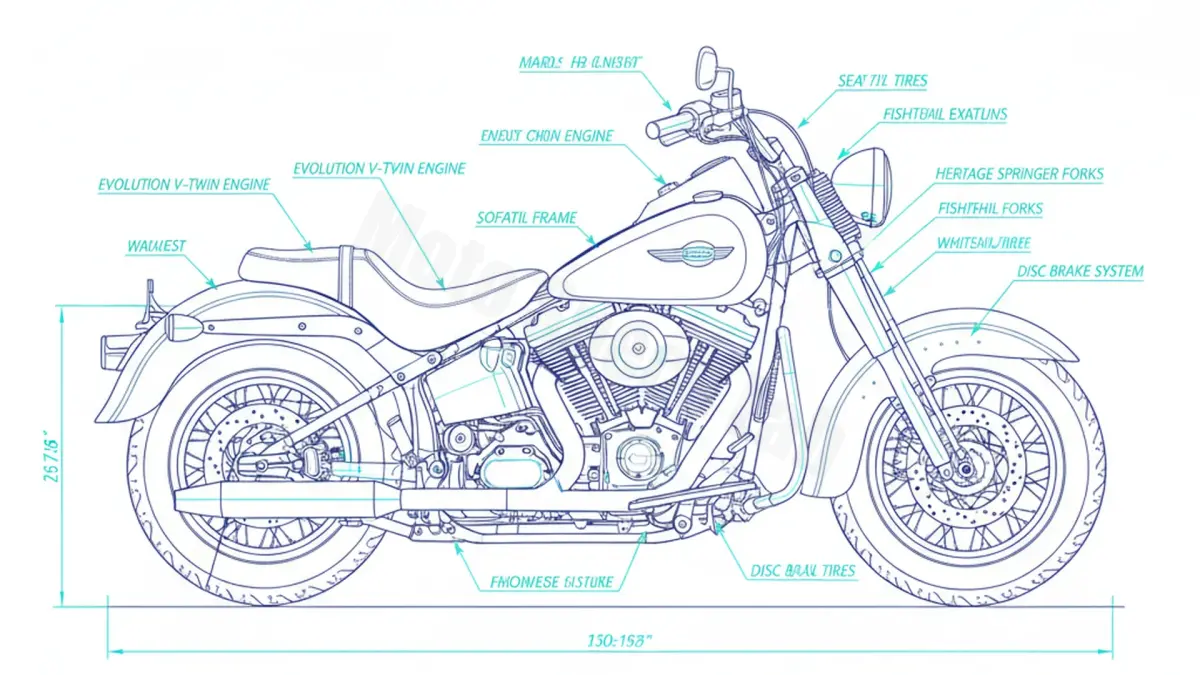
The Harley-Davidson FLSTS Heritage Springer is not merely a retro-styled cruiser; it is a significant engineering feat of the late 20th century. A unique historical highlight of this model is that it featured the first production-line chrome-plated Springer front end since the 1940s. Unlike the original rigid forks, the FLSTS fork was re-engineered using modern computer-aided design (CAD) to include a sophisticated floating fender system and a modern hydraulic damper, allowing it to handle the significantly higher torque and weight of modern V-Twin engines without the stability issues of its ancestors.
Engineering Evolution: Evo vs. Twin Cam
At MotoSpecsLab, we categorize the FLSTS into two distinct mechanical eras. From 1997 to 1999, the bike was powered by the 1340cc Evolution engine, known for its single-cam simplicity and ‘potato-potato’ cadence. In 2000, the model transitioned to the Twin Cam 88B. The ‘B’ denotes the counterbalanced version of the engine, which utilized dual internal counter-balancers to negate the primary vibrations of the rigid-mount Softail frame, offering a smoother ride at the expense of traditional mechanical feedback.
Maintenance Guide & Technical Requirements
Lubrication System
The lubrication requirements differ slightly between the two engine generations. While both utilize SAE 20W50 Harley-Davidson 360 mineral or synthetic oil, the dry sump capacities vary. The 1997–1999 Evolution models require approximately 2.85 liters, whereas the 2000–2003 Twin Cam models require 3.3 liters. Always check levels with the bike upright for the most accurate reading on the Softail oil tank dipstick.
Tires and Chassis Stability
The FLSTS relies on a square footprint provided by 130/90-16 tires on both ends. Given the unique geometry of the Springer fork, tire pressure is critical for preventing ‘low-speed flop.’
- Front: 2.5 bar (36 psi)
- Rear (Solo): 2.5 bar (36 psi)
- Rear (Two-up): 2.8 bar (40 psi)
We recommend inspecting the Springer rocker bearings every 5,000 miles for play, as these are the primary wear points that affect high-speed tracking.
Electrical & Ignition
The ignition system utilizes the HD-6R12 spark plugs. For the 2000+ models with Delphi Fuel Injection (if equipped/optioned) or the standard CV Carburetor, maintaining a gap of 0.038-0.043 inches is vital. The 65989-97C battery provides the high cold-cranking amps (CCA) required to turn over the high-compression V-twin cylinders.
Editorial Verdict
The FLSTS Heritage Springer remains one of the most collectible modern Harleys. Its combination of 1940s aesthetics with 1990s/2000s reliability makes it a masterpiece of industrial design. However, owners must be diligent with the Springer fork maintenance—specifically greasing the steering head and rocker bearings—to ensure the ‘old school’ look doesn’t result in ‘old school’ handling problems.