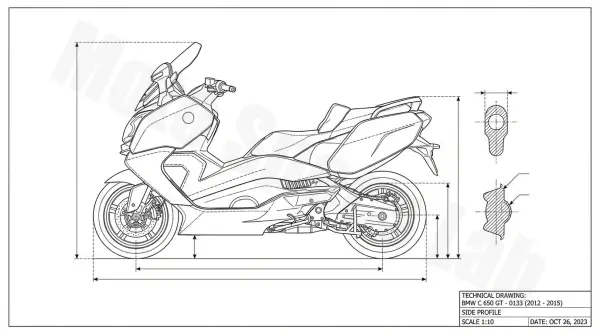
BMW C 650 GT – 0133 (2012 – 2015): The Ultimate Maintenance & Service Guide
The BMW C 650 GT (Internal code: 0133), produced between 2012 and 2015, redefined the maxi-scooter segment. Combining the comfort of a touring motorcycle with the ease of use of a scooter, it remains a popular choice on the used market. However, maintaining a high-performance machine like the C 650 GT requires diligence and a specific understanding of its unique BMW engineering.
In this comprehensive 1500-word guide, we will cover everything from routine oil changes to the complex CVT belt service, ensuring your “Gran Turismo” stays on the road for years to come. Whether you are a DIY mechanic or a dedicated owner, this guide serves as your primary resource for the 2012-2015 model years.
1. Understanding the BMW C 650 GT (0133) Technical Specs
Before diving into the tools, it is essential to understand what makes the 0133 model tick. The 2012-2015 models featured a 647cc parallel-twin engine manufactured by Kymco to BMW’s strict specifications, delivering 60 hp and 66 Nm of torque.
| Component | Specification |
|---|---|
| Engine Type | 647cc Liquid-cooled, 4-stroke parallel twin |
| Oil Capacity | 3.1 Liters (with filter change) |
| Oil Type | SAE 15W-50, API SJ / JASO MA2 |
| Coolant Capacity | Approx. 1.5 Liters |
| Final Drive | Chain in oil bath |
| Transmission | CVT (Continuously Variable Transmission) |
2. Routine Maintenance Schedule
BMW recommends specific service intervals to maintain the integrity of the C 650 GT. For the 2012-2015 models, the standard intervals are every 10,000 km (6,000 miles) or annually, whichever comes first.
The 10,000 km (6,000 Mile) Service
- Engine Oil and Filter: Replace.
- Brake System: Inspect pads, rotors, and fluid levels.
- Tire Pressure and Tread: Check for wear and dry rot.
- Lights and Electronics: Ensure the BMW CAN-bus system is error-free.
- Side Stand/Center Stand: Lubricate pivot points.
The 20,000 km (12,000 Mile) Major Service
This is the most critical service for the C 650 GT. In addition to the 10k tasks, you must:
- CVT Belt Replacement: The belt is rated for 20,000 km. Failure to replace it can lead to catastrophic transmission damage.
- CVT Rollers and Sliders: Inspect and replace if flat spots are present.
- Air Filter: Replace the intake air filter.
- Spark Plugs: Replace (NGK LMAR8D-J).
- Valve Clearance: Check and adjust (BMW recommends this every 40,000 km, but many enthusiasts check at 20,000 km).
3. Engine Oil and Filter Change: Step-by-Step
The parallel-twin engine in the C 650 GT is a dry-sump design with a separate oil tank. This makes the oil change slightly different from a standard motorcycle.
Tools Needed:
- 17mm Socket (Drain plug)
- Oil filter wrench (BMW-specific or 76mm 12-flute)
- 3.1 Liters of 15W-50 Synthetic Oil
- New crush washer and O-ring
The Process:
- Warm the Engine: Run the scooter for 5 minutes to thin the oil.
- Drain the Sump: Locate the drain plug on the bottom of the engine. Remove it and let the oil drain into a pan.
- Drain the Oil Tank: There is a secondary drain for the oil tank. Ensure both are emptied.
- Replace the Filter: Remove the old filter. Lubricate the gasket of the new filter with fresh oil and hand-tighten.
- Refill: Add 2.5 liters first, run the engine briefly, then top off to the 3.1-liter mark using the dipstick located under the seat/side panel.
4. The CVT System: Maintenance and Optimization
The CVT is the heart of the BMW C 650 GT’s drivability. Unlike a manual motorcycle, the CVT requires specific attention to the belt and centrifugal weights.
CVT Belt Replacement
The 2012-2015 models are known for generating significant heat within the CVT housing. If you notice a “shuddering” sensation when pulling away from a stop, your belt or clutch may be glazed. Use only the OEM BMW belt or a high-quality reinforced aftermarket belt (like Malossi or Gates) to ensure longevity.
Clutch Maintenance
The centrifugal clutch can accumulate dust. Every 10,000 km, it is advisable to open the CVT cover and blow out the clutch dust with compressed air. This prevents “clutch squeal” and ensures smooth engagement.
5. The Final Drive: Chain in Oil Bath
One unique feature of the C 650 GT (0133) is the final drive. Unlike most scooters that use a gear set, BMW used a chain enclosed in an oil bath. This provides the durability of a chain with the low maintenance of a shaft drive.
Maintenance Requirement: The oil in the chain case should be changed every 20,000 km. Use 75W-90 transmission oil. Check for leaks around the rear axle seal, as this was a known minor issue on 2012-2013 models.
6. Braking System and ABS
The C 650 GT is a heavy machine (approx. 260kg wet). The braking system consists of dual 270mm discs at the front and a single 270mm disc at the rear, managed by a Bosch 9.1 ABS system.
Brake Fluid Flush
Brake fluid (DOT 4) is hygroscopic, meaning it absorbs moisture. BMW recommends a fluid flush every 2 years regardless of mileage. Because of the ABS pump, it is vital to ensure no air enters the system during bleeding.
Parking Brake Adjustment
The C 650 GT features an automatic parking brake that engages when the side stand is deployed. If the scooter rolls while on the side stand, the cable needs adjustment via the tensioner located near the rear caliper.
7. Cooling System Care
The 647cc engine runs hot, especially in city traffic. The cooling system must be kept in top shape to avoid head gasket issues.
- Coolant Level: Check the expansion tank located behind the right-side fairing.
- Radiator Fins: Because the radiator sits low, it can collect road debris. Clean the fins gently with water to ensure maximum airflow.
- Hose Inspection: Check for cracking or bulging in the rubber hoses, especially near the clamps.
8. Electrical System and Battery
The 0133 model uses a CAN-bus electrical system. This means traditional “splicing” into wires for accessories is discouraged. Always use a CAN-bus compatible charger (like the BMW Optimate) to maintain the battery through the 12V accessory port.
Battery Access: The battery is located behind the right front fairing panel. If the scooter struggles to crank, check the battery voltage. These scooters require a strong 12.8V+ to initialize the ECU and ABS modules correctly.
9. Common Issues to Watch For (2012-2015 Models)
Every motorcycle has its quirks. For the early generation C 650 GT, keep an eye on these specific areas:
Cam Chain Tensioner (CCT)
Early 2012-2014 models often suffered from a noisy cam chain tensioner, which sounds like a “rattle” on cold starts. BMW released an updated hydraulic tensioner. If your scooter still has the old silver bolt version, consider upgrading to the black-capped updated version to prevent timing jumps.
Stalling Issues
Some owners reported stalling when coming to a stop. This is often traced back to the Idle Air Control (IAC) valve or a cracked vacuum hose. Cleaning the throttle bodies usually resolves this issue.
The “Fuel Flap” Release
The cable-operated fuel door can sometimes stick. Lubricate the latch mechanism with a dry silicone spray to prevent getting stranded at the gas station.
10. Tires and Suspension
The C 650 GT uses 15-inch wheels, which is standard for maxi-scooters but limits tire choices compared to 17-inch motorcycle wheels.
- Front Tire: 120/70 R15
- Rear Tire: 160/60 R15
- Pressure: 35 PSI Front / 42 PSI Rear (Adjust based on passenger load).
The front inverted forks are not adjustable, but the rear monoshock has preload adjustment. If the ride feels “wallowy,” increasing the rear preload can significantly improve handling when carrying luggage.
11. Bodywork and Aerodynamics
The GT model is known for its electric windscreen and extensive fairings. To maintain the bodywork:
- Windscreen Tracks: Lubricate the electric motor tracks with a small amount of white lithium grease to ensure smooth operation.
- Fasteners: BMW uses Torx bolts (T25 and T30) for almost all panels. Ensure they are snug, as vibrations can loosen them over time.
12. Conclusion: The Longevity of the C 650 GT
The BMW C 650 GT – 0133 (2012 – 2015) is a robust and sophisticated machine. While it requires more specialized maintenance than a small-displacement scooter, the rewards are immense. By following this 20,000 km service cycle—specifically focusing on the CVT belt, oil-bath chain, and cam chain tensioner—owners can easily see their scooters surpass the 100,000 km mark.
Proper maintenance not only ensures safety and performance but also preserves the resale value of this premium German maxi-scooter. Stay on top of your fluids, listen for unusual noises, and enjoy the open road on one of the most comfortable long-distance scooters ever built.
Disclaimer: This guide is for informational purposes. Always consult your official BMW Motorrad Service Manual for specific torque settings and safety procedures.