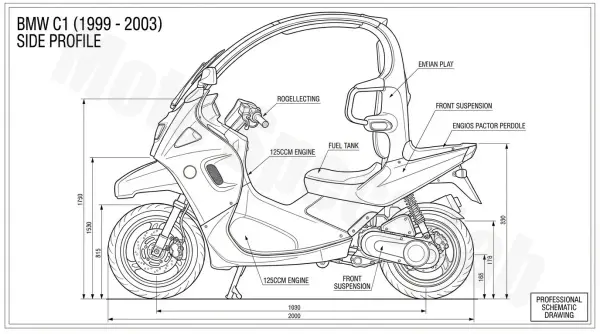
Comprehensive Maintenance Guide for BMW C1 125 (1999–2003)
The BMW C1 125 is a revolutionary piece of automotive history. Produced between 1999 and 2003, this “cabin motorcycle” combined the safety features of a car with the agility of a scooter. Powered by a liquid-cooled 125cc Rotax engine, the C1 remains a cult favorite for urban commuters. However, maintaining a BMW C1 125 requires specific knowledge due to its unique structural design and specialized mechanical components.
Whether you are a seasoned mechanic or a DIY enthusiast, this guide provides a deep dive into the essential maintenance tasks required to keep your BMW C1 125 running smoothly and safely.
1. Understanding the BMW C1 125 Engine
The heart of the C1 125 is a 4-stroke, single-cylinder, 4-valve engine manufactured by Rotax. It features electronic fuel injection (BMS) and a catalytic converter, which was ahead of its time for 125cc scooters.
Technical Specifications for Maintenance
| Component | Specification |
|---|---|
| Engine Oil Capacity | 1.1 Liters (with filter change) |
| Recommended Oil | SAE 10W-40 or 15W-50 (API SG/SH) |
| Spark Plug | NGK CR8EB |
| Idle Speed | 1500 ± 50 RPM |
| Valve Clearance (Cold) | Inlet: 0.10–0.15mm / Exhaust: 0.15–0.20mm |
2. Routine Engine Maintenance
Oil and Filter Change
The BMW C1 125 has a relatively small oil capacity. Frequent oil changes are the single most important task for engine longevity. It is recommended to change the oil every 6,000 km (3,700 miles) or annually.
- Step 1: Warm up the engine for 5 minutes to thin the oil.
- Step 2: Place the scooter on its center stand.
- Step 3: Locate the drain plug on the bottom right of the engine case.
- Step 4: Remove the oil filter cover (held by three bolts).
- Step 5: Replace the filter with a high-quality OEM or equivalent (e.g., Mahle OX 154).
- Step 6: Refill with 1.1L of high-quality semi-synthetic or synthetic oil.
Air Filter Service
The air filter is located on the left side of the vehicle. A clogged air filter will reduce fuel efficiency and cause the engine to run rich, potentially damaging the catalytic converter. Check every 6,000 km and replace every 12,000 km.
3. The CVT Drive System (Transmission)
The Continuously Variable Transmission (CVT) is the most critical maintenance area for performance. Because the C1 125 is heavy (approx. 185kg), the drive belt and rollers are under significant stress.
Drive Belt Replacement
The drive belt should be inspected every 6,000 km for cracks or thinning. Replacement is mandatory every 12,000 km to 15,000 km. A snapped belt on a C1 can be dangerous as it can lock the rear wheel.
Variator Rollers and Sliders
If you notice “flat spots” on your acceleration or a rattling sound at idle, your variator rollers are likely worn. When replacing the belt, always inspect the rollers. Standard weight is typically around 10.5g to 11g for the 125cc model. Use a light coating of high-temperature grease on the variator ramp if specified, though many modern rollers are designed to run dry.
4. Cooling System Maintenance
The BMW C1 125 is liquid-cooled. Overheating is a common issue if the system is neglected. The radiator is positioned behind the front wheel, making it susceptible to road debris and mud.
- Coolant Flush: Replace the coolant every 2 years. Use a 50/50 mix of distilled water and ethylene glycol-based antifreeze (nitrite-free).
- Radiator Cleaning: Periodically spray the radiator fins with low-pressure water to remove dirt.
- Thermostat: If the temperature gauge rises rapidly, check the thermostat and the electric cooling fan.
5. Braking System and ABS
Most BMW C1 models came equipped with ABS (Anti-lock Braking System). This system requires specific attention during maintenance.
Brake Fluid Flush
Brake fluid is hygroscopic (absorbs water). To prevent internal corrosion of the ABS modulator—which is very expensive to replace—flush the DOT 4 brake fluid every 2 years. Ensure that you bleed both the front and rear calipers until the fluid runs clear.
Pads and Discs
The C1 uses Brembo calipers. Check pad thickness regularly. If the pads wear down to the metal, you will damage the rotors. Given the weight of the C1, the front brake does about 70% of the stopping work; expect to change front pads more frequently than the rear.
6. Suspension and Tires
The C1 uses a Telelever front suspension system, similar to BMW’s larger touring bikes. This provides excellent stability under braking.
Tire Pressure
Correct tire pressure is vital for the C1’s unique handling characteristics. Low pressure can make the steering feel “heavy” and sluggish.
- Front (120/70-13): 2.3 bar (33 psi)
- Rear (140/70-12): 2.6 bar (38 psi)
Shock Absorbers
Check the rear shocks for oil leaks. The C1’s weight puts a lot of strain on the rear suspension. If the ride feels bouncy, the damping has likely failed, and the shocks should be replaced in pairs.
7. The “Cabin” and Safety Cell Maintenance
The BMW C1 is unique because of its roof and safety features. These require their own maintenance routine.
Windshield and Wiper
The C1 features a large glass windshield and a wiper system.
- Wiper Blade: Replace the wiper blade annually. A streaky blade is dangerous in rain.
- Washer Fluid: Keep the reservoir filled (located under the front “bonnet” cover).
- Glass Care: Use a specialized glass sealant to help rain bead off, as the vertical nature of the screen catches a lot of water.
Seatbelts
The C1 has a dual-seatbelt system. Inspect the webbing for frays and ensure the retraction mechanism works smoothly. If a belt is jammed, it must be replaced to maintain the vehicle’s safety rating (which allows the rider to ride without a helmet in many jurisdictions).
8. Electrical System and Battery
The battery is located in a compartment under the seat/rear area. Because the C1 has an electric starter and often runs accessories like heated grips or a sound system, the battery must be in top condition.
- Battery Type: 12V 14Ah (Lead-acid or AGM).
- Charging: If the C1 is not used for more than two weeks, use a BMW-compatible trickle charger. The C1 has a constant small drain from the clock and immobilizer.
- Fuses: The fuse box is located behind the small panel in the leg shield area. Carry spare 10A, 15A, and 20A fuses.
9. Troubleshooting Common BMW C1 125 Issues
Hard Starting: Often caused by a weak battery or a fouled spark plug. Check the fuel pump relay if the engine cranks but won’t fire.
Stalling at Idle: This is frequently due to a dirty Idle Air Control (IAC) valve or a cracked vacuum hose. The Rotax engine is sensitive to air leaks.
ABS Light Flashing: Usually indicates low battery voltage during startup. If it persists, check the wheel speed sensors for debris or gap distance.
10. Annual Maintenance Checklist
Follow this checklist every spring to ensure your BMW C1 125 is road-ready:
- Change engine oil and filter.
- Check CVT belt for wear and debris.
- Inspect tire tread depth and adjust pressure.
- Test all lights (Headlight, indicators, brake light).
- Check brake pad thickness and fluid levels.
- Lubricate the center stand pivot point (they are known to seize).
- Inspect the windshield wiper and washer spray.
- Check coolant level in the expansion tank.
Conclusion
The BMW C1 125 (1999-2003) is a masterpiece of engineering that requires diligent maintenance. By following this guide, you can ensure that your C1 remains a reliable, safe, and eye-catching commuter. Regular attention to the CVT system and frequent oil changes are the keys to reaching high mileages on the robust Rotax engine.
Always refer to the official BMW workshop manual for specific torque settings and advanced repairs. Proper care not only preserves the riding experience but also maintains the resale value of this modern classic.