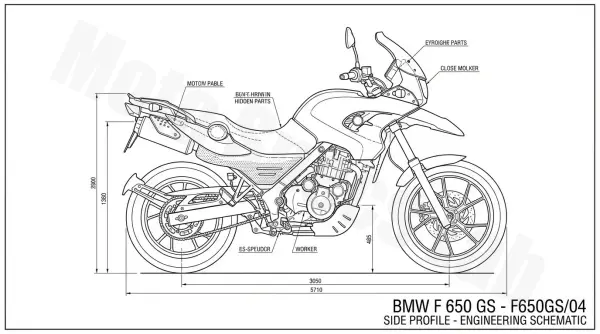
BMW F 650 GS Maintenance Guide: 2004 – 2007 (Twin Spark Models)
The BMW F 650 GS (2004-2007), often referred to by its internal code R13 or simply the “Twin Spark,” is a legendary dual-sport motorcycle known for its bulletproof Rotax engine and incredible fuel efficiency. Whether you are planning a transcontinental adventure or a daily commute, keeping your F650GS in peak condition is essential for safety and longevity.
This guide provides a detailed walkthrough of the essential maintenance tasks required for the 2004, 2005, 2006, and 2007 models. These years are specifically notable for the dual-ignition system (two spark plugs), which improved fuel combustion and smoothed out the low-end throttle response compared to the earlier single-spark versions.
Quick Reference Specifications
| Component | Specification |
|---|---|
| Engine Oil | SAE 15W-50 (Mineral or Semi-Synthetic), API SF/SG/SH |
| Oil Capacity | 2.3 Liters (Total with filter change) |
| Spark Plugs | 2x NGK DR8EB (Gap: 0.6 – 0.7mm) |
| Valve Clearance (Cold) | Intake: 0.03–0.11 mm | Exhaust: 0.25–0.33 mm |
| Tire Pressure (Solo) | Front: 1.9 bar (28 psi) | Rear: 2.1 bar (30 psi) |
| Coolant Type | Nitrite-free Ethylene Glycol (50/50 mix with distilled water) |
1. Engine Oil and Filter Change
The BMW F 650 GS uses a dry-sump lubrication system. This means the majority of the oil is stored in an external oil tank (located in the “fake” fuel tank area on the left side) rather than in the bottom of the engine. Changing the oil on this bike is more involved than on a standard wet-sump motorcycle.
Steps for Oil Change:
- Warm the Engine: Ride the bike for 10 minutes to thin the oil for better drainage.
- Drain the Oil Tank: Remove the left-side plastic fairing. Place a catch pan under the frame and remove the drain plug located on the frame downtube. Warning: The oil will shoot out horizontally initially.
- Drain the Engine Sump: Locate the 24mm drain bolt on the bottom of the engine. Remove it and allow the remaining oil to drain.
- Replace the Filter: The oil filter is behind a circular cover on the right side of the engine (3x 10mm bolts). Replace the paper filter and the O-ring on the cover.
- Refilling: Reinstall all drain plugs (use new copper crush washers). Pour in 2.0 liters of oil. Start the engine, let it idle for 30 seconds, then add the remaining 0.3 liters to reach the 2.3L total capacity.
2. Air Filter Maintenance
The airbox is located under the right-side fairing. Because the F 650 GS is an adventure bike, the air filter can clog quickly if you ride in dusty off-road conditions.
To access the filter, you must remove the right-side faux-tank panel. Unscrew the airbox cover and slide out the rectangular pleated paper filter. While some riders opt for reusable K&N filters, the OEM paper filters provide superior filtration for engine longevity in harsh environments.
3. The Dual Spark System (Spark Plugs)
The 2004–2007 models feature two spark plugs. One is located centrally, and the other is slightly to the side. Accessing them requires removing the center “tank” plastics. Use a thin-walled 18mm spark plug socket.
Pro Tip: Always blow out the spark plug wells with compressed air before removing the plugs. Dirt and pebbles often collect in these pockets and can fall into the combustion chamber once the plug is removed.
4. Valve Clearance Inspection
BMW recommends checking valve clearances every 10,000 km (6,000 miles). The F 650 GS uses a shim-under-bucket design. While the Rotax engine is known for holding its tolerances well, neglected valves can lead to hard starting and eventual engine damage.
Procedure Overview:
- Remove the valve cover (requires removing the battery and moving some wiring out of the way).
- Set the engine to Top Dead Center (TDC) on the compression stroke. Use the timing marks on the cams and the crankshaft locking bolt hole.
- Use feeler gauges to measure the gap between the cam lobe and the bucket.
- If measurements are out of spec, the camshafts must be removed to replace the shims.
5. Cooling System and the Water Pump Issue
A known “Achilles heel” of the BMW F 650 GS is the water pump seals. The pump is driven by plastic gears that can wear, or the seals can fail, allowing coolant to weep from a small hole at the bottom of the pump housing.
- Inspection: Regularly check the “weep hole” behind the rear brake lever. If you see oil or coolant dripping, your water pump seals are failing.
- Coolant Flush: Every two years, drain the coolant by removing the drain bolt on the water pump housing. Refill with a 50/50 mix of silicate-free coolant and distilled water.
- Bleeding the system: There is a bleed screw on the top right of the cylinder head. You must open this while filling to ensure no air pockets remain in the cooling jacket.
6. Drive Chain and Sprockets
The F 650 GS is a “thumper” (single cylinder), meaning it delivers power in large pulses. This can be hard on the drive chain. Proper tension and lubrication are vital.
- Chain Slack: Measure the slack at the midpoint of the bottom run. It should be between 35mm and 45mm while the bike is on its side stand.
- Cleaning: Use a dedicated chain cleaner and a grunge brush. Avoid high-pressure washers, which can force water past the O-rings.
- Sprocket Wear: Inspect for “hooked” teeth on the front and rear sprockets. If the teeth look like shark fins, it is time for a replacement set.
7. Braking System
The 2004-2007 models often came equipped with ABS. Maintenance of the Brembo calipers is straightforward but critical.
- Brake Pads: Check the thickness of the friction material. If it is less than 1.5mm, replace the pads. Sintered pads are recommended for better performance.
- Brake Fluid: DOT 4 fluid should be flushed every two years. If you have an ABS model, ensure you pump the brakes thoroughly during the bleed process to cycle the fluid through the ABS pump.
8. Battery and Electrical System
The battery is located centrally, high up under the faux-tank cover. Because it sits directly above the hot engine, the electrolyte in lead-acid batteries tends to evaporate quickly.
Maintenance Tip: If using a standard lead-acid battery, check the water levels every 3 months and top up with distilled water. Many owners upgrade to AGM (Absorbed Glass Mat) or Lithium batteries to eliminate this maintenance step and prevent acid overflow from damaging the frame paint.
9. Suspension and Tires
The front forks on the F 650 GS are non-adjustable. Over time, the fork oil loses its damping properties.
- Fork Oil: Change the fork oil every 20,000 km. Use a 7.5W or 10W fork oil depending on your weight and riding style.
- Headset Bearings: These bikes are prone to “notchy” steering head bearings. With the front wheel off the ground, turn the bars slowly. If you feel a “detent” in the center, the bearings need replacement.
- Tires: The standard sizes are 100/90-19 (Front) and 130/80-17 (Rear). Check for dry rot and tread depth regularly.
10. Common Issues to Watch For
Beyond standard maintenance, keep an eye on these F650GS-specific quirks:
- Swingarm Bearings: These are often under-greased from the factory. It is wise to pull the swingarm pivot bolt and grease the needle bearings every 40,000 km.
- Fuel Filter/Regulator: The fuel filter is also the pressure regulator. It is expensive and located under the seat. If the bike stumbles at high RPM, this filter may be clogged.
- Wiring Harness Rubbing: Check the wiring harness near the rear shock preload adjuster. It is known to rub against the frame, which can cause electrical shorts over time.
Summary Maintenance Schedule
- Every 10,000 km (6,000 miles): Change oil/filter, check valve clearance, inspect spark plugs, clean air filter.
- Every 20,000 km (12,000 miles): Replace spark plugs, replace air filter, change fork oil.
- Every 2 Years: Flush brake fluid, flush coolant, check battery health.
Conclusion
The BMW F 650 GS (2004-2007) is one of the most rewarding motorcycles to maintain yourself. Its mechanical layout is logical, and parts are widely available. By following this maintenance guide, you ensure that your “Twin Spark” remains a reliable partner for many miles to come. Regular attention to the oil levels, water pump health, and valve clearances will keep the Rotax 655 engine humming smoothly through any terrain.
Disclaimer: This guide is for informational purposes. Always consult your official BMW Service Manual for specific torque values and safety procedures.