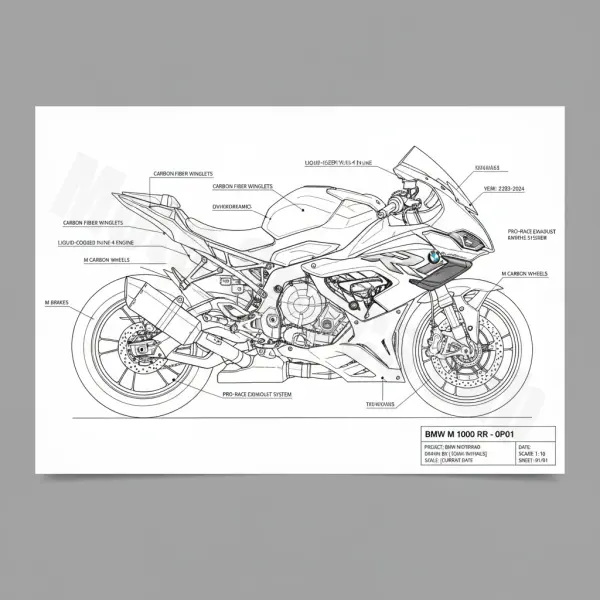
Ultimate Maintenance Guide: BMW M 1000 RR – 0P01 (2023-2024)
Mastering the care of the world’s most advanced homologation superbike.
Introduction to the BMW M 1000 RR (0P01)
The BMW M 1000 RR (Model Code 0P01) represents the pinnacle of German motorcycle engineering. Introduced for the 2023 and 2024 model years, this machine is more than just a motorcycle; it is a precision instrument designed for the World Superbike Championship (WSBK). Featuring radical aerodynamics, a high-revving ShiftCam engine, and extensive use of carbon fiber, the 0P01 demands a maintenance regimen that matches its performance capabilities.
Whether you are using your M RR as a dedicated track weapon or a premium road machine, adhering to a strict maintenance schedule is vital. This guide provides a comprehensive breakdown of the services required to keep your 212-horsepower beast running at peak efficiency while preserving its long-term value.
The Break-In Period: The First 600 Miles (1,000 km)
The first few hundred miles are the most critical in the life of the M 1000 RR. During the 0P01’s break-in phase, the engine components seat themselves, and the initial wear particles are captured by the oil filter.
- RPM Limits: BMW recommends staying below 7,000 – 9,000 RPM for the first 600 miles. Avoid full-throttle applications and constant speeds for long durations.
- The First Service: This must be performed by an authorized BMW Motorrad dealer to unlock the full RPM range and remove the electronic “running-in” governor.
- Oil Change: The factory “running-in” oil is drained and replaced with high-performance synthetic oil.
Regular Maintenance Schedule
BMW Motorrad specifies service intervals based on mileage and time. For the 2023-2024 M 1000 RR, the standard interval is 6,000 miles (10,000 km) or 12 months, whichever comes first.
| Component | Interval | Action Required |
|---|---|---|
| Engine Oil & Filter | 6,000 Miles / 1 Year | Replace (Use Advantec Ultimate 5W-40) |
| Valve Clearance | 18,000 Miles (30,000 km) | Check and Adjust (ShiftCam System) |
| Spark Plugs | 12,000 Miles (20,000 km) | Replace |
| Air Filter | 12,000 Miles (20,000 km) | Replace (More frequent if tracked) |
| Brake Fluid | Every 2 Years | Flush and Replace (DOT 4 LV) |
| Coolant | Every 3-4 Years | Check concentration and levels annually |
Engine Care: The ShiftCam Powerplant
Oil Requirements
The 0P01 engine utilizes BMW’s ShiftCam technology, which varies valve timing and stroke. This system requires high-quality lubrication to function correctly. Always use BMW Advantec Ultimate 5W-40 synthetic oil. The oil capacity is approximately 4.0 liters (4.2 quarts) including the filter change.
Cooling System
The M 1000 RR runs hot due to its high compression ratio and performance tuning. Ensure the radiator fins are clear of debris. The 2023-2024 models feature optimized cooling ducts; ensure these are not obstructed. Use a 50/50 mix of distilled water and BMW-approved antifreeze (nitrite-free).
Drivetrain and the M Endurance Chain
The 2023-2024 M 1000 RR comes standard with the M Endurance Chain. This chain features a Diamond-Like Carbon (DLC) coating on the rollers, which significantly reduces friction and wear.
- Lubrication: While marketed as “maintenance-free,” the M Endurance chain still benefits from occasional cleaning and light lubrication to prevent corrosion of the metal plates and to keep the O-rings supple.
- Tension: Check chain slack every 600 miles. Correct slack is typically 45-50mm measured at the center point between the sprockets on the side stand.
- Sprockets: Inspect for “hooking” or chipped teeth. High-torque launches can accelerate rear sprocket wear.
Braking System: M Brakes
The blue-anodized M Brake calipers are a hallmark of the 0P01. These are developed from WSBK experience and provide immense stopping power.
Brake Pad Inspection
Inspect pads every 3,000 miles. If the friction material is less than 1.5mm, replace them immediately. For track use, check pads after every weekend. Use genuine BMW M Brake pads or high-end sintered alternatives like Brembo Z04 for racing applications.
Fluid Maintenance
The M 1000 RR uses a complex ABS Pro system. Air in the lines can drastically affect the performance of the Dynamic Brake Control (DBC). If the lever feels spongy, a professional bleed of the ABS pump via the BMW diagnostic tool (ISTA) is recommended.
Suspension: Marzocchi and M Components
The 2023-2024 model features 45mm upside-down forks and a revised rear shock. While these are manually adjustable (unless equipped with DDC – Dynamic Damping Control), they require periodic servicing.
- Fork Seals: Inspect for oil weeping. Dust and track debris can compromise the seals.
- Linkage: The rear suspension linkage should be cleaned and regreased every 12,000 miles to ensure smooth movement.
- Settings: Keep a log of your compression and rebound settings. The M RR is sensitive to even 1-2 clicks of adjustment.
Wheels and Tires: Carbon Fiber Care
One of the most expensive components on the M 1000 RR is the M Carbon Wheels. These offer a massive reduction in unsprung weight but require specialized care.
Tire Pressures (Cold)
- Road: Front 36 PSI / Rear 42 PSI
- Track (Michelin Power Slick 2): Front 30-32 PSI / Rear 22-24 PSI (Warm)
Always check for hairline cracks in the carbon fiber after hitting a significant pothole or track curbing.
Electronics and Battery Management
The 0P01 is a rolling computer. It features a 6.5-inch TFT display, 6-axis IMU, and multiple riding modes. Maintenance of the electrical system is paramount.
The Lithium-Ion Battery
The M 1000 RR uses a lightweight M Lithium-Ion battery. These batteries have specific charging requirements.
- Charging: Only use a charger specifically designed for Lithium (LiFePO4) batteries. Using a standard lead-acid charger can damage the battery or cause a fire.
- Long-term Storage: If the bike is not ridden for more than 2 weeks, connect it to the M Battery Charger.
Software Updates
BMW frequently releases firmware updates for the ECU, TFT, and ABS modules. These can improve throttle mapping and quick-shifter smoothness. Ensure your dealer checks for updates during every annual service.
Aerodynamics and Carbon Fiber Bodywork
The 2023-2024 M 1000 RR features massive carbon fiber winglets that produce up to 49.8 lbs of downforce at 186 mph. Maintenance of these components is essential for stability.
- Fasteners: High downforce creates vibration. Periodically check the torque on the winglet mounting bolts.
- Cleaning: Use only pH-neutral soaps. Avoid abrasive waxes. Use a high-quality UV-protectant spray to prevent the clear coat on the carbon from yellowing over time.
- Windshield: The tall “bubble” screen is prone to scratching. Clean with a dedicated acrylic cleaner and a microfiber cloth.
Track Day Specific Maintenance
If you are racing or taking your 0P01 to track days, the standard maintenance intervals no longer apply. Performance-driven wear is significantly higher.
- Oil: Change every 2-3 track days.
- Air Filter: Inspect after every weekend; the high-velocity intake can suck in significant debris on track.
- Chain: Clean and lube after every track session once the chain is warm.
- Brake Fluid: Flush at the start of every season or if the fluid darkens.
Winter Storage Guide
If you are storing your M 1000 RR for the winter, follow these steps to ensure it is ready for spring:
- Fuel: Fill the tank and add a fuel stabilizer to prevent ethanol separation.
- Tires: Use front and rear paddock stands to prevent flat-spotting on the carbon wheels.
- Battery: Connect to a BMW M-specific Lithium-Ion tender.
- Cover: Use a breathable indoor cover to protect the carbon fiber and electronics from dust.
Frequently Asked Questions (FAQ)
What is the oil capacity of the 2023 BMW M 1000 RR?
The oil capacity is approximately 4.0 liters (4.2 quarts) when changing the filter. Always check the sight glass after a short warm-up and 5-minute settle period.
Can I use standard DOT 4 brake fluid?
BMW recommends DOT 4 LV (Low Viscosity). Standard DOT 4 can be used in an emergency, but the ABS Pro system is calibrated for the flow characteristics of the LV fluid.
How often should I check the valve clearances?
The official interval is 18,000 miles. However, for bikes used exclusively on the track, many teams check them every 6,000 miles to ensure the ShiftCam pins and cams are within tolerance.
Why is my M 1000 RR limited to 9,000 RPM?
This is the break-in rev limiter. It must be removed by a dealer during the 600-mile service using the BMW ISTA diagnostic system.