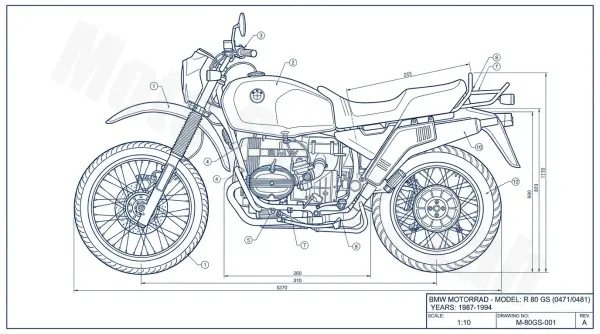
Ultimate Maintenance Guide: BMW R 80 GS (0471/0481) 1987 – 1994
The BMW R 80 GS, produced between 1987 and 1994 (model codes 0471 and 0481), represents the pinnacle of the “Airhead” era. While its larger sibling, the R 100 GS, grabbed the headlines with more power, the R 80 GS is often hailed by purists as the smoother, more balanced machine. Featuring the revolutionary Paralever rear suspension, this bike corrected many of the handling quirks of the earlier Monolever models.
Owning a classic BMW GS is a commitment to mechanical stewardship. Because these bikes are engineered with simplicity and accessibility in mind, most maintenance can be performed in a home garage. This guide provides a comprehensive overview of the service requirements to keep your 800cc boxer running for another 30 years.
Technical Specifications Quick Reference
| Component | Specification |
|---|---|
| Engine Type | Air-cooled, flat-twin (Boxer), 2 valves per cylinder |
| Displacement | 797cc |
| Engine Oil Capacity | 2.25 Liters (with filter change) |
| Oil Viscosity | 20W-50 (Mineral based recommended) |
| Gearbox Oil | 800ml – SAE 80W-90 GL5 |
| Rear Drive Oil | 260ml – SAE 80W-90 GL5 |
| Valve Clearance (Cold) | Intake: 0.10mm | Exhaust: 0.20mm |
| Spark Plugs | Bosch W7DC or NGK BP6ES |
| Tire Pressure | Front: 2.2 bar (32 psi) | Rear: 2.5 bar (36 psi) |
1. The Engine: Heart of the Airhead
Engine Oil and Filter Change
The R 80 GS engine relies heavily on its oil for both lubrication and cooling. Due to the lack of a liquid cooling system, the oil undergoes significant thermal stress. It is recommended to change the oil every 5,000 km (3,000 miles) or annually.
- Warm the engine: Take a short ride to ensure the oil is at operating temperature to allow for better drainage.
- Drain the oil: Remove the 19mm drain plug located at the bottom of the oil pan. Inspect the magnetic plug for excessive metal shavings.
- Replace the filter: The oil filter is located behind a cover on the right side of the engine. Crucial: Ensure the “white O-ring” and the shim are installed correctly. Incorrect installation can lead to a loss of oil pressure and engine failure.
- Refill: Add 2.25 liters of high-quality 20W-50 mineral oil. Avoid synthetic oils in these older engines as they can cause seal leaks.
Valve Clearance Adjustment
Airhead valves are notorious for “tightening” over time as the valve seats wear. This should be checked every 7,500 – 10,000 km.
- The engine must be stone cold (let it sit overnight).
- Remove the valve covers (center nut and two side nuts).
- Rotate the engine using the alternator nut (under the front engine cover) until the “OT” (Top Dead Center) mark is visible in the timing hole for the cylinder you are working on.
- Ensure both rockers have play (compression stroke).
- Adjust the intake to 0.10mm and the exhaust to 0.20mm using a feeler gauge.
2. Fuel System and Carburetion
The R 80 GS uses dual Bing 32mm Constant Velocity (CV) carburetors. These are reliable but require periodic synchronization to ensure smooth idling and vibration-free acceleration.
Carburetor Synchronization
If your bike vibrates excessively at 3,000 RPM or has a rough idle, the carburetors are likely out of sync. Use a vacuum gauge (like a Twin转向 or Harmonizer) or the “shorting method” to balance the cables.
- Adjust the idle speed screws first to achieve a steady 1,000 RPM.
- Adjust the cable tension so that both butterflies open simultaneously when the throttle is twisted.
Air Filter Maintenance
The air filter is housed in a plastic box above the gearbox. Given the GS’s off-road heritage, check this frequently if riding in dusty conditions. Replace the paper element every 15,000 km. Do not attempt to blow out paper filters with compressed air, as this creates microscopic holes that allow grit into the engine.
3. The Drivetrain: Gearbox and Paralever
The 1987-1994 models feature the Paralever system, designed to eliminate the “shaft effect” where the rear of the bike rises under acceleration. However, this system introduces extra u-joints that require attention.
Gearbox and Final Drive Oil
Change these fluids every 10,000 km. Use a high-quality GL5 rated 80W-90 gear oil.
Note: On the Paralever models, the driveshaft housing (the “swingarm”) runs dry. If you find oil inside the rubber boots, it indicates a failing seal in the gearbox or the final drive.
Driveshaft Inspection
The Paralever driveshaft is a known weak point. The u-joints are phased and balanced. Every 30,000 km, it is wise to remove the swingarm and inspect the u-joints for “notchy” movement or play. Replacing a failing driveshaft early is much cheaper than repairing a shattered swingarm housing.
4. Chassis, Suspension, and Brakes
Front Forks
The R 80 GS uses Marzocchi or BMW-branded forks depending on the exact year. Change the fork oil every two years.
- Standard oil: 7.5W or 10W fork oil.
- Capacity: Approximately 410cc per leg (verify with your specific sub-model manual).
Braking System
The front features a single Brembo dual-piston caliper. The rear uses a cable-actuated drum brake.
- Front: Flush the DOT 4 brake fluid every 2 years. Inspect pads for thickness. If the lever feels “mushy,” consider upgrading to a stainless steel braided brake line.
- Rear: Lubricate the brake cam pivot periodically. If the brake pedal has too much travel, adjust the knurled nut at the rear hub.
5. Electrical System
The BMW “Airhead” electrical system is generally robust but has two main enemies: heat and vibration.
The Charging System
The Bosch alternator produces about 280 watts. The Diode Board (rectifier) is mounted behind the front engine cover. The rubber mounts for this board can perish over time, leading to a loss of grounding and a failed charging system. Many owners replace these with solid metal mounts.
Battery Care
The R 80 GS uses a large lead-acid or AGM battery. Ensure the terminals are clean and tight. Because the charging system is relatively weak at low RPMs, using a battery tender is highly recommended if the bike is not ridden weekly.
6. Maintenance Schedule Summary
| Task | Interval |
|---|---|
| Engine Oil & Filter | 5,000 km / 6 Months |
| Valve Clearance Check | 7,500 – 10,000 km |
| Gearbox & Final Drive Oil | 10,000 km / 12 Months |
| Spark Plugs | 10,000 km |
| Air Filter Replacement | 15,000 km (More often if off-road) |
| Brake Fluid Flush | Every 2 Years |
| Grease Splines (Clutch/Drive) | 40,000 km |
7. Essential Tools for the R 80 GS Owner
To maintain your GS properly, you should have the following tools in your workshop:
- Feeler Gauges: Specifically 0.10mm and 0.20mm.
- Torque Wrench: Essential for cylinder head nuts and wheel bolts.
- Multi-meter: For troubleshooting the charging system.
- Oil Filter Wrench: The specific thin-walled socket for the BMW filter canister.
- Vacuum Gauges: For carburetor balancing.
Conclusion
The BMW R 80 GS (1987-1994) is a masterpiece of functional design. By following this maintenance guide, you ensure that your “Airhead” remains a reliable companion for both daily commutes and transcontinental adventures. The key to longevity for these machines is consistency; they do not like to sit idle. Regular oil changes and valve adjustments will keep the Boxer engine humming for hundreds of thousands of kilometers.
Whether you are a seasoned mechanic or a new owner, the R 80 GS offers a rewarding mechanical experience. Respect the torque specs, keep the splines lubricated, and enjoy the ride on one of the greatest dual-sport motorcycles ever built.
Disclaimer: This guide is for informational purposes. Always consult your official BMW factory service manual before performing mechanical work.