| Component | Specification |
|---|---|
| Production Years | 1983 – 1988 |
| Engine Oil | SAE 10W-40 (JASO MA) |
| Oil Capacity | 2.1 L (2.5 L with filter) |
| Tires (Front/Rear) | 100/90-18 56H / 110/90-18 61H |
| Tire Pressure (F/R) | 2.25 bar / 2.50 bar (2.80 with passenger) |
| Battery | YB12A-A |
| Spark Plugs | 4x NGK DPR8EA-9 |
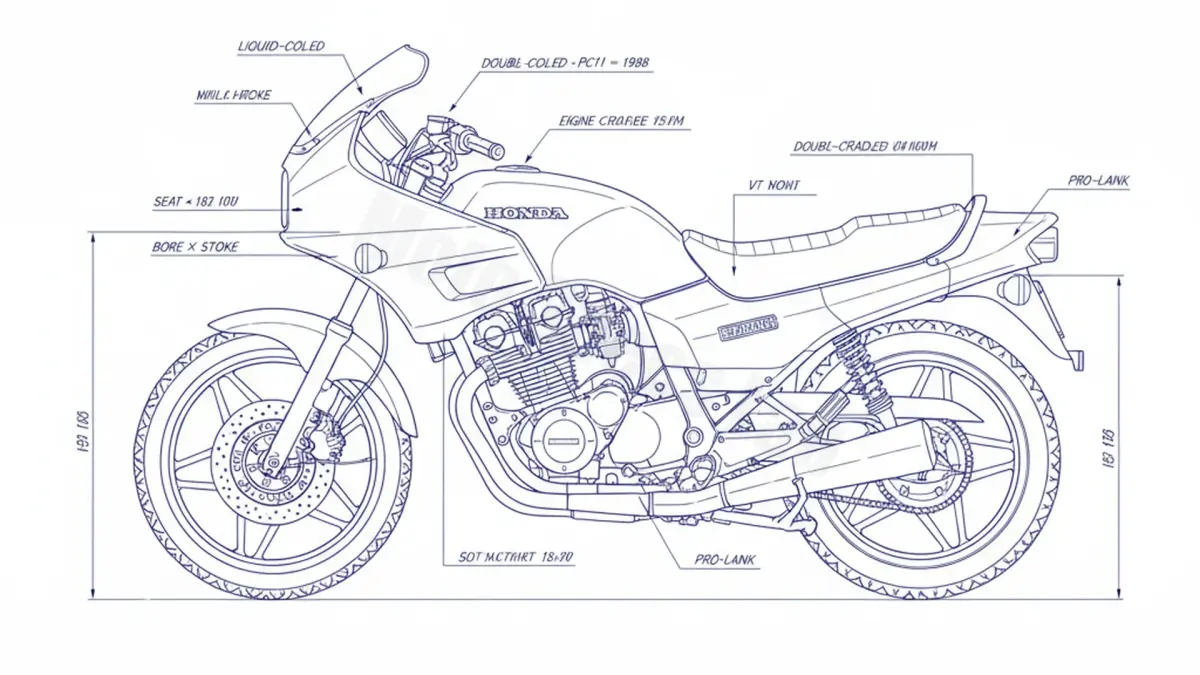
The Honda VT 500 E (PC11) stands as a landmark in motorcycle engineering, primarily for its introduction of the offset dual-pin crankshaft. This innovation allowed Honda to design a narrow 52-degree V-twin that possessed the perfect primary balance of a much larger 90-degree V-twin, effectively eliminating the need for heavy balancer shafts while maintaining a compact chassis footprint. At MotoSpecsLab, we recognize the PC11 as the definitive ‘mechanic’s motorcycle’ of the 1980s—reliable, shaft-driven, and technically sophisticated.
Technical Review: Performance and Reliability
The PC11’s liquid-cooled, SOHC 3-valve engine was ahead of its time. The inclusion of dual spark plugs per cylinder ensured efficient combustion and reduced emissions, a precursor to modern lean-burn technology. Its shaft drive (Cardan) system made it an exceptional commuter and light tourer, offering virtually maintenance-free power delivery compared to its chain-driven rivals of the era.
Maintenance Protocol
1. Lubrication System
To maintain the integrity of the high-revving V-twin, use a high-quality SAE 10W-40 oil meeting JASO MA standards. Because the VT 500 E shares its oil with the transmission and wet clutch, friction modifiers found in automotive oils must be avoided.
- Drain and Fill: 2.1 Liters
- With Filter Change: 2.5 Liters
2. Ignition and Electrical
The PC11 is unique in its class for using four spark plugs (two per cylinder). This design requires the NGK DPR8EA-9. Neglecting the secondary plugs can lead to uneven idling and decreased fuel efficiency. The electrical system is supported by a YB12A-A lead-acid battery; ensure the vent tube is correctly routed to prevent frame corrosion.
3. Tires and Chassis Safety
Handling precision on the VT 500 E is highly sensitive to tire pressure. The factory recommends 2.25 bar (33 psi) for the front and 2.50 bar (36 psi) for the rear. When carrying a pillion or heavy luggage, the rear pressure should be increased to 2.80 bar (41 psi) to prevent sidewall overheating and maintain stability through corners.
Editor’s Verdict
The Honda VT 500 E remains a masterclass in functional design. While its aesthetics are quintessentially 80s, its mechanical soul is timeless. For the modern enthusiast, it offers a vintage riding experience without the typical vintage reliability headaches, provided the dual-plug ignition and specific oil capacities are strictly observed.