| Quick Specs & Fluid Capacities | |
|---|---|
| Model Code | CX500A (Euro 5+) |
| Production Year | 2024–Present |
| Engine Oil | SAE 10W-40 API SG-SM JASO MA2 (2.2 L) |
| Spark Plug | NGK LMAR9G |
| Tire Size (Front) | 120/70 ZR 17 M/C (58W) |
| Tire Size (Rear) | 160/60 ZR 17 M/C (69W) |
| Tire Pressure (F/R) | 2.25 bar (33 psi) / 2.50 bar (36 psi) |
| Battery System | FTZ7S (12V) + 48V Traction Battery |
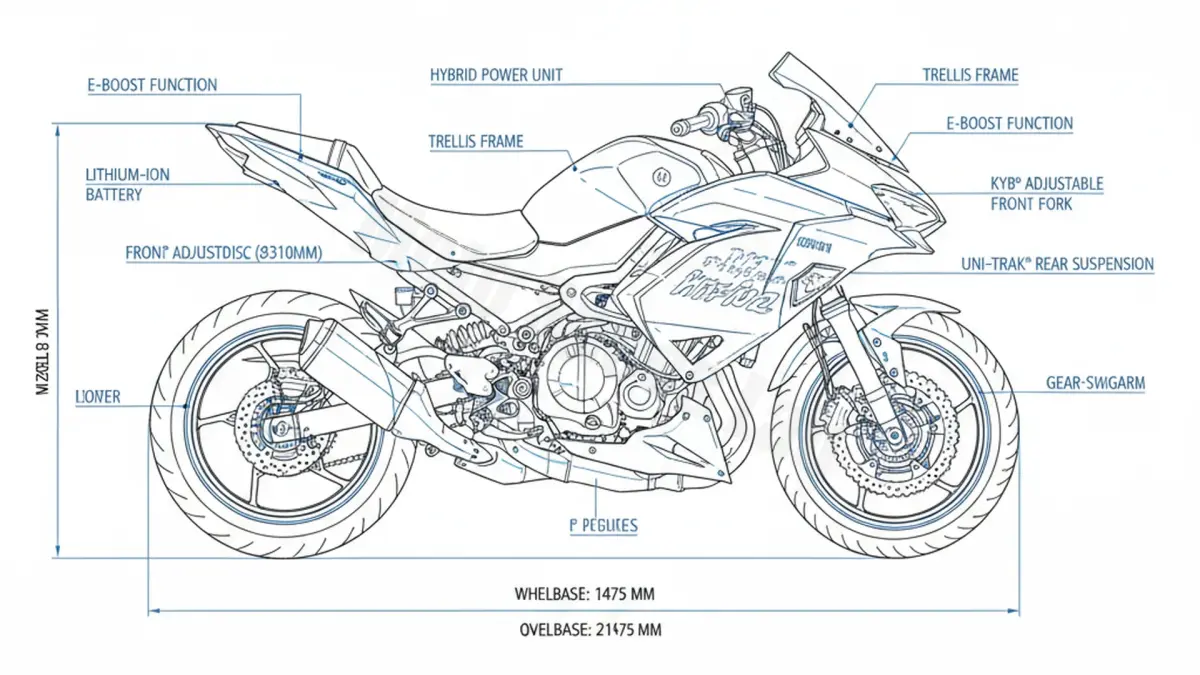
Engineering Highlight: The Kawasaki Ninja 7 Hybrid (CX500A) represents a historic milestone as the world’s first mass-production ‘strong hybrid’ motorcycle. Unlike mild hybrids, the CX500A can operate solely on electric power, utilizing a complex liquid-cooled 9kW traction motor paired with a 451cc parallel-twin internal combustion engine (ICE). This architecture allows for a unique ‘e-boost’ function, providing 650cc-class acceleration with 250cc-class fuel economy.
Technical Architecture and Powertrain
The heart of the CX500A is a sophisticated synergy between the Euro 5+ compliant 451cc engine and a 48V lithium-ion battery pack located under the seat. The transmission is a specialized 6-speed automated manual (AMT), which eliminates the clutch lever but retains physical gears, allowing for either full automatic shifting or manual selection via handlebar buttons. This system is critical for managing the transition between EV, Eco-Hybrid, and Sport-Hybrid modes.
Maintenance Protocol: MotoSpecsLab Insights
Maintaining a hybrid motorcycle requires a dual-focus approach. While the ICE components follow traditional service intervals, the 48V system introduces new considerations for the technician.
1. Lubrication and Cooling
The 451cc engine requires 2.2 liters of SAE 10W-40 meeting JASO MA2 standards. Given the frequent stop-start nature of hybrid operation, using a high-quality synthetic oil is essential to minimize wear during cold-start transitions in Eco-Hybrid mode. The cooling system is integrated, managing heat for both the ICE and the traction motor controller.
2. Electrical System Management
The Ninja 7 Hybrid uses two distinct electrical circuits. The FTZ7S 12V battery handles the ECU, lights, and dash, while the 48V Lithium-Ion pack powers the drive motor. Owners should ensure the 12V battery remains charged during long storage periods, as it is required to ‘wake up’ the high-voltage system. The 48V battery is designed for the life of the vehicle but requires firmware updates during scheduled dealer visits.
3. Chassis and Tires
Despite the added weight of the battery and motor, the CX500A maintains agile handling. The tire pressures are specific: 33 psi (Front) and 36 psi (Rear). MotoSpecsLab recommends strictly adhering to these pressures to ensure the regenerative braking system (which captures energy during deceleration) functions with optimal grip and stability.
MotoSpecsLab Verdict
The Kawasaki Ninja 7 Hybrid CX500A is a masterclass in packaging. It bridges the gap between traditional combustion and full electrification without the range anxiety of a pure EV. For the DIY mechanic, standard tasks like oil changes and spark plug replacements (using the NGK LMAR9G) remain accessible, though the high-voltage hybrid drivetrain remains the domain of certified Kawasaki technicians.