
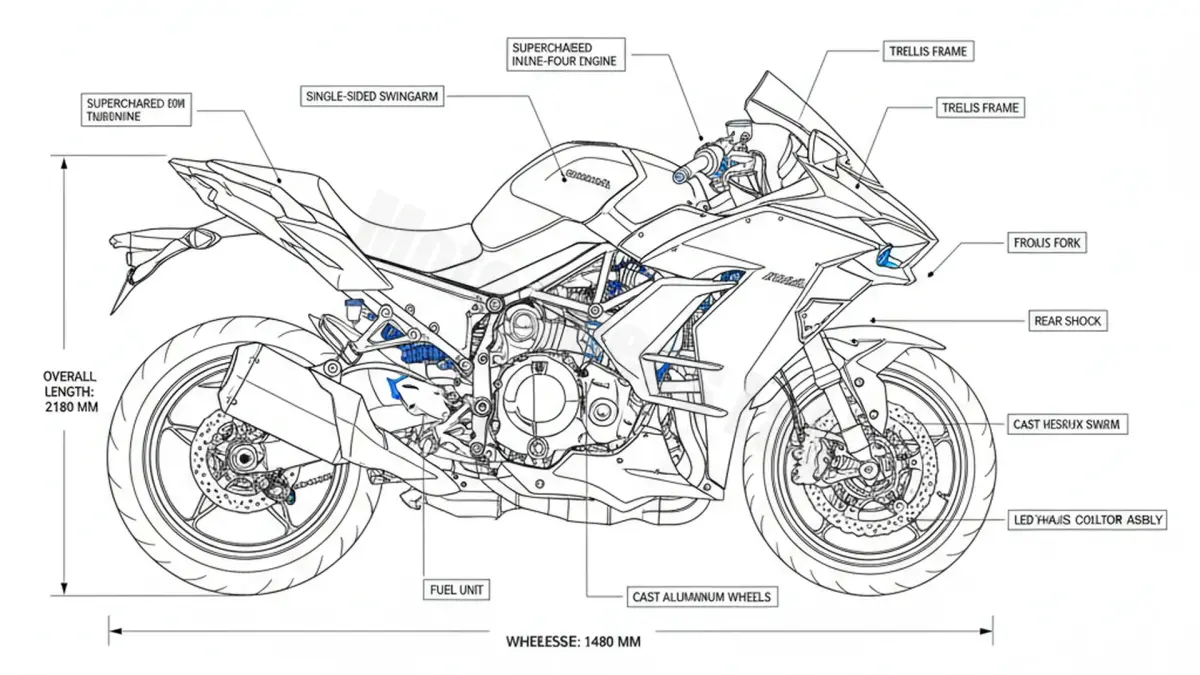
| Component | Specification |
|---|---|
| Engine Type | 998cc Liquid-cooled, 4-stroke In-Line Four with Supercharger |
| Engine Oil | SAE 10W-40 API SG-SM / JASO MA2 (4.1 L) |
| Tires (Front/Rear) | 120/70 ZR 17 / 190/55 ZR 17 |
| Tire Pressure | 2.9 bar (42 psi) Front & Rear |
| Spark Plugs | NGK SILMAR9B9 |
| Battery | YTZ14S |
A marvel of modern thermodynamics, the Kawasaki Ninja H2 SX (ZXT02PP) features a Balanced Supercharged Engine where the impeller is machined from a single forged aluminum block using a 5-axis CNC mill, capable of spinning at nearly 100,000 RPM—approximately 9.2 times the speed of the crankshaft.
Engineering Overview: The Euro 5 Evolution
The ZXT02PP iteration represents the pinnacle of Kawasaki’s Sport Touring lineup. To meet stringent Euro 5 emissions standards without sacrificing the 200PS output, Kawasaki refined the exhaust system and optimized the ECU mapping. The integration of the Bosch Advanced Rider Assistance Systems (ARAS) via radar sensors marks a significant technological leap, requiring precise electrical stability from the YTZ14S battery.
Maintenance Essentials
Lubrication System
The supercharged nature of the H2 SX places immense thermal stress on the engine oil. It is imperative to use a high-quality synthetic SAE 10W-40 meeting JASO MA2 standards. The total capacity is 4.1 liters. Due to the high-speed impeller bearings, oil change intervals should be strictly adhered to, ensuring no shear-down affects the forced induction components.
Chassis and Contact Patch
The H2 SX utilizes a 120/70 ZR 17 front and a 190/55 ZR 17 rear tire. Unlike many sportbikes that allow for lower pressures on track, Kawasaki specifies a consistent 2.9 bar (42 psi) for both ends to maintain the structural integrity of the tire carcass under the high torque loads generated by the supercharger.
Ignition System
The NGK SILMAR9B9 iridium spark plugs are specifically designed for the high-pressure environment of the combustion chamber. These long-reach plugs ensure consistent ignition even under maximum boost conditions. Replacement requires significant disassembly of the fairings and airbox, reflecting the bike’s dense packaging.
Conclusion
The Kawasaki Ninja H2 SX ZXT02PP is not merely a motorcycle; it is a high-performance aerospace experiment for the road. Proper maintenance of its cooling, lubrication, and electronic systems is vital for preserving its unique power delivery and longevity.