
| Specification | Data |
|---|---|
| Production Years | 2005 – 2008 |
| Engine Oil | SAE 10W-40 JASO MA (3.5 L) |
| Front Tire | 150/80 R16 M/C 71V |
| Rear Tire | 170/70 B16 M/C 75H |
| Tire Pressure (F/R) | 2.0 bar (28 psi) / 2.5 bar (36 psi) |
| Battery | YTX20L-BS |
| Spark Plug | NGK IFR5E11 |
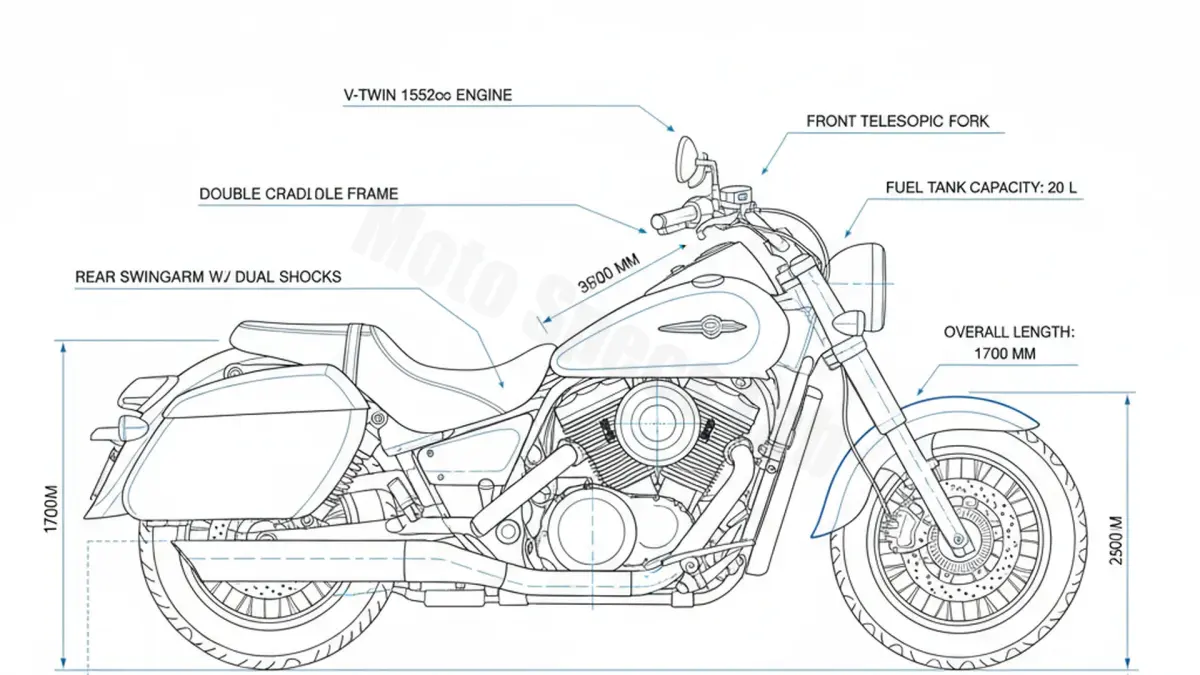
The Kawasaki VN 1600 Classic Tourer (VNT60AT), often referred to in North American markets as the ‘Nomad,’ represents a pinnacle in the evolution of Kawasaki’s heavyweight V-twin cruisers. An engineering highlight often overlooked is its integrated shaft drive system combined with a digital fuel injection system that utilized dual 36mm throttle bodies. This configuration was specifically tuned to deliver peak torque at a remarkably low 2,700 RPM, ensuring that the heavy chassis could maintain effortless cruising speeds even when fully loaded with a passenger and luggage.
Engineering Overview
At the heart of the VNT60AT is the 1,552cc liquid-cooled, SOHC, 8-valve V-twin. Unlike many of its contemporaries that relied on air cooling for aesthetic reasons, Kawasaki prioritized thermal stability and longevity. The engine features a gear-driven engine balancer to neutralize the primary vibration inherent in large-displacement V-twins, resulting in a smooth power delivery that defines the touring experience.
Maintenance Guide
Lubrication System
For the VNT60AT, oil quality is paramount due to the shared lubrication of the engine and transmission. MotoSpecsLab recommends a high-quality SAE 10W-40 JASO MA synthetic or semi-synthetic oil. The total capacity for a filter change is 3.5 liters. Regular intervals help maintain the hydraulic valve lash adjusters, which eliminate the need for periodic valve clearance adjustments.
Tires and Handling
The Classic Tourer utilizes a specific tire combination to balance stability and load-bearing capacity. The front 150/80 R16 and rear 170/70 B16 should be maintained at 2.0 bar (28 psi) and 2.5 bar (36 psi) respectively. Given the bike’s wet weight, maintaining these pressures is critical to prevent cupping and ensure predictable cornering.
Electrical and Ignition
The ignition system relies on NGK IFR5E11 laser iridium plugs. These are designed for high durability and consistent sparking under the lean-burn conditions of the fuel injection system. Power is supplied by a YTX20L-BS battery, which provides the high cold-cranking amps (CCA) necessary to turn over the large high-compression pistons.
FAQ
Q: How often should the shaft drive oil be changed?
A: While the engine oil is changed frequently, the final drive oil should be inspected every 12,000 km and replaced to prevent gear wear.
Q: Can I use a standard spark plug instead of the IFR5E11?
A: We recommend sticking to the IFR5E11 iridium plugs as the ECU is calibrated for the specific resistance and heat range of these components.