| Attribute | Specification |
|---|---|
| Production Years | 1978 – 1980 |
| Engine Type | 1015cc, DOHC, Inline-4 |
| Oil Type | SAE 10W-40 or 20W-50 (API SE/SF) |
| Oil Capacity | 3.0 L (Change) / 3.7 L (Dry) |
| Spark Plug | NGK B8ES |
| Battery | YB14L-A2 |
| Tire Size | F: 3.25-18 4PR / R: 4.00-18 4PR |
| Tire Pressure | F: 2.0 bar (28 psi) / R: 2.25 bar (32 psi) |
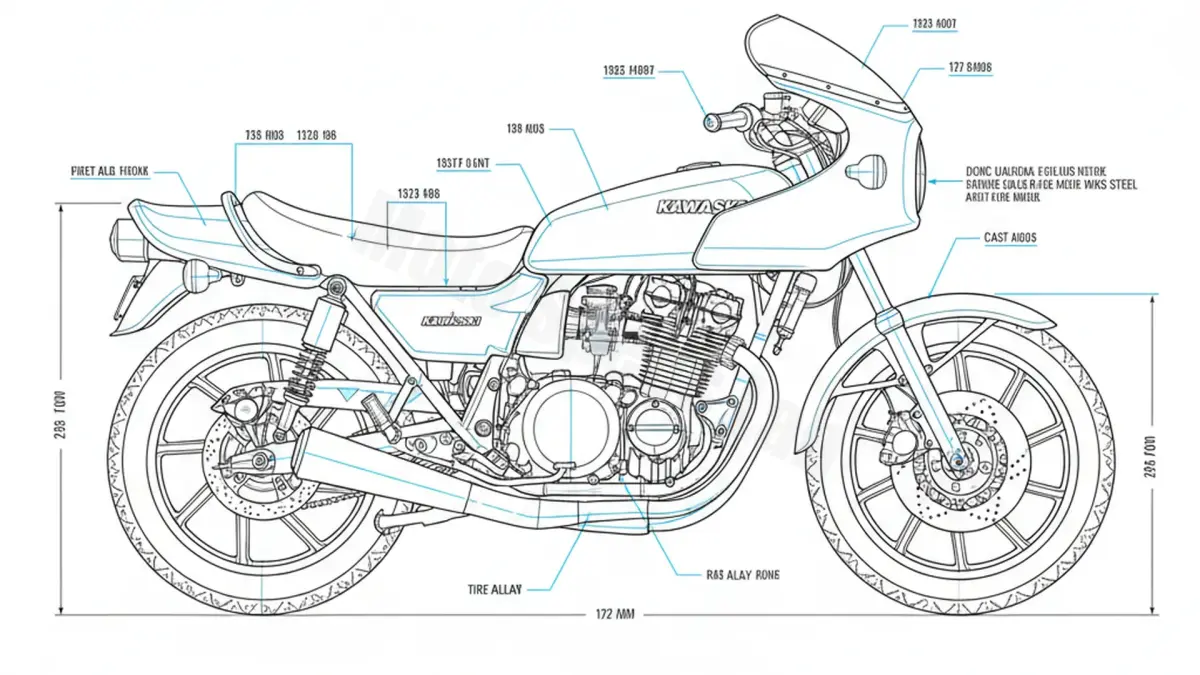
The Kawasaki Z 1000 Z1-R (Z1F/B) holds a legendary status in motorcycling history as Japan’s first true “factory custom.” While its competitors were still refining traditional UJM (Universal Japanese Motorcycle) designs, Kawasaki broke the mold by introducing the industry’s first handlebar-mounted fairing and a distinctive, angular “coffin” fuel tank, setting the stage for the modern café racer aesthetic.
Engineering Evolution: The 1015cc Powerplant
At the heart of the Z1-R lies the evolution of the legendary Z1 engine. Bored out to 1015cc, this dual-overhead-cam inline-four was designed not just for raw power, but for the sustained high-speed touring that the fairing promised. The Z1-R featured 28mm Mikuni carburetors and a unique 4-into-1 exhaust system, which was a radical departure from the four-pipe setups of the era. This configuration provided a sharper throttle response and a significant weight reduction, though it required precise tuning to maintain the engine’s smooth power delivery.
Maintenance Guide: Preserving the Legend
Lubrication System
To ensure the longevity of the DOHC valvetrain, MotoSpecsLab recommends using high-quality SAE 10W-40 or 20W-50 oil meeting API SE or SF standards. Given the air-cooled nature of the engine, thermal stability is paramount. A standard oil change requires 3.0 Liters, while a complete engine rebuild (dry) requires 3.7 Liters. Regular intervals every 3,000 miles are suggested to prevent sludge buildup in the specialized oil galleries.
Ignition and Electrical
The Z1-R utilizes NGK B8ES spark plugs. Maintaining a clean gap is essential for the 1970s-era ignition system to prevent fouling. The electrical system is supported by a YB14L-A2 battery. Due to the added electrical load of the fairing-mounted instruments, ensuring a healthy charging system is critical for modern reliability.
Chassis and Tires
Unlike the wire-spoke wheels of its predecessors, the Z1-R was equipped with cast alloy wheels. For optimal handling, the front tire should be a 3.25-18 4PR at 2.0 bar (28 psi), and the rear should be a 4.00-18 4PR at 2.25 bar (32 psi). Proper inflation is vital to mitigate the “high-speed weave” sometimes associated with early fairing-equipped motorcycles.
Frequently Asked Questions (FAQ)
What makes the Z1-R different from a standard Z1000?
The Z1-R features a handlebar-mounted fairing, a 4-into-1 exhaust, cast alloy wheels, and a smaller, more angular fuel tank compared to the rounded styling of the standard Z1000.
Can I use synthetic oil in the Z1-R?
While modern synthetics offer better protection, ensure they are compatible with wet clutches (JASO MA) and maintain the vintage-appropriate viscosity (10W-40 or 20W-50).