| Specification | Value |
|---|---|
| Model Designation | RJ42A / L4 |
| Engine Oil | SAE 10W-40 (0.9 L) |
| Spark Plug | NGK R0452A-10 |
| Front Tire | 80/100-21 51M |
| Rear Tire | 100/90-19 57M |
| Tire Pressure | 1.0 bar (15 psi) F/R |
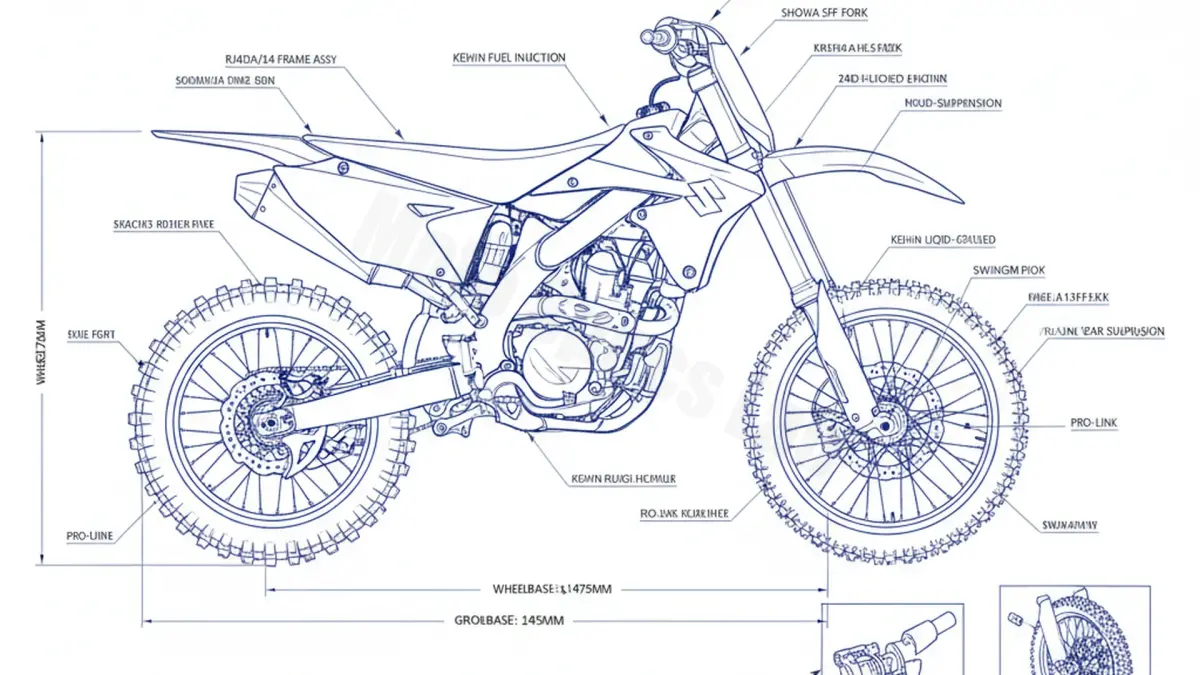
The 2014 Suzuki RM-Z 250 (RJ42A/L4) represents a pivotal era in motocross engineering where Suzuki perfected the art of the ‘cornering-first’ chassis. A unique engineering highlight of this specific generation is the refinement of the Showa Separate Function Fork (SFF) Type 2. Unlike traditional forks, the SFF separates the damping and spring tasks into different legs, significantly reducing friction and weight while allowing for easier tunability—a feature that solidified the RM-Z’s reputation as the sharpest handling 250F in its class.
Engine and Performance Analysis
The heart of the RJ42A is a liquid-cooled, 249cc, DOHC four-valve engine. By the 2014 model year, Suzuki had optimized the Electronic Fuel Injection (EFI) mapping to provide a more linear power delivery. The engine is characterized by a strong mid-range pull, though it requires disciplined maintenance to maintain its competitive edge. The use of a specialized NGK R0452A-10 racing plug is mandatory to handle the high combustion pressures and heat cycles typical of professional-grade motocross racing.
Maintenance Guide: Precision Care
To ensure the longevity of the RJ42A engine, MotoSpecsLab recommends a strict oil change interval. The system requires 0.9 liters of SAE 10W-40. It is critical to use oil that meets JASO MA standards to ensure the wet clutch system operates without slippage.
Tire and Chassis Setup
Handling is the RM-Z’s primary weapon. Maintaining the correct tire pressure is essential for the 80/100-21 front and 100/90-19 rear tires. We recommend a baseline of 1.0 bar (15 psi) for both ends. This pressure provides the necessary carcass flex for the tires to bite into corners, complementing the aggressive frame geometry.
Technical Verdict
The Suzuki RM-Z 250 RJ42A/L4 remains a favorite for riders who prioritize agility and technical cornering over raw top-end speed. While it lacks an electric start (a common critique of its era), its mechanical simplicity and superb chassis feedback make it a purist’s tool on the track. Regular attention to the air filter and valve clearances is the key to keeping this yellow machine at the front of the pack.