| Specification | Data |
|---|---|
| Production Years | 1997-2001 |
| Engine Type | 996cc 90° V-Twin, DOHC |
| Oil Type / Capacity | SAE 10W-40 API SF or SG (3.3 L) |
| Spark Plugs | NGK CR9EK |
| Battery | YTX12-BS |
| Front Tire | 120/70 ZR 17 |
| Rear Tire | 190/50 ZR 17 |
| Tire Pressure (F/R) | 2.5 bar / 2.5-2.9 bar |
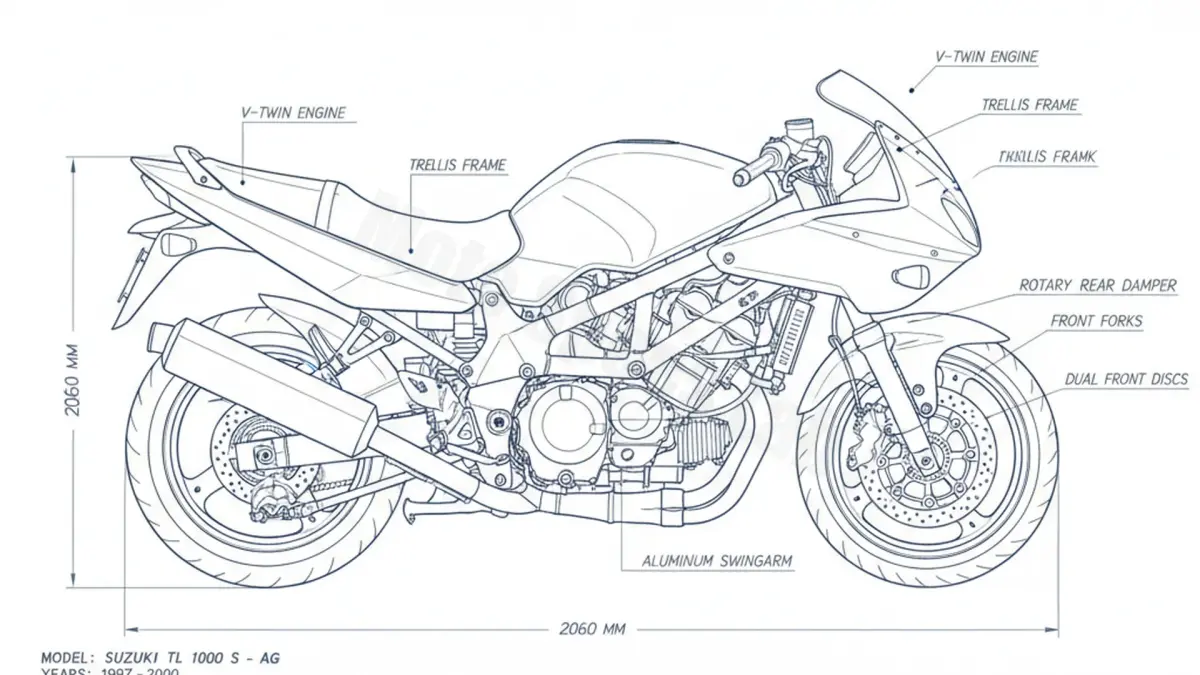
The Suzuki TL 1000 S (AG) holds a unique position in motorcycling history as Japan’s first serious attempt to challenge Italian dominance in the large-capacity V-twin sportbike segment. Historically, it is most notable for being the first fuel-injected V-twin production bike from Japan and for its controversial ‘rotary’ rear damper—a design inspired by Formula 1 suspension technology intended to keep the wheelbase short while accommodating a massive V-twin engine.
Engineering Analysis: The Heart of the Beast
The 996cc engine is the crown jewel of the TL 1000 S. Utilizing a 90-degree V-twin configuration, it provides perfect primary balance. The ‘AG’ model series features a sophisticated electronic fuel injection system with 52mm throttle bodies, delivering a punchy torque curve that earned the bike its reputation for aggressive power delivery. Unlike its competitors of the era, the TL1000S utilized a hybrid cam drive system (chain and gear), ensuring high-RPM stability and timing precision.
The Rotary Damper & Handling Characteristics
To maintain a compact 1415mm wheelbase, Suzuki engineers separated the spring from the damping unit, employing a rotary damper. While theoretically sound, this system was prone to overheating during hard use, leading to inconsistent damping rates. This contributed to the bike’s ‘Widowmaker’ reputation, eventually leading Suzuki to install a steering damper as standard equipment. For modern owners, ensuring the rotary unit is in peak condition or replacing it with an aftermarket coil-over conversion is a common performance upgrade.
Maintenance Guide & Technical Requirements
- Lubrication: The TL 1000 S engine requires 3.3 liters of high-quality SAE 10W-40 oil. It is critical to use API SF or SG rated oils to ensure the wet clutch operates without slipping.
- Ignition System: For optimal combustion and throttle response, NGK CR9EK dual-electrode plugs are specified. These should be checked every 6,000 km.
- Electrical: The YTX12-BS battery is standard. Given the high compression of the V-twin, maintaining a strong charge is essential for the starter motor’s longevity.
- Tires and Pressure: The 190/50 ZR 17 rear tire provides a significant contact patch. For solo spirited riding, maintain 2.5 bar (36 psi) at both ends. Increase the rear to 2.9 bar (42 psi) when riding ‘dual’ to prevent sidewall deformation.
Conclusion
The Suzuki TL 1000 S – AG remains a cult classic for riders who value character and raw power. While its suspension requires specific attention, its engine remains one of the most charismatic powerplants ever produced by Suzuki. Proper adherence to the 10W-40 oil intervals and tire pressure settings is the baseline for a safe and exhilarating riding experience.