| Parameter | Specification |
|---|---|
| Production Years | 1987–1988 |
| Engine Type | 749cc Inline-4, 20-Valve DOHC |
| Oil Capacity | 3.5 L (SAE 20W-40 / 10W-40) |
| Tire Size (Front) | 120/80-16 60V |
| Tire Size (Rear) | 140/70-18 67V |
| Battery Type | YB14L-A2 |
| Spark Plug | NGK DR8ES-L (0.6–0.7 mm gap) |
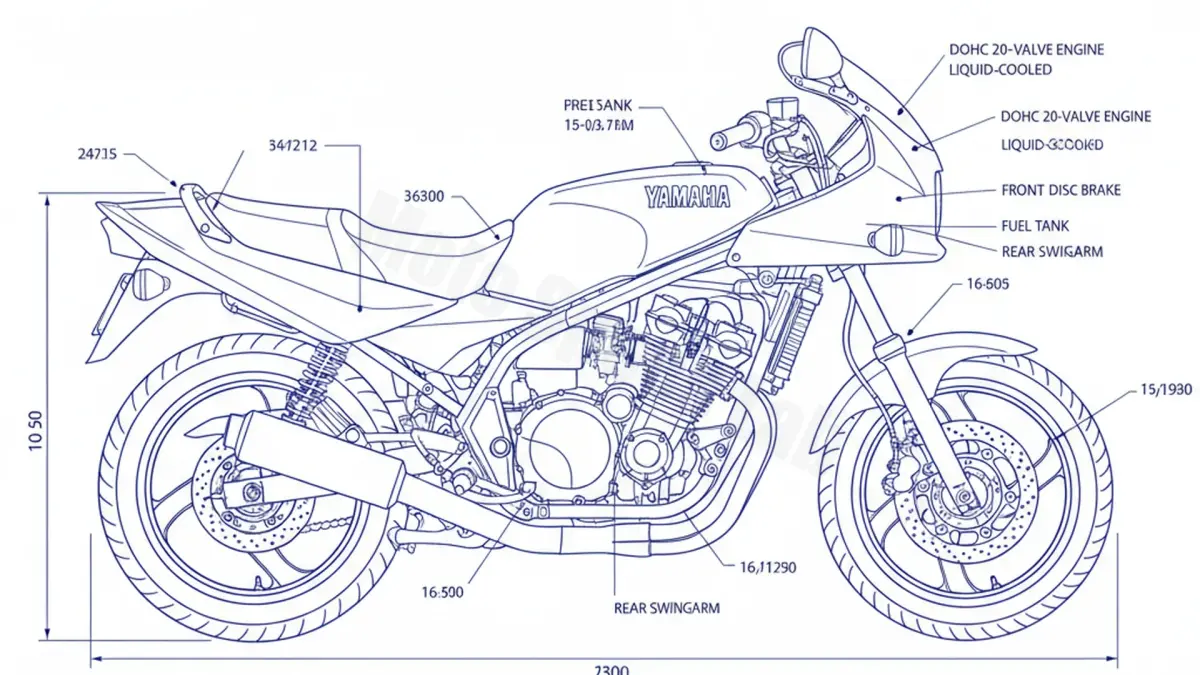
The Yamaha FZ 750 Genesis (2KK) holds a prestigious place in motorcycling history as the pioneer of the ‘Genesis’ design philosophy, most notably introducing the world’s first mass-produced five-valve-per-cylinder cylinder head. This 20-valve configuration allowed for a more efficient combustion chamber shape and higher RPM potential, a hallmark of Yamaha’s engineering dominance in the late 1980s.
Engineering Excellence: The Genesis Concept
The 2KK variant, produced between 1987 and 1988, refined the original 1985 design. The engine was tilted forward at a 45-degree angle. This lowered the center of gravity and allowed for a downdraft intake system, significantly improving volumetric efficiency. In the 2KK generation, Yamaha optimized the exhaust system and ignition mapping, resulting in a smoother power delivery compared to the earlier 1FN models.
Maintenance Guide & Technical Requirements
To maintain the high-performance standards of the FZ 750, strict adherence to technical specifications is required. The 749cc power plant is sensitive to oil quality; MotoSpecsLab recommends using a high-quality mineral or semi-synthetic 10W-40 or 20W-40 oil (API SE/SF/SG) to protect the intricate valve train. The total capacity is 3.5 liters.
Chassis and Running Gear
The 2KK features a unique wheel combination: a 16-inch front for rapid turn-in and an 18-inch rear for stability. Maintaining correct tire pressures is critical for handling; the front should be kept at 2.25 bar (32 psi), while the rear requires 2.50 bar (36 psi) for standard use, increasing to 2.80 bar (40 psi) under heavy loads.
Electrical and Ignition
The ignition system relies on NGK DR8ES-L spark plugs. For optimal combustion, the gap must be precisely set between 0.6mm and 0.7mm. The electrical system is powered by a YB14L-A2 lead-acid battery, which requires regular fluid level checks to ensure longevity.
Verdict
The Yamaha FZ 750 2KK is more than a classic; it is a masterclass in mid-80s Japanese engineering. For collectors and enthusiasts, it offers a visceral riding experience that modern bikes, despite their electronics, struggle to replicate. Proper maintenance of the ‘Genesis’ engine is the key to preserving this milestone of mechanical history.