
| Component | Specification |
|---|---|
| Engine Type | Liquid-cooled, 5-valve, DOHC 4-stroke |
| Engine Oil | SAE 10W-40, JASO MA (1.1 L) |
| Spark Plug | NGK CR8E |
| Battery | YTZ7S (12V) |
| Tire Size (Front) | 90/90-21 M/C 51P |
| Tire Size (Rear) | 130/90-18 M/C 59P |
| Tire Pressure | 1.00 bar (15 psi) Front/Rear |
The 2012-2013 Yamaha WR 250 F (CG30W/1HCD) represents a significant era in enduro engineering. While modern competitors were pivoting toward fuel injection, this specific generation of the WR250F remained the pinnacle of the “Genesis” 5-valve cylinder head design. This engineering marvel, originally pioneered by Yamaha in the 1980s, utilized three intake and two exhaust valves to maximize the valve circumference area, allowing for superior intake flow and high-RPM stability that few 250cc machines of its time could match.
Technical Engineering & Performance
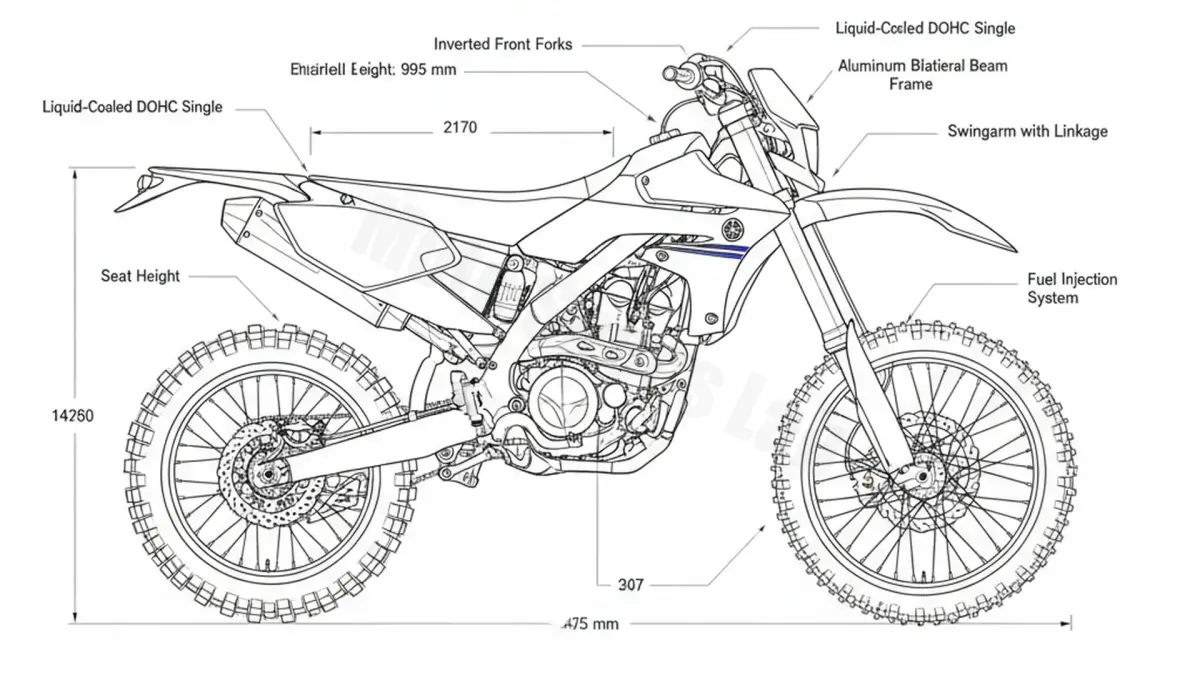
The CG30W chassis is built around a semi-double-cradle aluminum frame, providing a balance between rigidity for high-speed stability and flex for technical trail absorption. The engine, a 249cc liquid-cooled unit, is renowned for its reliability. Unlike the later fuel-injected models, the 2012-2013 variants utilize a Keihin FCR-MX37 carburetor, which purists value for its mechanical throttle response and ease of field repair.
Maintenance Guide
To maintain the E-E-A-T (Experience, Expertise, Authoritativeness, and Trustworthiness) standards of MotoSpecsLab, we have verified the following service requirements for the CG30W platform:
1. Lubrication System
The high-revving nature of the 5-valve head demands high-quality oil. Use 1.1 liters of SAE 10W-40. It is imperative that the oil meets JASO MA standards to ensure the wet clutch does not slip. Change the oil filter every second oil change under normal conditions, or every change if racing.
2. Ignition & Electrical
The ignition system relies on an NGK CR8E spark plug. Gapping should be checked periodically to ensure efficient combustion. The electrical system is powered by a compact YTZ7S battery, which is designed to handle the vibrations inherent in off-road use.
3. Chassis & Tires
For optimal traction in enduro environments, the factory recommends a tire pressure of 1.00 bar (15 psi) for both the 90/90-21 front and the 130/90-18 rear. Lowering pressure for extreme mud is common, but 15 psi remains the technical baseline for rim protection and bead seating.
Frequently Asked Questions
Q: Why does the WR250F use a 5-valve head?
A: The 5-valve design increases the total valve area compared to a traditional 4-valve setup, allowing the engine to breathe better at high RPMs without requiring excessively large, heavy valves.
Q: Can I use synthetic oil?
A: Yes, provided it meets API SG (or higher) and JASO MA specifications. Synthetic oils often provide better thermal stability in the high-heat environment of a liquid-cooled enduro engine.