| Component | Specification |
|---|---|
| Production Years | 1989 – 1991 |
| Engine Oil | SAE 20W-40 or 10W-40 (2.3 L / 2.5 L) |
| Tires (Front/Rear) | 90/90-18 51H / 110/90-18 61H |
| Tire Pressure | F: 2.0 bar / R: 2.25-2.5 bar |
| Battery Type | YB12AL-A |
| Spark Plug | NGK DR8ES-L (Gap: 0.6 – 0.7 mm) |
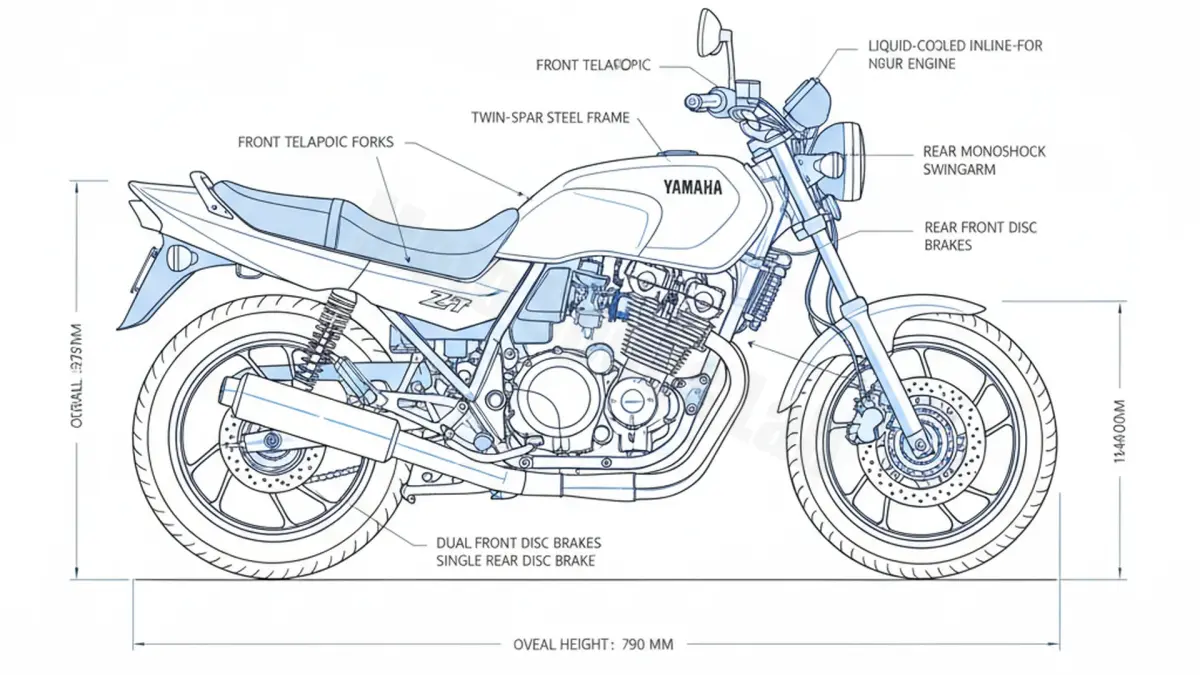
The Yamaha XJ 600 3KN occupies a unique space in motorcycling history as the final evolution of the original XJ series before the introduction of the ‘Diversion’ (Seca II) moniker. While many 600cc machines of the late 80s were pivoting toward aggressive race-replica geometries, the 3KN retained a high-tensile steel double-cradle frame that prioritized stability and mechanical accessibility, making it one of the last true “universal” Japanese fours of its era.
Engineering Overview
The heart of the 3KN is its air-cooled, 8-valve DOHC inline-four engine. Unlike its liquid-cooled competitors, the XJ 600 utilized a sophisticated finning design for thermal management, which reduced weight and complexity. The 3KN variant, specifically produced between 1989 and 1991, featured refined carburetion and ignition mapping compared to the earlier 51J models, offering a smoother power delivery that peaked at approximately 72 horsepower.
Maintenance Specifications & Intervals
Lubrication System
For optimal engine longevity, MotoSpecsLab recommends high-quality mineral or semi-synthetic oils. The 3KN requires SAE 20W-40 for warmer climates or 10W-40 for temperate regions, meeting API SE, SF, or higher standards. The capacity is 2.3 liters for a standard oil change and 2.5 liters if the oil filter is removed.
Ignition and Electrical
The electrical system relies on the YB12AL-A lead-acid battery. To ensure consistent combustion, the NGK DR8ES-L spark plugs must be maintained with a precise gap of 0.6 – 0.7 mm. Fouled plugs are a common symptom of the aging Mikuni carburetors, so regular inspection is vital.
Chassis, Tires, and Handling
The 3KN utilizes 18-inch wheels both front and rear, a configuration that provides a classic feel but limits modern tire choices. The factory-specified sizes are 90/90-18 51H for the front and 110/90-18 61H for the rear. Maintaining correct pressure is critical for handling: 2.0 bar (29 psi) in the front and 2.25 bar (33 psi) in the rear for standard riding, increasing to 2.5 bar (36 psi) when carrying a passenger or heavy luggage.
Expert Verdict
The Yamaha XJ 600 3KN is a testament to over-engineering. It lacks the electronic complexity of modern bikes, offering a pure mechanical connection. For the collector or the DIY mechanic, it remains one of the most rewarding platforms for restoration and daily use, provided the air-cooling fins are kept clear and the valve clearances are checked every 24,000 km.
Frequently Asked Questions
Can I use synthetic oil in my XJ 600 3KN?
While modern synthetics offer superior protection, ensure they are JASO MA rated to prevent clutch slippage, as the 3KN uses a wet clutch system.
What is the correct spark plug gap?
The NGK DR8ES-L should be gapped between 0.6 mm and 0.7 mm for optimal ignition timing and fuel efficiency.