| Attribute | Specification |
|---|---|
| Model | Yamaha XJ 650 – 4K0/83 |
| Production Years | 1980–1984 |
| Engine Oil | SAE 10W-40 / 20W-40 (JASO MA) – 2.65 L |
| Front Tire | 3.25-19 54H |
| Rear Tire | 120/90-18 65H |
| Tire Pressure (F/R) | 2.0 bar / 2.25-2.50 bar |
| Battery | YB12A-A (12V) |
| Spark Plug | NGK BP7ES |
The Yamaha XJ 650 (4K0/83) represents a pivotal moment in Japanese motorcycle engineering. It was the first production motorcycle to feature the Yamaha Induction Control System (YICS). This innovative design utilized a secondary sub-chamber in the cylinder head to promote a high-velocity swirl of the air-fuel mixture, significantly improving combustion efficiency and low-end torque—a technological leap that set the standard for the XJ lineage throughout the 1980s.
Technical Overview: The Heart of the 4K0
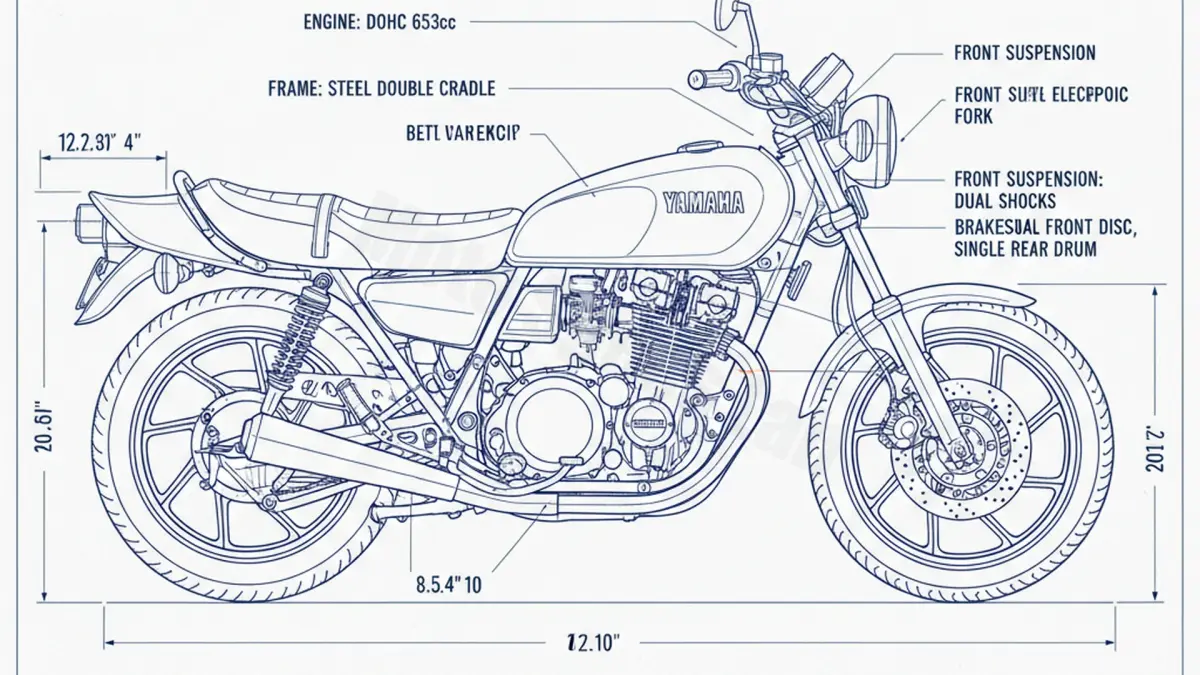
At the core of the 4K0 is an air-cooled, transverse four-cylinder DOHC engine. Delivering approximately 71 horsepower, the XJ 650 was designed as a versatile middleweight that bridged the gap between a pure sportbike and a reliable tourer. Its shaft drive system remains a hallmark of its durability, offering low-maintenance operation compared to contemporary chain-driven rivals.
Maintenance Guide & Service Data
1. Lubrication System
For the XJ 650, oil quality is paramount due to its air-cooled nature. Use a high-quality mineral or semi-synthetic SAE 10W-40 or 20W-40 oil meeting JASO MA standards to ensure the wet clutch operates without slipping. The total refill capacity including filter change is 2.65 Liters.
2. Ignition & Electrical
The 4K0 utilizes NGK BP7ES spark plugs. For optimal performance, the electrode gap should be checked regularly to prevent misfires. The electrical system is powered by a YB12A-A lead-acid battery; given the age of these machines, ensuring clean ground connections is critical to preventing charging issues common in vintage XJ models.
3. Chassis & Tires
The handling characteristics of the XJ 650 are highly sensitive to tire pressure.
- Front (3.25-19 54H): Maintain at 2.0 bar (29 psi).
- Rear (120/90-18 65H): 2.25 bar (33 psi) for solo trips, increasing to 2.50 bar (36 psi) for pillion or heavy luggage.
Editor’s Verdict
The Yamaha XJ 650 4K0/83 is more than just a vintage motorcycle; it is a masterclass in 1980s industrial design. For the modern collector or restorer, it offers a mechanical purity that is increasingly rare. Provided the YICS system is kept clean and the shaft drive oil is changed periodically, the XJ 650 remains one of the most reliable ‘UJM’ (Universal Japanese Motorcycles) ever produced.