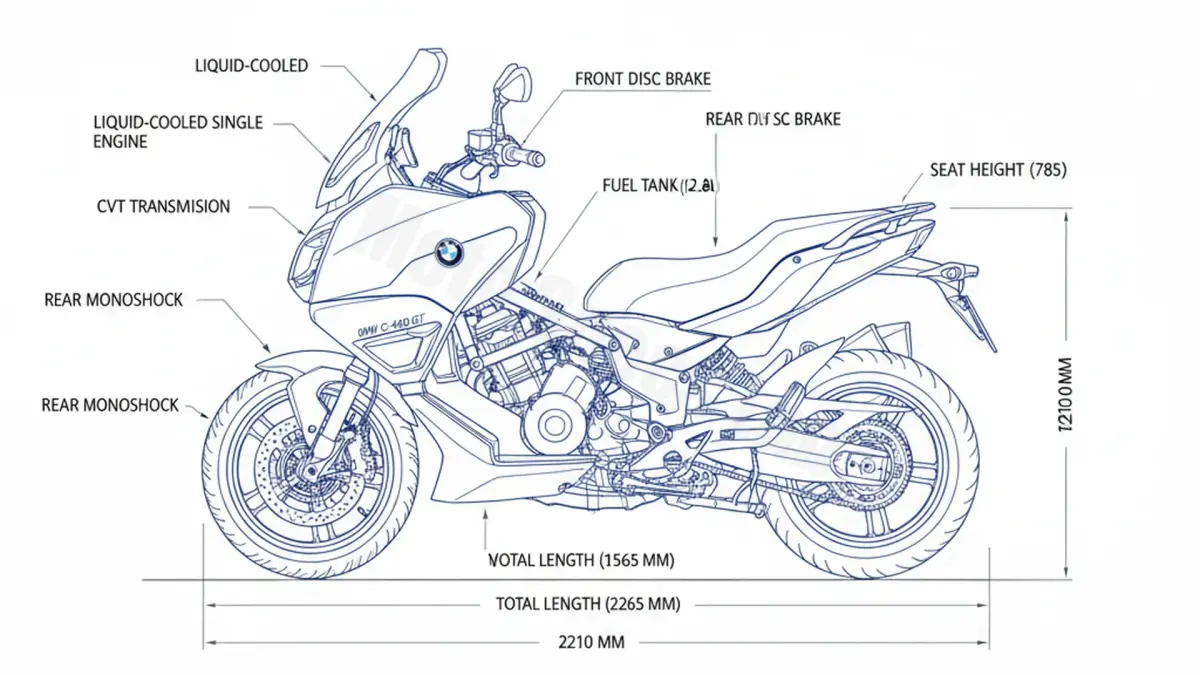
| Component | Specification |
|---|---|
| Engine Oil | SAE 0W-30, API SL / JASO MA2 (1.6 L) |
| Front Tire | 120/70 R 15 (2.2 bar / 31.9 psi) |
| Rear Tire | 150/70 R 14 (2.5 – 2.9 bar) |
| Spark Plug | NGK LMAR8J-9E (0.9 mm gap) |
| Battery | YTX9-BS |
While many mid-sized scooters prioritize utility over engineering, the BMW C 400 GT (0C61) stands out for its unique implementation of ‘E-gas’ (Electronic Throttle Control). Introduced primarily to meet stringent Euro 5 emissions standards, this system did more than just clean up the exhaust; it solved the low-speed surging issues found in earlier 0C06 models by utilizing a new throttle valve actuator and a revised centrifugal clutch, making it one of the smoothest urban commuters in the premium segment.
Engineering Evolution: The Euro 5 Transition
The 0C61 variant represents a significant technical leap for the C 400 GT. The 350cc single-cylinder engine was re-engineered with a new cylinder head and an optimized oxygen sensor. From a technician’s perspective, the most notable change is the shift to a SAE 0W-30 oil viscosity. This ultra-thin lubricant is critical for reducing internal friction and ensuring the hydraulic cam chain tensioner operates correctly during cold starts, a common failure point in engines using heavier, non-spec oils.
Critical Maintenance Data
1. Lubrication System
The C 400 GT requires exactly 1.6 liters of oil. At MotoSpecsLab, we emphasize the use of JASO MA2 certified oil. Despite being a scooter with a CVT, the internal components benefit from the high-shear stability of MA2 rated lubricants. The 0W-30 grade is non-negotiable for Euro 5 compliance and engine longevity.
2. Ignition & Electrical
The ignition system utilizes the NGK LMAR8J-9E. It is imperative to verify the 0.9 mm gap before installation. An incorrect gap can lead to ECU error codes related to the refined Euro 5 misfire detection system. The electrical load is supported by a YTX9-BS battery, which should be kept on a tender if the bike’s Keyless Ride system is frequently used, as the proximity sensor has a marginal parasitic draw.
3. Chassis & Contact Patch
The GT’s handling characteristics are highly sensitive to tire pressure. For the 120/70 R 15 front and 150/70 R 14 rear setup:
- Front: 2.2 bar (31.9 psi)
- Rear (Solo): 2.5 bar (36.3 psi)
- Rear (With Passenger/Luggage): 2.9 bar (42.1 psi)
Running the rear tire under-inflated on this model causes premature squaring of the carcass due to the weight bias of the CVT drivetrain.
Editor’s Verdict
The BMW C 400 GT (0C61) is a masterclass in how to adapt internal combustion to modern regulations without sacrificing performance. For the owner-mechanic, adherence to the specific 0W-30 oil weight and precise spark plug gapping is the difference between a reliable tourer and a frequent visitor to the dealership service bay.
Frequently Asked Questions
Q: Can I use 10W-40 oil if 0W-30 is unavailable?
A: No. The Euro 5 (0C61) engine tolerances and hydraulic tensioners are designed specifically for the flow rate of 0W-30. Using 10W-40 can lead to sluggish throttle response and increased wear.
Q: How often should I check the spark plug?
A: We recommend inspecting the NGK LMAR8J-9E every 10,000 km, though the official replacement interval is longer. The 0.9 mm gap is vital for the E-gas system’s stability.